How Long To Cook Stouffers Lasagna In Your Home Oven
Cooking Stouffer’s lasagna in your home oven typically takes 60 to 90 minutes at 375°F to 400°F. The exact time depends on whether the lasagna is frozen or thawed, the oven type, and the specific Stouffer’s variety you are using. This guide covers everything you need to know, including temperature settings, cover tips, and how to tell when it is perfectly done.
There is something truly special about pulling a bubbling pan of Stouffer’s lasagna out of the oven. The cheese is golden, the sauce is rich, and the whole house smells incredible. But here is the question everyone asks first: how long to cook Stouffer’s lasagna in oven settings at home?
The answer is not as simple as just setting a timer. Several factors play a role, including whether the lasagna is frozen or thawed, what kind of oven you have, and which Stouffer’s variety you picked up from the store. Getting the time and temperature right can mean the difference between a perfect meal and a disappointing one.
This guide walks you through everything step by step. We will cover exact times, temperatures, tips for the best results, and common mistakes to avoid. By the end, you will feel confident every time you bake a Stouffer’s lasagna in your own kitchen.
Key Takeaways
- Standard Bake Time: Frozen Stouffer’s lasagna usually needs 60 to 90 minutes at 375°F to 400°F.
- Thawed Lasagna Cooks Faster: A thawed Stouffer’s lasagna may only need 45 to 60 minutes.
- Internal Temperature Matters: The lasagna should reach 165°F in the center for safe eating.
- Cover with Foil: Keeping foil on the top for the first half prevents burning and promotes even cooking.
- Let It Rest: Allow the lasagna to sit for 10 to 15 minutes after baking for cleaner slices.
- Oven Type Makes a Difference: Convection ovens may reduce cook time by 10 to 15 minutes.
- Check the Box Instructions: Always start with the package directions and adjust based on your oven.
📑 Table of Contents
- Understanding Stouffer’s Lasagna and Your Oven
- How Long to Cook Stouffer’s Lasagna in Oven: The Basics
- Step-by-Step Instructions for Baking Stouffer’s Lasagna
- Common Mistakes When Cooking Stouffer’s Lasagna
- Pro Tips for the Perfect Stouffer’s Lasagna
- How to Tell When Stouffer’s Lasagna Is Done
- Comparing Stouffer’s Lasagna Varieties and Their Cook Times
- Frequently Asked Questions About Cooking Stouffer’s Lasagna
- Conclusion
Understanding Stouffer’s Lasagna and Your Oven
Before we dive into cook times, it helps to understand what you are working with. Stouffer’s lasagna comes in several varieties, and each one has slightly different baking needs. Your home oven also plays a big role in how the lasagna turns out.
What Makes Stouffer’s Lasagna Unique
Stouffer’s lasagna is a frozen meal designed for home ovens. It is not like a fresh lasagna from a restaurant. The ingredients are pre-portioned and sealed in a tray designed to go straight from the freezer to the oven. The lasagna contains layers of pasta, cheese, sauce, and often meat. Each variety has its own blend of seasonings and ingredients.
Here are some popular Stouffer’s lasagna options you might find at the store:
- Stouffer’s Classic Lasagna – the traditional meat and cheese version
- Stouffer’s Vegetable Lasagna – a meat-free option with roasted vegetables
- Stouffer’s Four Cheese Lasagna – rich and creamy with multiple cheese types
- Stouffer’s Spinach Lasagna – features spinach and cheese layers
Each of these varieties has its own recommended cook time and temperature listed on the package. Always check the box first, then use this guide to fine-tune the results based on your oven.
How Home Ovens Differ from Commercial Ovens
One reason Stouffer’s lasagna instructions can be tricky is that they are tested in commercial kitchens. Home ovens behave differently. They heat unevenly. They may run hotter or cooler than the dial shows. This is why many home cooks find that the package times need a small adjustment.
Here are some common differences between home and commercial ovens:
- Home ovens often have hot spots that cause uneven browning
- Commercial ovens circulate heat more evenly
- Home ovens may lose more heat when the door opens
- Older home ovens can be less accurate with temperature readings
- Convection home ovens cook faster than standard ones
Knowing these differences helps you adjust your Stouffer’s lasagna bake time and get better results. A simple oven thermometer can make a huge difference. It tells you the true temperature inside your oven so you can set it correctly.
How Long to Cook Stouffer’s Lasagna in Oven: The Basics
The standard cook time for a frozen Stouffer’s lasagna is between 60 and 90 minutes. But this range is broad because so many factors come into play. Let us break it down by scenario.
Frozen Lasagna Cook Time
When you take a Stouffer’s lasagna straight from the freezer, plan for a longer bake. The general rule is 60 to 75 minutes at 375°F for most varieties. Some larger or denser options may push closer to the 90-minute mark.
Here is what the typical frozen bake process looks like:
- Preheat your oven to 375°F
- Remove the plastic cover from the tray
- Place the tray on a center oven rack
- Bake for 60 minutes with foil loosely covering the top
- Remove the foil and bake for another 15 to 25 minutes
- Check that the internal temperature reaches 165°F
This method ensures the outside does not burn while the inside heats through evenly. The foil acts as a shield during the first part of cooking.
Thawed Lasagna Cook Time
If you take the time to thaw your Stouffer’s lasagna in the refrigerator overnight, the cook time drops significantly. A thawed lasagna usually needs only 45 to 60 minutes at 375°F.
Thawing has several advantages:
- The lasagna cooks more evenly throughout
- You can skip the foil-covering step
- The cheese browns faster and more evenly
- The overall bake time is shorter and more predictable
To thaw safely, place the lasagna in the refrigerator the night before you plan to cook it. Never thaw at room temperature, as this can lead to bacteria growth on the surface of the food.
Convection Oven vs Standard Oven
If you have a convection oven, you can reduce the cook time by about 10 to 15 minutes. Convection ovens use a fan to circulate hot air, which cooks food faster and more evenly. Most Stouffer’s packages now include a convection setting on the box instructions.
For convection ovens, try this approach:
- Reduce the temperature by 25°F (so 350°F instead of 375°F)
- Reduce the total time by 10 to 15 minutes
- Check for doneness early, around the 50-minute mark
- Use the same foil method for the first half of cooking
The result is often a better-looking lasagna with a more evenly browned top. The fan prevents those annoying hot spots that can leave one side of the lasagna overcooked while the other side is still cold.
Step-by-Step Instructions for Baking Stouffer’s Lasagna
Now that you understand the basics, let us walk through the full process. Following these steps will give you the best possible result every time you cook Stouffer’s lasagna in your home oven.
Step 1: Preheat Your Oven
Always preheat your oven before placing the lasagna inside. This is one of the most skipped steps, and it really matters. A cold oven means the lasagna starts cooking slowly, which can lead to uneven heating and a longer overall cook time.
Set your oven to 375°F for most Stouffer’s varieties. Wait for the oven to fully reach temperature before you put the lasagna in. Most ovens beep or have a light that tells you when they are ready.
Step 2: Prepare the Lasagna Tray
Take the lasagna out of the freezer or refrigerator. Remove the outer cardboard box and the plastic film cover. The tray is designed to go straight into the oven, so you do not need to transfer it to a different dish.
Place the tray on a baking sheet if you want to catch any potential drips. This is especially helpful if your lasagna has a sauce-heavy bottom layer.
Step 3: Cover and Bake
For frozen lasagna, cover the top loosely with aluminum foil. Do not wrap it tightly. You want the steam to escape a little so the cheese does not get soggy. Place the tray on the center rack of your oven.
Set your timer for 45 minutes if the lasagna is frozen, or 25 minutes if it is thawed. After this initial period, remove the foil and continue baking.
Step 4: Uncover and Finish Baking
Once you remove the foil, the lasagna needs to finish cooking uncovered. This is when the top gets golden and bubbly. For frozen lasagna, this second phase takes about 20 to 30 minutes. For thawed lasagna, it takes about 20 to 35 minutes.
Keep an eye on the lasagna during this phase. Every oven is different, and you do not want the cheese to burn. If the top is browning too fast, you can lay a piece of foil loosely over it again.
Step 5: Check the Internal Temperature
This is the most important step. Use a meat thermometer to check the temperature in the center of the lasagna. It should read 165°F. If it is below that, keep baking and check again every 5 minutes.
Do not rely on the timer alone. Ovens vary, and the thickness of the lasagna in your particular tray might be slightly different from what Stouffer’s tested in their lab.
Step 6: Let It Rest
Once the lasagna reaches 165°F, take it out of the oven. Let it rest on the counter for 10 to 15 minutes before cutting. This resting period allows the layers to set, which makes slicing much easier and cleaner.
If you cut into it right away, the cheese will slide off and the layers will fall apart. A little patience goes a long way toward a beautiful plate of lasagna.
Common Mistakes When Cooking Stouffer’s Lasagna
Even experienced cooks make mistakes with frozen lasagna. Here are the most common errors and how to avoid them.
Skipping the Preheat
Some people put the lasagna in a cold oven and let it heat up together. This sounds convenient, but it leads to uneven cooking. The outside of the lasagna overcooks while the inside stays cold. Always preheat.
Using the Wrong Rack Position
Placing the lasagna on the top rack can cause the cheese to burn before the inside is hot. Putting it on the bottom rack can leave the top undercooked and pale. The center rack is almost always the best spot for even heat distribution.
Removing the Foil Too Early
The foil cover is there for a reason. It traps steam, which helps the inside of the lasagna cook through. If you remove the foil too early, the top dries out and burns while the center stays frozen.
Overcooking the Lasagna
It is easy to go a few minutes over the recommended time, especially if you get distracted. Overcooked lasagna becomes dry and the cheese turns rubbery. Set a timer and check the temperature at the earliest suggested time.
Not Letting It Rest
We mentioned this above, but it is worth repeating. Cutting into hot lasagna right out of the oven is a recipe for a mess. The layers need a few minutes to firm up. Use that time to set the table or prepare a simple salad.
Pro Tips for the Perfect Stouffer’s Lasagna
Want to take your Stouffer’s lasagna from good to great? These pro tips make a noticeable difference.
Add Fresh Ingredients Before Baking
Consider adding a handful of fresh spinach, a sprinkle of extra parmesan, or some sliced mushrooms on top before baking. These small additions elevate the flavor and add texture. They also brown nicely in the oven during the last 15 minutes of cooking.
Use an Oven Thermometer
Most home ovens are off by 10 to 25 degrees. An inexpensive oven thermometer from the hardware store can change your cooking results completely. Place it in your oven, check the reading, and adjust your temperature setting accordingly.
Rotate the Tray Halfway Through
Since home ovens often have hot spots, rotating the lasagna tray halfway through the bake helps it cook more evenly. Simply turn the tray 180 degrees when you remove the foil for the second phase of cooking.
Let the Lasagna Come to Room Temperature First
If you have time, taking the frozen lasagna out of the freezer 30 minutes before baking can help it cook more evenly. The edges will not be as cold when they hit the hot oven, which reduces the risk of an overcooked outside and undercooked inside.
Store Leftovers Properly
If you have leftover lasagna, let it cool completely before storing it in the refrigerator. Wrap individual portions in plastic wrap or aluminum foil. Leftover lasagna reheats well in the microwave or oven at 350°F for about 20 minutes.
How to Tell When Stouffer’s Lasagna Is Done
Knowing when your Stouffer’s lasagna is fully cooked is essential. There are several clear signs to look for that go beyond just the timer.
The most reliable indicator is the internal temperature. When a meat thermometer inserted into the center reads 165°F, the lasagna is done. This is the food safety standard for reheating and cooking frozen meals.
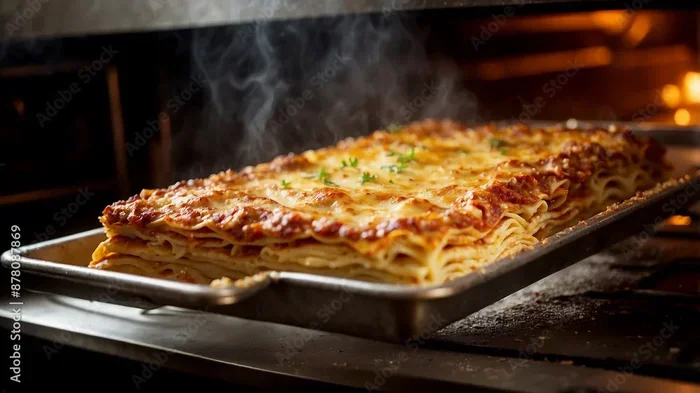
Visually, a done Stouffer’s lasagna has a golden-brown top that is bubbling slightly around the edges. The cheese should be melted and slightly browned in spots, not pale and not burnt. When you gently shake the tray, the center should have a slight jiggle but not be liquid.
The smell is another helpful clue. A fully baked lasagna fills the kitchen with a rich, savory aroma. If the smell seems flat or raw, it probably needs more time.
Here is a quick checklist to confirm your lasagna is done:
- Internal temperature of 165°F in the center
- Golden-brown and bubbly cheese on top
- Slight jiggle in the center when you shake the tray
- Rich, cooked aroma coming from the oven
- Edges pulling slightly away from the tray
If any of these signs are missing, give the lasagna a few more minutes and check again. It is always better to add a little more time than to serve a lasagna that is undercooked in the middle.
Comparing Stouffer’s Lasagna Varieties and Their Cook Times
Different Stouffer’s lasagna varieties have slightly different cook times. Here is a quick comparison to help you plan your meal.
- Stouffer’s Classic Lasagna (frozen): 60 to 75 minutes at 375°F
- Stouffer’s Classic Lasagna (thawed): 45 to 55 minutes at 375°F
- Stouffer’s Vegetable Lasagna (frozen): 55 to 70 minutes at 375°F
- Stouffer’s Four Cheese Lasagna (frozen): 60 to 75 minutes at 375°F
- Stouffer’s Spinach Lasagna (frozen): 55 to 70 minutes at 375°F
- All varieties in convection oven: Reduce time by 10 to 15 minutes
These times are starting points. Your specific oven, the altitude where you live, and how full your oven is can all affect the actual cook time. Use the internal temperature as your final guide.
Frequently Asked Questions About Cooking Stouffer’s Lasagna
Can I cook Stouffer’s lasagna at a lower temperature for longer?
Yes, you can cook it at 350°F instead of 375°F, but you will need to add about 10 to 15 extra minutes. A lower temperature cooks the lasagna more gently, which can result in a more even texture. Just make sure the center still reaches 165°F before serving.
Can I cook Stouffer’s lasagna in a toaster oven?
You can, but toaster ovens have limited space and less even heat distribution. If your toaster oven is large enough to hold the Stouffer’s tray with at least two inches of clearance on all sides, reduce the temperature by 25°F and check for doneness early. The edges may cook faster than in a full-size oven.
Why is my Stouffer’s lasagna soggy on top?
A soggy top usually means the foil was removed too late or the lasagna was covered for too long during baking. Make sure you remove the foil during the second phase of cooking. If the top is still soggy, try broiling on low for 2 to 3 minutes at the end, but watch it closely to prevent burning.
Can I freeze leftover Stouffer’s lasagna and reheat it later?
Yes, you can freeze leftover lasagna. Wrap individual portions tightly in plastic wrap and aluminum foil. To reheat, place the wrapped portion in a 350°F oven for about 25 to 30 minutes, or until the internal temperature reaches 165°F. The microwave works too, but the oven gives better texture.
How many servings does one Stouffer’s lasagna tray make?
Most Stouffer’s lasagna trays serve 4 to 6 people, depending on portion size. The classic variety tray is about 15 ounces before cooking and yields roughly 6 servings of about 2.5 ounces each. If you are feeding a larger group, you may want to buy two trays or prepare a side dish like garlic bread and a simple salad.
Is it safe to cook Stouffer’s lasagna from frozen without thawing?
Yes, it is completely safe. Stouffer’s designs their lasagna trays to go from freezer to oven. The package instructions account for cooking from a frozen state. Just make sure you follow the recommended time and temperature, and always check that the center reaches 165°F before serving.
Conclusion
Cooking Stouffer’s lasagna in your home oven is simple once you know the right time and temperature. The general answer to how long to cook Stouffer’s lasagna in oven settings is 60 to 90 minutes when frozen and 45 to 60 minutes when thawed, both at 375°F. But the real secret is paying attention to your specific oven and using the internal temperature as your guide.
Remember to preheat, use foil during the first half of baking, and let the lasagna rest before cutting. Avoid the common mistakes like skipping the preheat or removing the foil too early. And if you want to go the extra mile, try adding fresh toppings or using an oven thermometer to get more accurate results.
With these tips and guidelines, you will be able to serve a delicious, perfectly baked Stouffer’s lasagna every single time. Whether it is a busy weeknight dinner or a casual weekend gathering, Stouffer’s lasagna is a reliable and satisfying choice that everyone will enjoy.