How To Clean Baked On Food In Oven With Simple Tricks
Cleaning baked on food in oven doesn’t have to be hard. With a few household items like baking soda and vinegar, you can remove stubborn stains and grease from your oven interior. This guide shares simple, effective tricks that save time, money, and effort. You’ll learn step-by-step methods for oven cleaning that really work. Say goodbye to burnt food residue and hello to a fresh, spotless oven.
Nobody loves opening their oven and seeing a layer of burnt, crusty food staring back at them. That baked on food in oven mess is frustrating, messy, and honestly a little embarrassing when guests come over. But here’s the good news. You don’t need expensive cleaners or a lot of elbow grease to fix it.
In this guide, we walk you through simple tricks to clean baked on food in oven using things you probably already have at home. From baking soda pastes to steam cleaning methods, these oven cleaning tips are safe, affordable, and incredibly effective. Whether you deal with charred food residue after a Sunday roast or stubborn grease spots from last week’s casserole, we’ve got you covered.
Let’s be real. Oven cleaning isn’t anyone’s favorite chore. But with the right approach, it becomes quick and painless. Keep reading to discover the best methods, common mistakes to avoid, and tips to prevent future messes. Your oven will look brand new in no time.
Key Takeaways
- Baking soda paste is the #1 natural solution for breaking down baked on food in oven surfaces safely.
- Steam cleaning softens tough stains and makes scrubbing much easier without harsh chemicals.
- Regular maintenance prevents buildup and keeps your oven interior looking clean after every use.
- Oven racks and glass doors need special attention since they collect the most baked on grease and food spills.
- Avoid steel wool and harsh abrasives that can damage the oven finish and coating.
- DIY cleaning solutions are cheap and effective compared to expensive commercial oven cleaners.
- Know when to seek professional help if baked on residue is too stubborn or the oven has damaged parts.
📑 Table of Contents
- Why Baked-On Food Is So Hard to Remove
- Best Natural Cleaning Solutions for Your Oven
- Step-by-Step Guide to Clean Baked On Food In Oven
- How to Clean Oven Racks and Glass Door
- Preventing Future Baked-On Messes
- Common Mistakes to Avoid When Cleaning Your Oven
- When to Call a Professional for Oven Cleaning
- Final Thoughts on Cleaning Baked On Food In Oven
Why Baked-On Food Is So Hard to Remove
Understanding why baked on food sticks so stubbornly to oven surfaces helps you choose the right cleaning method. When food heats up past a certain temperature, the sugars and proteins in it undergo a chemical reaction called the Maillard reaction. This is what gives roasted food its delicious flavor but also creates a hard, crusty layer that bonds to metal and glass.
Over time, repeated cooking sessions layer more residue on top of older stains. The oven interior absorbs this buildup, especially around the walls, floor, and door. Grease splashes from cooking oils add another sticky dimension. Combined, these elements create a tough baked on grease situation that resists simple wiping.
Temperature plays a big role too. Higher oven temperatures create harder, more carbonized stains. If you’ve ever had food boil over or drip onto the oven floor, you know exactly what we mean. That charred food residue seems almost permanent. But don’t worry. The right cleaning approach breaks it down effectively.
The Science Behind Stubborn Oven Stains
Carbonization happens when organic material is exposed to prolonged heat. This process turns food particles into a hard, dark crust. The oven door glass and metal surfaces are especially vulnerable because they absorb heat directly. Water-based cleaning solutions work well on fresh spills. But carbonized stains need something stronger to dissolve the bond between the food and the surface.
This is where natural cleaning agents shine. Ingredients like baking soda and white vinegar create chemical reactions that soften and lift carbonized grime. They are gentle enough for regular use but powerful enough to handle tough baked on food in oven situations. More on that in the next section.
Best Natural Cleaning Solutions for Your Oven
Before you reach for a bottle of chemical spray, try these natural alternatives. They work surprisingly well and are much safer for your home environment. Most of these solutions use ingredients you already have in your kitchen.
Baking Soda Paste: The Ultimate Oven Cleaner
Baking soda paste is hands down the most popular and effective natural cleaner for ovens. Baking soda, also known as sodium bicarbonate, is a mild alkali that dissolves grease and breaks down acidic food residues. When mixed with water, it forms a thick paste that clings to oven surfaces and works on baked on grime over time.
Here is how to make it. Mix three parts baking soda with one part warm water. Stir until you get a spreadable consistency. For really tough stains, let the paste sit overnight. The longer it sits, the more it breaks down the burnt food stains. The next morning, wipe it away with a damp cloth. You will be amazed at how much grime comes off.
Vinegar Spray for Extra Cleaning Power
White vinegar is a natural acid that reacts with baking soda to create a fizzing action. This reaction helps lift loosened dirt from oven surfaces. After applying your baking soda paste and letting it sit, spray a solution of equal parts water and white vinegar over the paste. The fizzing action helps scrub away remaining residue.
Vinegar spray also cuts through grease and removes any leftover baking soda residue. It leaves your oven smelling fresh instead of chemical. This combination of baking soda and vinegar is one of the most trusted cleaning solutions for home oven cleaning.
Lemon Juice and Steam Method
Lemon juice is another excellent natural cleaner. Its citric acid helps dissolve grease and food buildup. To use this method, squeeze the juice of two lemons into a bowl of water. Place the bowl on the lowest oven rack and heat the oven to about 200 degrees Fahrenheit for 30 minutes. The steam loosens baked on food in oven surfaces, making it much easier to wipe clean afterward.
This steam cleaning method is gentle and leaves a pleasant citrus scent. It works especially well on light to moderate stains. For heavy buildup, combine this method with a baking soda paste treatment for best results.
Step-by-Step Guide to Clean Baked On Food In Oven
Now that you know which solutions work, let’s walk through the actual cleaning process. Follow these steps for a thorough and effective oven cleaning session.
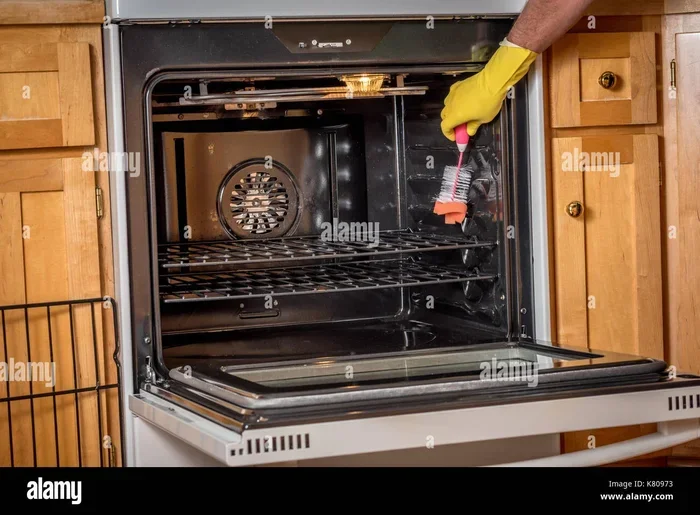
Step 1: Remove the oven racks and trays. Take out everything from inside the oven. Soak the racks in a sink filled with hot water and dish soap. This loosens surface grease before you start scrubbing.
Step 2: Make your cleaning paste. Mix baking soda and water into a thick paste. Spread it evenly across the oven floor, walls, and ceiling. Avoid the heating elements. Let the paste sit for at least 12 hours or overnight.
Step 3: Apply vinegar spray. After the paste has had time to work, spray the vinegar and water solution over the baking soda. Watch it fizz. This reaction lifts dirt and grime from the oven interior.
Step 4: Wipe everything clean. Use a damp cloth or sponge to wipe away the paste and loosened grime. Repeat if necessary. For stubborn spots, use a non-abrasive scrubbing pad. Never use steel wool or anything that can scratch the oven surface.
Step 5: Clean the glass door. The oven door glass collects a lot of baked on grease and food spills. Apply the baking soda paste to the glass, let it sit, then wipe clean. For really tough spots on the glass, make a paste with baking soda and a few drops of dish soap.
Step 6: Replace the racks and trays. Once everything is dry, put the racks and trays back in. Your oven should now look and smell fresh.
Quick Tips for Better Results
- Wear heat-resistant gloves when handling hot surfaces or soaking racks in hot water.
- Use a spray bottle for even application of your vinegar solution.
- Be patient with tough stains. Let the cleaning paste sit longer for better results.
- Wipe up fresh spills immediately after the oven cools down to prevent buildup.
- Rinse thoroughly after cleaning to remove all residue from the oven interior.
How to Clean Oven Racks and Glass Door
Oven racks and the oven door glass are the two areas that collect the most baked on food in oven messes. They need special attention during your cleaning routine.
Cleaning Oven Racks
Oven racks go through a lot of heat and direct food contact. Over time, they develop a thick layer of baked on grease and charred food residue. The best approach depends on how bad the buildup is.
For light buildup, soak the racks in hot soapy water for an hour. Scrub with a non-abrasive pad. For heavy buildup, try the baking soda and vinegar method directly on the racks. Apply paste, let it sit for a few hours, then scrub. Another option is to place the racks in a large garbage bag with ammonia and seal it overnight. This sounds extreme, but it works incredibly well for grease removal on metal surfaces.
Always rinse racks thoroughly after cleaning and dry them completely before placing them back in the oven. Moisture left on metal racks can cause rust over time.
Cleaning the Oven Door Glass
The oven door glass is one of the most visible parts of your oven. When it gets covered in baked on stains, the whole oven looks dirty even after a thorough interior cleaning. Burnt food stains on glass are especially frustrating because they build up in layers.
Start with the baking soda paste method. Apply it to the glass, let it sit for 30 minutes, then wipe with a damp cloth. For stubborn spots between the glass panes, use a razor blade carefully at a 45-degree angle. This works well on glass but never use it on oven interior surfaces.
A mixture of baking soda and hydrogen peroxide also works well on glass. Apply it, let it sit for 15 minutes, then scrub gently. The glass will become clear and transparent again.
Preventing Future Baked-On Messes
Cleaning is easier when you prevent buildup in the first place. A few simple habits can keep your oven interior much cleaner and reduce the need for deep oven cleaning sessions.
Use Oven Liners
Oven liners are silicone or aluminum mats that sit on the oven floor. They catch drips and spills before they can bake onto the oven surface. These liners are heat-resistant and easy to clean. Simply remove them, wash them, and replace them. They are one of the simplest ways to protect your oven from baked on food in oven messes.
Cover Your Dishes
When cooking foods that tend to bubble or splatter, use foil or a lid to cover the dish. This prevents grease and food particles from splashing onto the oven walls and floor. It is a small habit that makes a big difference over time.
Clean After Every Use
Get into the habit of wiping down the oven interior after it cools. A quick wipe with a damp cloth after each use prevents food from hardening and bonding to surfaces. This takes less than two minutes and saves you from hours of deep cleaning later.
Monitor Oven Temperature
Cooking at excessively high temperatures causes more carbonization of food spills. Try to use the right temperature for each recipe. Lower temperatures produce less baked on grease and charred residue. This simple adjustment helps keep your oven cleaner for longer.
Common Mistakes to Avoid When Cleaning Your Oven
Even with the best intentions, people make mistakes that can damage their oven or make cleaning harder. Here are some common errors to watch out for.
Using harsh chemical cleaners without ventilation. Many commercial oven cleaners contain strong chemicals that produce fumes. Always open windows and turn on ventilation when using these products. Better yet, stick with natural cleaning solutions whenever possible.
Scrubbing with abrasive pads. Steel wool and rough scrubbers scratch oven surfaces. Scratches create tiny grooves where food particles lodge and build up even faster. Use soft cloths or non-abrasive sponges instead.
Forgetting to remove racks before cleaning. Cleaning around racks is difficult and often leaves residue behind. Always remove racks first and clean them separately for the best results.
Not letting cleaning solutions sit long enough. Patience is key. Baking soda paste needs time to break down baked on grime. Rushing the process means you will need to repeat the cleaning multiple times.
Using too much water inside the oven. Excess water can damage heating elements and electrical components. Use damp cloths, not soaking wet ones, when wiping the oven interior.
When to Call a Professional for Oven Cleaning
Most baked on food in oven situations can be handled with DIY methods. But there are times when professional help makes sense. If your oven has a self-cleaning oven feature, consider using it. Self-cleaning ovens use high heat to burn off food residue, leaving only ash behind. This is a great option for heavy buildup that won’t respond to natural cleaners.
However, if the oven has damaged interior coating, persistent odors after cleaning, or electrical issues, it is best to consult a professional. Sometimes baked on residue is a sign of a deeper problem with oven maintenance or parts that need replacement.
Professional oven cleaning services use industrial-grade equipment and solutions. They can restore even heavily damaged ovens to near-new condition. The cost is reasonable for deep cleaning situations where DIY methods have failed.
Final Thoughts on Cleaning Baked On Food In Oven
Cleaning baked on food in oven does not need to be a dreaded chore. With the right natural solutions and a bit of patience, you can restore your oven to a sparkling clean state. The baking soda and vinegar method remains the gold standard for home oven cleaning. It is safe, affordable, and works on even the toughest stains.
Prevention is just as important as cleaning. Use oven liners, cover your dishes, and wipe down the interior after each use. These small habits keep baked on grease and food spills from building up in the first place.
Remember to be gentle with your oven surfaces. Avoid abrasive tools and harsh chemicals that can cause long-term damage. Treat your oven well, and it will serve you well for years to come. Now go ahead and give your oven the cleaning it deserves. You will love how fresh and clean it looks when you are done.
Frequently Asked Questions
What is the fastest way to clean baked on food in oven?
The fastest method is the baking soda and vinegar paste treatment. Apply a thick layer of baking soda paste to the stained areas, let it sit for 30 minutes, then spray with vinegar and wipe clean. For moderate stains, this works in under an hour. For heavy buildup, let the paste sit overnight for the best results.
Can I use commercial oven cleaners instead of natural methods?
Yes, commercial oven cleaners work well but contain strong chemicals. Always follow the manufacturer instructions and ensure proper ventilation. Natural methods with baking soda and vinegar are safer for regular use and just as effective for most baked on food in oven situations.
How often should I deep clean my oven?
A deep clean every three to four months is ideal for regular home cooks. If you cook frequently or deal with a lot of spills, you may need to clean more often. Wiping down the interior after each use reduces the need for deep cleaning sessions significantly.
Is it safe to use baking soda on all oven surfaces?
Baking soda is safe for most oven surfaces including metal, glass, and enamel. However, avoid using it on aluminum surfaces as it can cause discoloration. Always test a small hidden area first if you are unsure about a particular surface in your oven.
What causes baked on grease in the oven?
Baked on grease builds up from cooking oils, meat drippings, and food spills that hit the oven surfaces during cooking. Over time, repeated exposure to high heat causes the grease to carbonize and bond to the oven interior. Regular wiping and the use of oven liners help prevent this buildup.
Can I use a steam cleaner for oven cleaning?
Yes, steam cleaners are excellent for oven cleaning. The high-temperature steam softens baked on food residue and grease, making it easier to wipe away. This method works well for light to moderate buildup and is a chemical-free alternative for keeping your oven interior clean.