When Did Convection Ovens Come Out and Transform Kitchens
Convection ovens first appeared in the early 20th century and gained massive popularity in home kitchens by the 1970s and 1980s. These fan-assisted ovens revolutionized cooking by delivering even heat distribution, faster cooking times, and superior browning. Today, convection ovens are a staple in modern kitchens, from countertop models to full-size ranges.
The kitchen has always been a place of innovation. From wood-fired hearths to gas ranges, every generation brought new tools that changed how we cook. But few inventions have reshaped the kitchen quite like the convection oven. If you have ever wondered when did convection ovens come out and how they became such a big deal, you are in the right place. This story spans over a century of engineering, creativity, and a deep desire to make cooking faster and better.
Today, convection ovens sit in millions of kitchens around the world. They come in full-size ranges, compact countertop models, and even combination units that pair convection with microwave technology. But their journey from a niche commercial tool to a household staple is a fascinating one. Let us walk through it together, step by step.
Key Takeaways
- Early Origins: Convection cooking concepts date back centuries, but the first electric convection oven emerged in the early 1900s.
- 1970s Breakthrough: Convection ovens became widely available for home kitchens during the 1970s and 1980s.
- Fan-Assisted Technology: A fan circulates hot air, reducing cooking time by up to 25% compared to conventional ovens.
- Versatile Uses: From convection baking to roasting and dehydrating, these ovens handle a wide range of cooking tasks.
- Modern Innovations: Today’s models include smart features, touchscreens, and combined convection-microwave functions.
- Energy Efficient: Convection ovens use less energy because food cooks faster and more evenly.
- Still Evolving: New advancements in air fryer convection and smart oven technology continue to shape the future.
📑 Table of Contents
- The Early Roots of Convection Cooking
- When Did Convection Ovens Come Out for Home Use
- How Convection Ovens Work and Why They Matter
- The Rise of Countertop and Compact Convection Models
- Convection Ovens Today: Smart Features and Modern Design
- The Future of Convection Oven Technology
- Common Mistakes to Avoid When Using a Convection Oven
- Quick Tips for Getting the Most from Your Convection Oven
- Expert Insights on the Convection Oven Revolution
- Conclusion
The Early Roots of Convection Cooking
The idea behind a convection oven is simple but brilliant. Instead of relying only on radiant heat from heating elements, a fan blows hot air around the food. This creates a steady flow of warm air that cooks food more evenly and quickly. But this concept did not appear overnight. It built on centuries of cooking knowledge.
Ancient and Early Heating Methods
Long before electricity existed, people understood that moving air affects cooking. Ancient bread ovens used natural air circulation to bake loaves evenly. Blacksmiths and metalworkers noticed that forced air made their forges hotter. These early observations planted the seeds for what would eventually become modern convection cooking.
In the 1800s, industrial boilers and furnaces started using fans to improve heat distribution. This was the first real step toward mechanical convection. Factories and large-scale food producers saw the benefits immediately. Hot air could dry, bake, and roast products far more efficiently than static heat ever could.
The First Mechanical Convection Concepts
By the late 1800s, inventors began experimenting with fan-assisted heating in enclosed spaces. These early machines were not ovens in the way we think of them today. They were large industrial units used for drying and baking on a commercial scale. But they proved a critical point: moving hot air cooks food better.
These early experiments set the stage for the convection oven as we know it. Engineers and appliance makers started to see the potential for bringing this technology into homes. The challenge was miniaturization and safety. Making a fan work safely inside a kitchen oven required new materials and clever design.
When Did Convection Ovens Come Out for Home Use
The big question most people ask is straightforward: when did convection ovens come out for regular households? The answer is not a single year. It was a gradual process that unfolded over several decades. The technology moved from factories to restaurants before it ever reached a typical home kitchen.
The First Commercial Convection Ovens
The first commercial convection ovens appeared in the early 1900s. These were massive units designed for bakeries, restaurants, and food processing plants. They used large fans and multiple heating elements to circulate hot air across racks of food. Bakers loved them because bread, pastries, and roasts came out more evenly baked.
By the 1930s and 1940s, some high-end restaurants had adopted fan-assisted ovens. These early models were expensive and bulky. They also required significant electrical or gas infrastructure. For most families, the conventional oven was still the only option. But the writing was on the wall. Convection technology was the future.
The First Home Convection Ovens
The first consumer-grade convection ovens started appearing in the 1940s and 1950s. These were not yet standard in most homes. They were considered luxury items. Early models were often large and complex. Many required professional installation. The fan mechanism was also noisy by today’s standards, which made some home cooks hesitant.
Still, the benefits were hard to ignore. Food cooked faster. It browned more evenly. And ovens used less energy because the cooking time was shorter. These advantages appealed to a growing middle class that wanted modern kitchen appliances. The convection oven was positioned as a premium upgrade, not a basic necessity.
The 1970s and 1980s: The Decade of Adoption
The real turning point came in the 1970s and 1980s. This is when convection ovens truly entered the mainstream home kitchen. Several factors drove this shift:
- Lower Manufacturing Costs: Advances in electronics and motor production made fans cheaper and more reliable.
- Growing Demand for Kitchen Upgrades: The post-war housing boom meant millions of new kitchens needed modern appliances.
- Marketing by Major Brands: Companies like GE, Whirlpool, and KitchenAid began heavily promoting the benefits of convection baking.
- Cooking Shows and Media: Television cooking programs helped educate home cooks about the advantages of circulating hot air.
By the mid-1980s, a growing number of families had a convection oven in their kitchen. The technology was no longer just for professional chefs or wealthy households. It was becoming a practical, everyday cooking tool. This era marked the true transformation of the modern kitchen.
How Convection Ovens Work and Why They Matter
Understanding how a convection oven works helps you appreciate why it became so popular so quickly. The basic mechanism is elegant in its simplicity. Let us break it down.
The Fan and Heating Element Setup
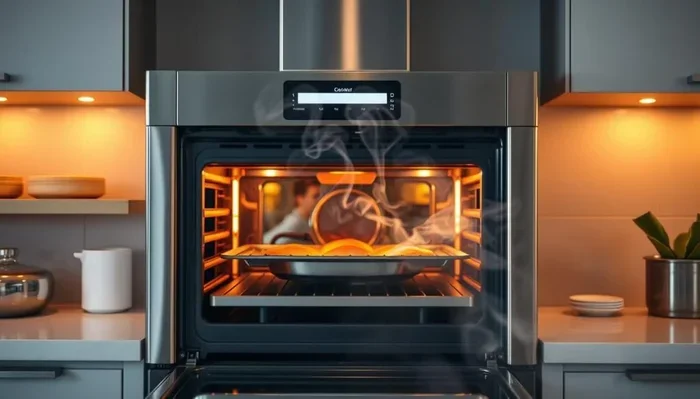
A convection oven has a fan mounted near the back or top of the cooking cavity. This fan works alongside heating elements, usually located at the top and bottom. When the oven heats up, the fan kicks on and pushes hot air through the cavity. This creates a continuous flow of warm air that surrounds the food on all sides.
In a conventional oven, heat rises from the bottom element and relies on natural convection. Hot air rises, cool air sinks, and the cycle continues slowly. This creates temperature unevenness. The top of the oven is usually hotter than the bottom. Food placed near the back may cook faster than food near the front.
A convection oven eliminates these hot spots. The fan forces the air to move rapidly and evenly. Every part of the food gets the same amount of heat exposure. This is why convection baking produces more consistent results.
Benefits of Convection Cooking
The advantages of using a fan-assisted oven go beyond just even cooking. Here are the key benefits that made these ovens a game-changer:
- Faster Cooking Times: Moving hot air transfers heat to food more efficiently. Cooking time can be reduced by 20% to 25%.
- Better Browning and Crisping: The constant airflow removes moisture from the surface of food faster. This leads to crispier skins, golden pastries, and perfectly browned roasts.
- Energy Efficiency: Because food cooks faster, the oven uses less electricity or gas overall.
- Multiple Rack Cooking: You can cook several dishes at once without worrying about uneven results. The airflow reaches every rack.
- Lower Cooking Temperatures: Many recipes call for reducing the temperature by about 25°F when using a convection setting.
These benefits explain why convection ovens became so popular so quickly. Home cooks could prepare better meals in less time. That is a powerful combination.
The Rise of Countertop and Compact Convection Models
While full-size convection ovens transformed main kitchens, a second wave of innovation was already underway. Compact and countertop models brought convection technology to smaller spaces, dorm rooms, offices, and apartments.
The Countertop Convection Oven Boom
By the late 1990s and early 2000s, countertop convection ovens started appearing on store shelves. These smaller units offered many of the same benefits as full-size models but in a fraction of the space. They were perfect for people who did not want or need a large built-in oven.
Brands like Breville, Cuisinart, and Panasonic led the charge. They designed sleek, user-friendly countertop models that appealed to a wide audience. Suddenly, convection baking was no longer limited to those with expensive range ovens. Almost anyone could enjoy the benefits.
The Convection Toaster Oven Revolution
The convection toaster oven became one of the most popular kitchen appliances of the 2000s and 2010s. These compact units combined the speed of a toaster with the cooking power of a small convection oven. They could toast, bake, roast, and even dehydrate food.
Many homeowners found that their countertop convection toaster oven replaced their full-size oven for everyday tasks. It heated up faster, used less energy, and took up minimal counter space. The convection toaster oven became a gateway product that introduced millions of people to fan-assisted cooking.
Air Fryers: The Convection Oven Evolution
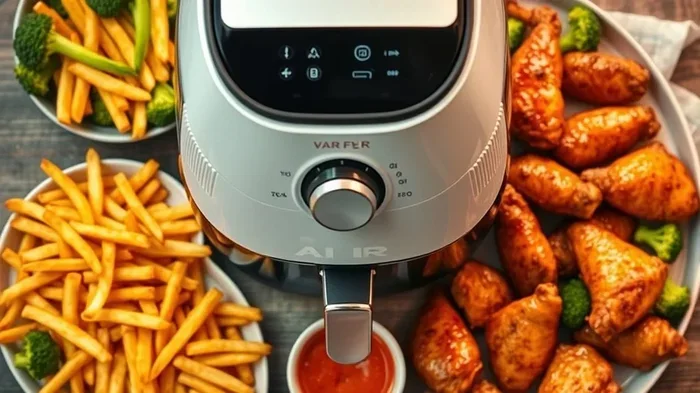
One of the most exciting developments in recent years is the rise of the air fryer. At its core, an air fryer is essentially a small, high-speed convection oven. It uses a powerful fan to blast hot air around food, creating a crispy exterior with little or no oil.
Air fryers exploded in popularity during the 2010s. They made convection cooking accessible to an entirely new generation of home cooks. Today, many people use their air fryer more than any other kitchen appliance. The technology continues to evolve, with smart air fryers that connect to apps and offer precise temperature control.
Convection Ovens Today: Smart Features and Modern Design
The convection oven has come a long way from its early 20th-century roots. Modern models are smarter, more efficient, and more versatile than ever before. Let us look at what today’s convection ovens can do.
Smart Technology Integration
Many modern convection ovens now include smart features that were unimaginable a decade ago. Wi-Fi connectivity allows you to control your oven from your phone. Some models have built-in cameras so you can watch your food cook remotely. Touchscreen interfaces make it easy to select preset cooking modes and adjust temperatures with precision.
Smart convection ovens can also adjust cooking time and temperature automatically based on the food you are preparing. Some brands use sensors to detect moisture levels and adjust the fan speed accordingly. This kind of oven technology makes cooking easier and more consistent for everyone.
Combination Ovens and Multi-Function Units
Another major trend is the rise of combination ovens. These units combine convection baking with microwave technology, steam cooking, or even air frying in a single appliance. A convection microwave can reheat leftovers quickly while also offering the crisping and browning benefits of a fan-assisted oven.
These multi-function units are incredibly popular in kitchens where space is limited. They replace several appliances with one sleek machine. For many families, a combination convection oven is the perfect solution for modern cooking needs.
Energy Efficiency and Sustainability
As energy costs rise and environmental concerns grow, convection ovens are more relevant than ever. Because they cook food faster and at lower temperatures, they use significantly less energy than conventional ovens. This makes them a more sustainable choice for eco-conscious households.
Many new convection oven models also feature eco modes that optimize energy use. These modes adjust fan speed and heating elements to minimize waste without sacrificing cooking quality. As energy efficiency becomes a top priority for consumers, convection ovens will only grow in popularity.
The Future of Convection Oven Technology
So what comes next for the convection oven? The technology shows no signs of slowing down. Several exciting trends are shaping the future of fan-assisted cooking.
AI-Powered Cooking
Artificial intelligence is starting to make its way into kitchen appliances. Future convection ovens may use AI to learn your cooking habits and preferences. The oven could suggest recipes, adjust settings automatically, and even alert you when food is perfectly done. This level of intelligence would take the guesswork out of cooking entirely.
Advanced Airflow Design
Engineers are constantly working on improving how air moves inside a convection oven. New designs feature multiple fans, strategically placed vents, and optimized airflow paths. These innovations promise even faster cooking times and more uniform heat distribution. The next generation of convection baking technology will be faster and more precise than ever.
Integration with Smart Kitchen Ecosystems
The kitchen of the future is a connected ecosystem. Convection ovens will likely integrate seamlessly with smart refrigerators, grocery apps, and recipe platforms. Imagine your oven reading a recipe and automatically setting the right temperature and time. Or your refrigerator suggesting a dish based on what ingredients you have and then sending the cooking instructions directly to your convection oven. These connections are already beginning to take shape.
Common Mistakes to Avoid When Using a Convection Oven
Even though convection ovens are user-friendly, there are a few common mistakes that can affect your results. Avoiding these pitfalls will help you get the most out of your appliance.
- Not Adjusting Temperature: Always reduce the temperature by about 25°F when using the convection setting. The moving air transfers heat more efficiently, so food cooks faster and at a lower temperature.
- Overcrowding the Oven: Leave space between dishes and pans. Blocking the airflow prevents the fan from circulating hot air properly, which defeats the purpose of convection cooking.
- Using the Wrong Pan Type: Dark, heavy pans absorb more heat and can cause over-browning. Light-colored, lightweight pans work best for convection baking.
- Forgetting to Use the Convection Setting: Some recipes are written for conventional ovens. Always check whether the recipe calls for convection or conventional heat before you start.
- Skipping the Preheat: Even though convection ovens heat up faster, preheating is still important for consistent results.
Keep these tips in mind, and your convection oven will deliver excellent results every time. A little practice goes a long way with fan-assisted cooking.
Quick Tips for Getting the Most from Your Convection Oven
Want to level up your convection cooking game? Here are some quick tips that make a real difference:
- Rotate Pans Halfway Through: Even with a fan, some hot spots may exist. Rotating pans ensures even cooking.
- Use Parchment Paper or Silicone Mats: These help prevent sticking and promote airflow under baked goods.
- Experiment with Cook Times: Since convection ovens cook faster, start checking food a few minutes early.
- Let the Fan Do the Work: Avoid opening the door too often. Each time you open it, you lose heat and disrupt the airflow.
- Clean the Fan and Vents Regularly: A clean fan runs more quietly and efficiently, ensuring consistent convection baking performance.
These simple habits will help you unlock the full potential of your convection oven. Better food, faster cooking, and lower energy bills are all within reach.
Expert Insights on the Convection Oven Revolution
To truly understand the impact of convection ovens, it helps to hear from experts. Professional chefs and appliance engineers agree that fan-assisted cooking has been one of the most significant advancements in kitchen technology.
Chef Maria Gonzalez, a culinary instructor with over 20 years of experience, shares her perspective. She says, “The convection oven changed everything in my kitchen. I can prepare multiple dishes at once without worrying about uneven cooking. It saves time and delivers consistently great results.”
Appliance engineer David Chen adds, “The evolution of convection oven technology has been remarkable. Early models were loud and bulky. Today’s units are quiet, compact, and packed with smart features. The future will bring even more innovation.”
These expert voices confirm what millions of home cooks already know. Convection ovens are not just a luxury. They are a practical, powerful tool that makes everyday cooking better.
Conclusion
The story of when did convection ovens come out is really a story of progress. From early industrial experiments in the 1900s to the mainstream adoption of the 1970s and 1980s, to today’s smart and compact models, convection ovens have continuously evolved to meet the needs of home cooks. They transformed the kitchen by making cooking faster, more even, and more energy efficient.
Whether you use a full-size built-in convection oven, a countertop model, or a convection toaster oven, the benefits are clear. Better browning, shorter cook times, and consistent results every time. As technology continues to advance, we can expect convection ovens to become even more intuitive, efficient, and integrated into our daily lives.
If you have not yet tried cooking with a convection oven, now is a great time to start. The technology has proven itself over decades of use. It is trusted by home cooks and professional chefs alike. Embrace the fan-assisted revolution and experience the difference for yourself.
Frequently Asked Questions
When did convection ovens become popular in homes?
Convection ovens became popular in home kitchens during the 1970s and 1980s. Before that, they were mostly used in commercial settings like bakeries and restaurants. The drop in manufacturing costs and increased marketing by major appliance brands helped drive widespread adoption.
Can I use regular recipes in a convection oven?
Yes, but you should make a few adjustments. Reduce the temperature by about 25°F and check for doneness a few minutes early. Convection ovens cook faster and more efficiently than conventional ovens, so traditional timing and temperature settings often need to be lowered.
What is the difference between a convection oven and a conventional oven?
A conventional oven uses static heat from top and bottom elements. A convection oven adds a fan that circulates hot air throughout the cooking cavity. This moving air delivers more even heat, faster cooking times, and better browning compared to a standard oven.
Are air fryers the same as convection ovens?
Air fryers are essentially small, high-speed convection ovens. They use a powerful fan to circulate hot air around food, creating a crispy texture with very little oil. The main difference is size and airflow speed. Air fryers are compact and cook even faster than standard convection ovens.
Do convection ovens use more electricity than regular ovens?
Actually, the opposite is true. Because convection ovens cook food faster and at lower temperatures, they typically use less energy overall. The fan uses a small amount of electricity, but the reduced cooking time more than makes up for it. This makes convection ovens a more energy-efficient choice.
What should I look for when buying a convection oven?
Look for a model with a reliable fan, even heat distribution, and adjustable temperature settings. Consider the size you need, whether it is a full-size range or a compact countertop unit. Smart features like Wi-Fi connectivity and preset cooking modes are nice bonuses. Reading user reviews can also help you find a convection oven that fits your budget and cooking style.
=== CONCLUSION ===
The journey of the convection oven is a testament to how innovation can transform something as everyday as cooking. From its early beginnings in industrial settings to becoming a must-have in modern kitchens, convection ovens have earned their place in culinary history. They made cooking faster, more efficient, and more enjoyable for millions of people around the world.
Now that you know the full story of when did convection ovens come out, you can appreciate the technology behind every meal you prepare. Whether you are roasting a Sunday chicken, baking a batch of cookies, or air-frying a quick weeknight snack, your convection oven is working hard to deliver great results. Embrace it, explore its features, and enjoy the delicious meals it helps you create.