How To Get Rid Of A Microwave Oven Quickly And Safely
Getting rid of a microwave oven doesn’t have to be stressful or complicated. This guide covers every safe and legal way to dispose of your old microwave, from recycling centers to donation options. You’ll learn how to prepare your unit, avoid common mistakes, and make the process fast and hassle-free.
So, you’ve got an old microwave sitting in your kitchen, and you need to get rid of it. Maybe it’s broken, outdated, or you’re upgrading to a newer model. Whatever the reason, how to get rid of a microwave oven is a question more people ask than you’d think.
Throwing it in the trash might seem like the easiest route. But here’s the thing — microwaves contain electronic components, hazardous materials, and metals that shouldn’t end up in a landfill. Not only is improper disposal bad for the environment, but it can also be illegal in many areas. That’s why finding the right disposal method matters so much.
In this guide, we’ll walk you through every safe, practical, and responsible way to say goodbye to your old microwave. Whether you want to recycle it, donate it, or just need it picked up, we’ve got you covered. Let’s dive in and make this process as simple as reheating leftover pizza.
Key Takeaways
- Never toss a microwave in the trash: It contains hazardous materials and electronic components that require proper handling.
- Recycling is the best option: Most parts of a microwave, including metal and glass, can be recycled responsibly.
- Donation extends its life: If your microwave still works, donating it helps others and keeps it out of landfills.
- Professional pickup services make it easy: Many retailers and waste management services offer appliance removal.
- Always unplug and clean first: Proper preparation ensures safety and makes the disposal process smoother.
- Check local regulations: Different areas have specific rules for electronic waste and appliance disposal.
📑 Table of Contents
- Why You Should Never Throw Your Microwave In The Trash
- How To Prepare Your Microwave For Disposal
- Best Ways To Get Rid Of A Microwave Oven
- What Happens When You Recycle A Microwave
- Common Mistakes To Avoid When Disposing Of A Microwave
- How Much Does It Cost To Get Rid Of A Microwave
- Expert Tips For A Smooth Microwave Disposal Experience
- Final Thoughts On Getting Rid Of Your Microwave
Why You Should Never Throw Your Microwave In The Trash
It’s tempting to just bag up your old microwave and put it on the curb. But there are real reasons why this is a bad idea. Understanding these reasons will help you make a better choice.
Environmental Impact
Microwaves contain several materials that can harm the environment. The glass turntable, metal housing, and electronic circuit boards all contain substances that don’t break down safely in soil. When microwaves sit in landfills, these materials can slowly leach into the ground and water supply.
The magnetron — the part that actually generates the microwaves — contains metals like beryllium oxide. This substance is harmful when inhaled as dust. While it’s sealed inside the unit during normal use, breaking it open in a landfill creates real risks.
Legal And Regulatory Concerns
Many states and municipalities have strict rules about electronic waste disposal. Throwing a microwave in your regular trash bin can result in fines in some areas. These laws exist because electronics contain recyclable materials and potentially dangerous components.
Before you dispose of any appliance, check your local waste management rules. Most cities have specific guidelines for appliance disposal and e-waste recycling. Following these rules keeps you on the right side of the law and protects the planet.
Safety Hazards
Even an unplugged microwave can pose risks. Capacitors inside the unit can hold a charge long after the power is cut. If you or a waste worker accidentally punctures the unit, there could be an electrical shock hazard. This is why proper handling and disposal are so important.
Taking a few extra minutes to dispose of your microwave correctly protects everyone involved — from your family to the workers at the recycling facility.
How To Prepare Your Microwave For Disposal
Before you do anything with your old microwave, you need to prepare it properly. This step makes the entire process safer and smoother.
Step 1: Unplug And Let It Rest
First things first — unplug the microwave. Don’t just turn it off. Physically pull the plug from the wall. Then wait at least 24 hours before handling it. This gives any remaining electrical charge time to dissipate.
This is a critical safety step that many people skip. Even a microwave that hasn’t been used in months can hold a dangerous charge in its capacitors.
Step 2: Clean It Thoroughly
Nobody wants to deal with a dirty, smelly microwave during disposal. Give it a good interior and exterior cleaning before you move it.
Use a mixture of warm water and mild dish soap. Wipe down the inside walls, the turntable, and the door seal. For stubborn stains, a paste of baking soda and water works wonders. A clean microwave is also more welcome if you decide to donate it.
Step 3: Remove Personal Items And Accessories
Take out any microwave-safe dishes, covers, or turntable supports you’ve stored inside. Check the door seal for any stuck food or debris. Also, remove any stickers or labels you’ve applied over the years.
Keep the power cord intact. Some recycling centers and pickup services require the appliance to be complete with all parts. A missing turntable or broken door might limit your disposal options.
Step 4: Measure And Plan The Move
Microwaves are heavier than they look. A standard countertop model weighs 25 to 35 pounds. Before you attempt to move it, measure doorways, hallways, and stairwells. You don’t want to get stuck halfway through the move.
If you’re moving it up or down stairs, ask a friend for help. Bending and twisting while carrying a heavy microwave is a quick way to hurt your back. Protect yourself first, then protect the environment.
Best Ways To Get Rid Of A Microwave Oven
Now for the good part — figuring out exactly how to get rid of a microwave oven the right way. Here are the most practical and responsible options available to you.
Option 1: Recycle It At A Local Center
Microwave recycling is the gold standard for disposal. Most recycling centers accept small appliances and can properly break them down for materials recovery.
To find a recycling center near you, check these resources:
- Earth911 — their website lets you search by zip code and material type
- Your local waste management authority — they often publish e-waste drop-off locations
- Best Buy and other retailers — many stores have in-store recycling bins for small appliances
- Scrap metal recyclers — they accept microwaves and pay for the metal content
When you arrive at the recycling center, they may ask you to leave the microwave at the designated e-waste area. Some centers charge a small fee for electronic waste, while others accept it for free.
Option 2: Donate It If It Still Works
If your microwave is still in good working condition, donation is a fantastic option. Someone else can get years of use out of it, and you’ll keep it out of the waste stream.
Here are some great places to donate a working microwave:
- Habitat for Humanity ReStores — they sell donated appliances to fund home building projects
- Local thrift stores — Goodwill, Salvation Army, and similar organizations often accept small appliances
- Shelters and community centers — these places always need working kitchen appliances
- Facebook Marketplace or Freecycle — give it away for free to someone in your community
Before donating, make sure the microwave passes a basic safety check. Plug it in, test the door closes properly, and listen for any unusual sounds. A safe, working appliance is much more likely to be accepted.
Option 3: Schedule A Pickup Service
If you don’t have a truck or the strength to haul your microwave somewhere, a pickup service is a great solution. Several options exist for appliance pickup near you.
Consider these services:
- Junk removal companies — services like 1-800-GOT-JUNK or local equivalents will pick up your microwave for a fee
- Your city’s bulk waste pickup — many municipalities offer scheduled bulk item collection
- Retailer trade-in programs — when you buy a new microwave, the store often takes the old one
- Curbside e-waste collection — some areas offer periodic e-waste pickup days
Before booking any service, confirm they handle electronic waste properly. Ask if they recycle or donate the items they collect. A reputable service will have clear policies about responsible disposal.
Option 4: Sell Or Give Away Online
Even an older microwave might have value to someone. Listing it on Craigslist, Facebook Marketplace, or Nextdoor is a quick way to find it a new home.
Be honest about the condition. Take clear photos, mention any flaws, and price it fairly. Most working microwaves sell for $20 to $50 depending on the brand and age. Giving it away for free also works — many people love free appliances.
Option 5: Return It To The Manufacturer
Some appliance manufacturers have take-back programs. Brands like Panasonic, Toshiba, and LG sometimes accept old units for proper recycling. Check the manufacturer’s website or call their customer service line to ask about their return policy.
This option might require you to ship the microwave yourself, so it works best for those who live close to a shipping center or have a sturdy box available.
What Happens When You Recycle A Microwave
Curious about what actually happens after you drop off your old microwave for recycling? The process is more fascinating than you might think.
The Dismantling Process
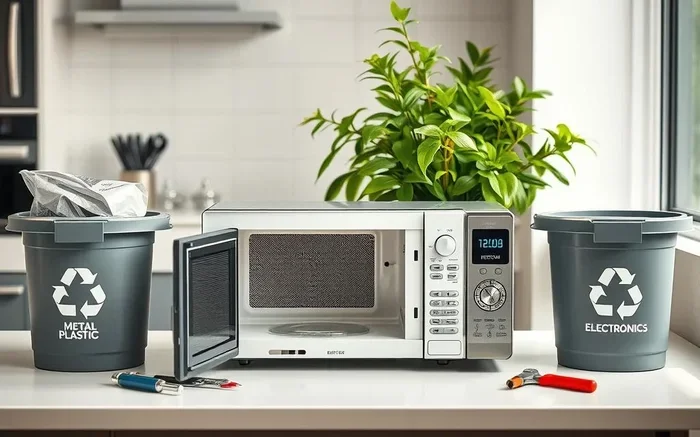
At the recycling facility, trained technicians carefully disassemble the microwave. They remove hazardous components first, including capacitors and any materials containing beryllium. These are handled with special care and sent to specialized facilities for safe processing.
Next, the remaining parts are sorted by material type. The metal housing goes with ferrous metals. The glass turntable gets processed with glass recycling. Copper wiring and circuit board components are separated for precious metal recovery.
Material Recovery Rates
Here’s a look at what gets recovered from a typical microwave:
- Steel and iron: makes up the bulk of the housing and is fully recyclable
- Copper: found in wiring and the magnetron coil
- Glass: the turntable and internal components
- Plastic: the outer casing and internal panels
- Circuit boards: contain small amounts of gold, silver, and other precious metals
Modern recycling facilities can recover up to 90 percent of the materials in a microwave. This is why recycling is far better than sending it to a landfill.
Common Mistakes To Avoid When Disposing Of A Microwave
Even with good intentions, people make mistakes when getting rid of old appliances. Here are the most common ones to watch out for.
Mistake 1: Forgetting To Unplug It
This seems obvious, but it happens all the time. Always unplug your microwave before moving it or taking it for disposal. A plugged-in microwave can cause electrical issues during transport, and the capacitors remain live even when the unit is turned off.
Mistake 2: Ignoring Local Disposal Rules
Every area has different rules about what goes in the trash and what needs special handling. Some cities classify microwaves as household hazardous waste and require specific drop-off procedures. Failing to follow these rules can lead to fines or your item being turned away.
Mistake 3: Leaving It On The Curb Without Arrangement
Putting a microwave on the curb without checking with your local waste management is risky. In many areas, this is considered illegal dumping. The item may not get collected, and you could face penalties. Always confirm what’s allowed in your area first.
Mistake 4: Not Removing Personal Data
Some modern microwaves have digital displays, smart features, or Bluetooth connectivity. While they don’t store personal data like phones do, it’s still good practice to reset any smart features and remove any custom settings before disposal.
Mistake 5: Choosing The Cheapest Option Without Checking Practices
Not all junk removal services are created equal. Some companies simply dump everything at the nearest landfill without any recycling. Before hiring a service, ask how they handle electronic waste. Choose a company that prioritizes recycling and responsible disposal.
How Much Does It Cost To Get Rid Of A Microwave
Cost is always a factor when disposing of appliances. The good news is that getting rid of a microwave can be completely free in many cases.
Here’s a quick breakdown of potential costs:
- Recycling center drop-off: usually free, though some centers charge $5 to $10 for electronics
- Retailer pickup with new purchase: typically free when you buy a replacement
- Junk removal service: ranges from $50 to $150 depending on the company and your location
- Municipal bulk pickup: often free with a scheduled appointment
- Donation drop-off: completely free
- Online sale or giveaway: free — you might even make a few dollars
The cheapest and most environmentally friendly option is almost always recycling or donating. If your microwave still works, donation is the clear winner. For broken units, recycling centers are your best bet.
Expert Tips For A Smooth Microwave Disposal Experience
A few extra tips can save you time and trouble when it’s time to dispose of your microwave.
Call ahead before visiting any recycling center. Not all centers accept microwaves, and some have specific hours for electronic waste. A quick phone call saves you a wasted trip.
Keep your receipt if you bought a new microwave. Many retailers offer free old appliance removal when you purchase a replacement. Having your receipt makes this process much easier.
Take photos of the unit before disposal. This creates a record that you’ve handled the appliance responsibly, which can be helpful if any questions come up later.
Ask about pickup days in your community. Many neighborhoods organize e-waste collection events a few times a year. These are perfect opportunities to drop off old appliances for free.
Don’t forget about the packaging. If you still have the microwave box, some recycling centers or donation shops will accept both the unit and the box together.
Final Thoughts On Getting Rid Of Your Microwave
Disposing of a microwave oven doesn’t have to be complicated or stressful. The key is to choose a method that’s safe, legal, and environmentally responsible. Whether you recycle it, donate it, or schedule a pickup, you’re making a better choice than simply tossing it in the trash.
Remember, how to get rid of a microwave oven the right way comes down to a few simple steps. Unplug it, clean it, and choose a disposal method that works for your situation and your community. Every microwave that gets properly recycled or donated is one less item in a landfill and one more step toward a healthier planet.
Take a few minutes today to handle this responsibly. Your future self — and the environment — will thank you. Making smart disposal choices is a small action that adds up to a big difference over time.
Frequently Asked Questions
Can I put a microwave in my regular trash bin?
In most areas, no. Microwaves are classified as electronic waste and should not go in regular trash. Many municipalities prohibit disposing of electronics in household waste. Check with your local waste management authority to find out the rules in your specific area. Recycling or donating is always the better choice.
How do I find a microwave recycling center near me?
Start by visiting Earth911.com and entering your zip code along with the item name. You can also check your city or county waste management website for e-waste drop-off locations. Best Buy stores often accept small appliances for recycling as well. Calling your local recycling center directly is another great way to confirm they accept microwaves.
Is it free to recycle a microwave?
In most cases, yes. Many recycling centers accept microwaves at no charge. However, some facilities may charge a small fee for electronic waste processing. Municipal e-waste collection events are almost always free. Retailer trade-in programs are also typically free when you purchase a new appliance.
Can I donate a microwave that’s more than 10 years old?
It depends on the condition. If the microwave still works safely and heats food properly, many donation centers will accept it regardless of age. However, if it’s showing signs of wear, sparks, or uneven heating, it’s best to recycle it instead. Always be honest about the age and condition when donating.
What should I do if my microwave is still leaking radiation?
If you suspect your microwave is leaking radiation, do not attempt to use, donate, or transport it yourself. Contact a local e-waste recycling facility and explain the situation. They have the proper equipment and training to handle compromised units safely. Never try to open or repair a microwave yourself — the capacitor can hold a lethal charge even when unplugged.
How long does the microwave disposal process take?
If you’re dropping off a microwave at a recycling center, it usually takes less than 30 minutes including travel time. Scheduling a pickup service might take a day or two for the appointment. Donating a working microwave is quick — just drop it off at the designated location. Overall, the entire process is straightforward and doesn’t require much time at all.