How To Clean Oven Tray Grease With Vinegar And Baking
Cleaning oven tray grease does not have to be hard or expensive. Using vinegar and baking soda is one of the most effective and non-toxic ways to remove even the toughest baked-on grease from your oven trays. This guide walks you through every step, from preparation to final polishing, so your oven trays look brand new again.
Every home cook knows the frustration. You pull out your oven tray and see a thick layer of baked-on grease staring back at you. It can make even the simplest cooking session feel like a chore waiting to happen. But here is the good news. You do not need expensive chemical sprays or abrasive scrubbers to get the job done.
How to clean oven tray grease with vinegar and baking soda is one of the easiest and most affordable solutions you will ever try. These two household staples work together like magic to break down even the most stubborn grease stains. Whether your trays are stainless steel, coated, or made of another material, this natural method gets results. In this guide, we will walk you through every step in detail. You will learn why grease builds up, what supplies you need, the best cleaning methods, and how to keep your oven trays spotless for the long run.
Let us be honest. Oven tray grease is not just a cosmetic problem. Built-up grease can affect how your food cooks, create unpleasant odors, and even pose a fire risk in extreme cases. That is why regular cleaning matters so much. The good part is that with the right approach, oven tray cleaning takes far less time and effort than most people think.
Key Takeaways
- Vinegar and baking soda are safe, natural cleaners that dissolve oven tray grease without harsh chemicals.
- The soaking method works best for moderate grease and requires patience but minimal effort.
- A baking soda paste tackles stubborn stains that soaking alone cannot remove.
- Regular maintenance prevents buildup and makes future cleaning much faster.
- Avoid using metal scrubbers on coated trays to prevent surface damage.
- Heat-activated vinegar boosts grease cutting power for deep cleaning results.
- Non-toxic cleaning protects your family and the environment from harmful residues.
📑 Table of Contents
- Why Oven Tray Grease Builds Up So Quickly
- What You Need to Clean Oven Tray Grease With Vinegar and Baking Soda
- Step-by-Step Guide to Clean Oven Tray Grease With Vinegar and Baking Soda
- Tips for Stubborn Grease Stains That Will Not Budge
- Keeping Your Oven Tray Clean for Longer
- Common Mistakes to Avoid When Cleaning Oven Tray Grease
- Why Natural Cleaning With Vinegar and Baking Soda Is the Best Choice
- Conclusion
Why Oven Tray Grease Builds Up So Quickly
Understanding the enemy helps you fight it better. Oven tray grease does not just appear out of nowhere. It builds up over time through a natural process that happens every time you cook.
The Science Behind Baked-On Grease
When you cook fatty foods at high temperatures, the fats melt and splash onto the tray. As the tray cools, those fats solidify and stick to the surface. Over multiple cooking sessions, layer after layer builds up. Heat causes a process called polymerization, which essentially turns liquid grease into a hard, plastic-like coating. This is why a quick wipe after cooking does not always remove the residue completely.
Different foods contribute to grease buildup in different ways. Roasted meats, baked pastries, and crispy snacks all leave behind significant amounts of fat. Even foods that seem lean can release enough oils to create a film on your tray over time.
Why Traditional Cleaning Methods Often Fail
Many people reach for heavy-duty chemical cleaners when they see grease on their oven trays. These products can work, but they come with downsides. Harsh chemicals leave behind residues that may touch your food the next time you cook. They can also damage the surface of your trays, especially if they have a non-stick coating.
Other common mistakes include using steel wool on non-stick surfaces or scrubbing too aggressively. These actions scratch the tray and create tiny grooves where grease can hide and build up even faster. Natural cleaning with vinegar and baking soda avoids all of these problems. It is gentle on surfaces but tough on grease.
What You Need to Clean Oven Tray Grease With Vinegar and Baking Soda
Before you start, gather everything you need. Having your supplies ready makes the process smooth and fast. You probably already have most of these items in your kitchen.
Household Ingredients for Natural Grease Removal
Here is your shopping list for this cleaning method. You will need white distilled vinegar, baking soda, warm water, and a few drops of dish soap. That is it. No special products required.
White vinegar works best because of its high acidity level. The acid helps dissolve grease and breaks down mineral deposits. Baking soda acts as a gentle abrasive that scrubs away residue without scratching. Together, they create a chemical reaction that lifts grease from surfaces effectively.
Tools and Supplies You Will Need
In addition to the cleaning ingredients, you will want a few basic tools. A large basin or sink for soaking works well. A soft sponge or non-abrasive scrub brush helps remove loosened grease. A microfiber cloth is great for drying and polishing. If you are dealing with really tough stains, an old toothbrush can reach into corners and edges.
For extra cleaning power, you can also prepare a spray bottle filled with vinegar and water. This makes it easy to apply the solution evenly across the tray surface. Some people also like to line their oven trays with aluminum foil or parchment paper before cooking. This simple trick reduces grease buildup significantly.
Step-by-Step Guide to Clean Oven Tray Grease With Vinegar and Baking Soda
Now let us get into the heart of the matter. Below are three proven methods you can use depending on how bad the grease is. Each method uses vinegar and baking soda as the primary cleaning agents.
Method One: The Soaking Method
The soaking method is perfect for trays with moderate grease buildup. It requires patience but very little physical effort.
Start by filling your sink or a large basin with hot water. The water should be as hot as you can comfortably handle. Add two tablespoons of dish soap and stir until it dissolves. Then add one cup of white vinegar. The vinegar helps soften the grease while the soap cuts through the oil.
Place your oven tray into the solution. Make sure the entire surface is submerged. Let it soak for at least one hour. For heavily greasy trays, you can soak overnight. The warm water and vinegar work together to loosen the baked-on residue.
After soaking, remove the tray and pour baking soda directly onto the greasy areas. Use about three to four tablespoons. The baking soda will fizz slightly when it contacts the vinegar residue, which helps lift the remaining grease. Scrub gently with a soft sponge in circular motions. Rinse thoroughly with clean water and dry with a microfiber cloth.
Method Two: The Baking Soda Paste Method
This method works best for trays with thick, stubborn grease that will not budge with soaking alone.
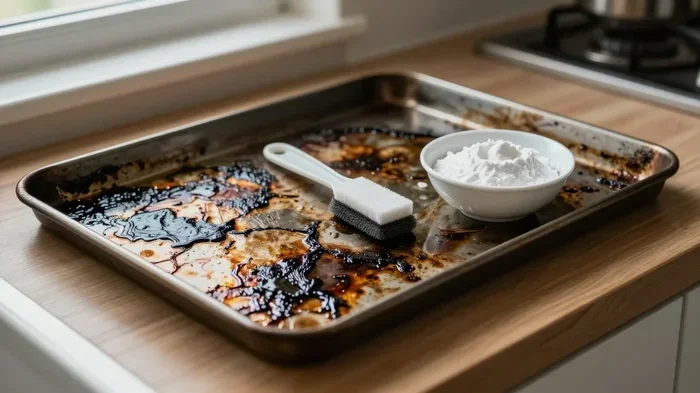
Start by mixing three parts baking soda with one part water. Stir until you form a thick paste. The consistency should be similar to toothpaste. Apply the paste generously across the entire greasy surface of the oven tray. Make sure to cover every area, especially the corners and edges where grease tends to accumulate.
Let the paste sit for at least thirty minutes. For really tough stains, leave it on for two to three hours. The baking soda works to absorb the grease and break it down over time.
After the waiting period, spray or drizzle white vinegar over the paste. You will notice it starts to fizz. This reaction helps lift the grease from the surface. Use your scrub brush or sponge to work the paste into the greasy areas. The mild abrasion of the baking soda does the heavy lifting without scratching the tray.
Rinse the tray thoroughly under warm running water. You may need to rinse twice to remove all baking soda residue. Dry the tray completely with a clean cloth. If any grease spots remain, repeat the process once more. Most trays come clean after one or two applications.
Method Three: The Heat-Activated Vinegar Method
This method uses heat to boost the cleaning power of vinegar. It works especially well for trays with baked-on food particles mixed with grease.
Preheat your oven to 200 degrees Fahrenheit or 95 degrees Celsius. Place the greasy oven tray inside on the middle rack. Let it heat for about ten minutes. The warmth softens the hardened grease and makes it much easier to remove.
Carefully remove the tray using oven mitts. It will be hot. Immediately sprinkle baking soda over the surface and spray white vinegar directly onto the baking soda. Use a damp cloth or sponge to wipe away the loosened grease. The combination of heat, vinegar, and baking soda creates a powerful cleaning action that melts through grease quickly.
This method is also excellent for removing baked-on grease from trays that have not been cleaned in a long time. The heat reactivates the grease and makes it pliable, so it wipes away much more easily than it would at room temperature.
Tips for Stubborn Grease Stains That Will Not Budge
Sometimes, despite your best efforts, some grease stains just refuse to go away. Here is what to do when the standard methods need a boost.
When Vinegar and Baking Soda Are Not Enough
If you have tried the methods above and still see grease residue, do not give up. There are a few tricks that can help. One option is to repeat the baking soda paste method twice in a row. Let the paste sit for several hours or even overnight the second time. This extended contact time gives the baking soda more opportunity to absorb the grease.
Another option is to add a tablespoon of salt to your baking soda paste. Salt provides extra abrasion and helps break down particularly tough grease deposits. Apply the paste, let it sit, and scrub gently. The combination of salt, baking soda, and vinegar is surprisingly effective against the most stubborn stains.
How to Handle Burnt-On Food and Grease Mixtures
Burnt-on messes are a special challenge. When food particles char and fuse with grease, they create a hardened crust that is difficult to remove. For these situations, try boiling water directly on the tray. Fill a pot with water, bring it to a boil, and pour it over the burnt areas on the tray.
Let the hot water sit for fifteen to twenty minutes. The heat softens both the burnt food and the grease underneath. Then apply your baking soda paste and scrub as usual. This two-step approach softens the damage first and then removes it, which is much more effective than trying to scrub a hardened crust directly.
For oven trays with a lot of caked-on residue, you can also try the oven cleaning method. Place the tray in a baking dish, add enough vinegar to cover the bottom, and sprinkle baking soda over the vinegar. The chemical reaction creates bubbles that work into the burnt-on grime. Let it sit for thirty minutes, then scrub and rinse.
Keeping Your Oven Tray Clean for Longer
Cleaning is only half the battle. Prevention is just as important. Once you have put in the effort to restore your oven trays, you want to keep them that way.
Preventive Measures to Reduce Grease Buildup
The easiest way to prevent grease buildup is to line your oven tray before cooking. Parchment paper or aluminum foil creates a barrier between your food and the tray surface. When you are done cooking, simply remove the liner and discard it. This simple habit saves you from hours of scrubbing.
Another preventive step is to wipe your tray shortly after cooking. While the tray is still warm (not hot), give it a quick wipe with a damp cloth. This removes the fresh grease before it has a chance to harden and bond with the surface. Even a thirty-second wipe after each use makes a huge difference over time.
You can also place a drip pan beneath your oven tray during cooking. This catches excess grease and prevents it from reaching the tray surface directly. Drip pans are inexpensive and easy to replace when they get too greasy.
A Simple Maintenance Routine for Spotless Trays
Building a maintenance routine takes just a few minutes per week. Once a week, fill your sink with warm water and a splash of vinegar. Let your oven trays soak for fifteen to twenty minutes while you do other tasks. When you return, a quick wipe with a sponge removes most of the surface grease.
Once a month, give your trays a deeper clean using the baking soda paste method. This prevents grease from building up to the point where heavy scrubbing becomes necessary. Consistent, light cleaning is always easier than occasional deep cleaning.
Common Mistakes to Avoid When Cleaning Oven Tray Grease
Even with the best intentions, people often make mistakes that make the cleaning process harder or even damage their trays. Here are the most common errors and how to avoid them.
Cleaning Errors That Make Grease Worse
One of the biggest mistakes is using cold water on hot grease. Cold water causes grease to solidify and stick even more firmly to the tray surface. Always use warm or hot water when cleaning oven trays. The warmth keeps the grease soft and pliable so it wipes away easily.
Another mistake is using too much water with baking soda. If your paste is too runny, it will not adhere to the tray surface properly. The paste needs to be thick enough to stay in place and absorb grease effectively. Adjust the ratio of baking soda to water until you get a consistent, spreadable paste.
What Not to Use on Your Oven Tray
Steel wool and other metal scrubbers can scratch non-stick and coated trays. Once the surface is scratched, grease finds more places to hide and stick. Always use soft sponges, nylon scrub brushes, or microfiber cloths instead.
Avoid using bleach on oven trays. Bleach can react with food residues and create harmful chemical compounds. It can also discolor and weaken the tray material over time. Stick with vinegar and baking soda for safe, effective cleaning every time.
Do not ignore the edges and corners of your oven tray. Grease loves to accumulate in these hard-to-reach areas. Use an old toothbrush or a narrow scrub brush to clean these spots regularly. Neglecting them leads to buildup that becomes harder to remove with each passing week.
Why Natural Cleaning With Vinegar and Baking Soda Is the Best Choice
There are many reasons to choose a natural approach for your oven tray cleaning routine. First and foremost, vinegar and baking soda are completely non-toxic. They do not release harmful fumes or leave chemical residues that could contaminate your food. This makes them safe for households with children, pets, and people with sensitivities to harsh chemicals.
These ingredients are also incredibly affordable. A box of baking soda and a bottle of white vinegar cost just a few dollars and last through many cleaning sessions. Compared to commercial oven cleaners that can cost ten to fifteen dollars per can, the savings add up quickly.
From an environmental perspective, natural cleaners are the clear winner. Chemical oven cleaners contain ingredients that can harm waterways and soil when they enter the waste stream. Vinegar and baking soda are biodegradable and eco-friendly. You can feel good about using them knowing they do not contribute to pollution or environmental damage.
Finally, the versatility of these two ingredients cannot be overlooked. Vinegar and baking soda work for countless other cleaning tasks around the kitchen and home. They clean microwaves, remove stains from coffee cups, deodorize refrigerators, and much more. Once you make them part of your cleaning routine, you will find yourself reaching for them again and again.
Conclusion
How to clean oven tray grease with vinegar and baking soda is a simple, effective, and safe approach that anyone can use. Whether you are dealing with light surface grease or heavy baked-on buildup, these natural ingredients deliver impressive results without the risks associated with chemical cleaners.
By following the methods outlined in this guide, you can restore your oven trays to their original condition. The soaking method, the baking soda paste method, and the heat-activated method each offer unique advantages for different levels of grease buildup. Combine these techniques with preventive habits and regular maintenance, and your oven trays will stay clean with minimal effort.
Remember that consistency is key. A little cleaning after each use prevents the need for deep scrubbing sessions. Keep your vinegar and baking soda stocked in the kitchen, and you will always be ready to tackle grease the moment it appears. Your oven trays will thank you, and your kitchen will smell fresh and clean instead of chemical and harsh.
Start today. Try the vinegar and baking soda method on your next greasy oven tray. Once you see the results, you will wonder why you ever reached for anything else. Natural cleaning works, it is affordable, and it is safe for your family and the planet. Give it a try and experience the difference for yourself.
Frequently Asked Questions
Can I use apple cider vinegar instead of white vinegar?
Yes, apple cider vinegar works for cleaning oven tray grease, but white vinegar is more effective because of its higher acidity level. If you only have apple cider vinegar on hand, it will still get the job done. Just be aware that it may leave a slight color tint on light-colored trays.
How long should I soak my oven tray in vinegar and water?
For moderate grease, one hour of soaking is usually enough. For heavy buildup, soak overnight. The longer the tray soaks, the easier the grease will be to remove. If you are short on time, use the heat-activated method to speed things up significantly.
Is baking soda safe to use on non-stick oven trays?
Yes, baking soda is gentle enough for non-stick surfaces when used correctly. Always make a paste rather than using dry baking soda, and avoid using harsh scrubbers. The mild abrasion of baking soda paste cleans effectively without damaging the non-stick coating.
What if the vinegar smell does not go away after cleaning?
The vinegar smell usually fades within a few hours as the tray dries. To speed up the process, rinse the tray thoroughly with warm water after cleaning and dry it completely with a clean cloth. You can also wipe the tray with a small amount of lemon juice to neutralize any remaining odor.
Can I use this method on aluminum oven trays?
Yes, vinegar and baking soda are safe for aluminum trays. However, avoid leaving the baking soda paste on aluminum for too long, as it can cause discoloration over time. Rinse the tray thoroughly after cleaning and dry it immediately to prevent any chemical reaction with the aluminum surface.
How often should I clean my oven tray to prevent grease buildup?
A quick wipe after each use is ideal. A deeper clean using the vinegar and baking soda method once a week keeps grease from accumulating to problematic levels. If you cook frequently or cook a lot of fatty foods, you may need to clean your trays more often.