Is Blue Diamond Cookware Oven Safe You Need To Know
Yes, Blue Diamond cookware is generally oven safe, but the answer depends on the specific product and its coating type. Most Blue Diamond pans can withstand temperatures up to 350°F to 450°F, making them versatile for stovetop-to-oven cooking. Understanding the exact limits and proper care practices will help you get the most out of your investment.
Have you ever wondered whether your beloved Blue Diamond pan can go from the stovetop straight into the oven? Maybe you are making a skillet dinner and want to finish it under the broiler. Or perhaps you are baking a frittata and need to know if your frying pan can handle the heat. Is Blue Diamond Cookware Oven Safe? This is a question many home cooks ask, and for good reason. The last thing anyone wants is to ruin a good pan or, worse, release harmful fumes by overheating the wrong type of cookware.
Blue Diamond has built a strong reputation in the kitchen cookware world. Their diamond-reinforced non-stick pans promise durability, easy food release, and even heat distribution. But when it comes to oven use, not all pans are created equal. Some handle high heat like champions, while others have strict temperature limits. In this guide, we will walk you through everything you need to know about Blue Diamond oven safe cookware. By the end, you will feel confident using your Blue Diamond pans in the oven without any worries.
Key Takeaways
- Blue Diamond cookware is oven safe: Most products handle temperatures between 350°F and 450°F depending on the line.
- Check the product label: Always verify the specific oven safe temperature for your particular pan model.
- The diamond coating matters: The diamond-reinforced non-stick surface has specific heat limits you must respect.
- Avoid sudden temperature changes: Moving a cold pan directly into a hot oven can cause warping or damage.
- Hand washing extends lifespan: While some Blue Diamond pans are dishwasher safe, hand washing preserves the non-stick coating longer.
- Warranty coverage varies: Knowing your warranty terms helps protect your purchase if something goes wrong.
📑 Table of Contents
- What Makes Blue Diamond Cookware Special?
- Is Blue Diamond Cookware Oven Safe? The Answer
- Understanding Blue Diamond’s Oven Safe Temperature Limits
- How to Safely Use Blue Diamond Cookware in the Oven
- Blue Diamond Cookware: Pros and Cons for Oven Use
- Common Mistakes to Avoid with Blue Diamond Cookware
- Expert Tips for Getting the Most Out of Your Blue Diamond Cookware
- Final Thoughts on Blue Diamond Oven Safe Cookware
What Makes Blue Diamond Cookware Special?
Before diving into oven safety, it helps to understand what sets Blue Diamond apart from other non-stick pans on the market. The brand uses a unique diamond-reinforced coating that promises superior performance and longevity. Let us break down what makes these pans stand out.
The Diamond Reinforced Coating
Blue Diamond pans feature a coating that contains actual diamond particles. These tiny diamonds are embedded in a non-stick surface to boost durability and heat conductivity. The result is a pan that heats evenly and resists scratches better than standard non-stick cookware. The diamond particles create a hard surface that food has a tough time sticking to.
This coating is not just for looks. It genuinely improves cooking performance and makes everyday tasks like flipping pancakes or searing chicken much easier. However, this advanced coating also comes with specific care requirements. Understanding these requirements is key to keeping your pans in great shape for years.
Different Blue Diamond Product Lines
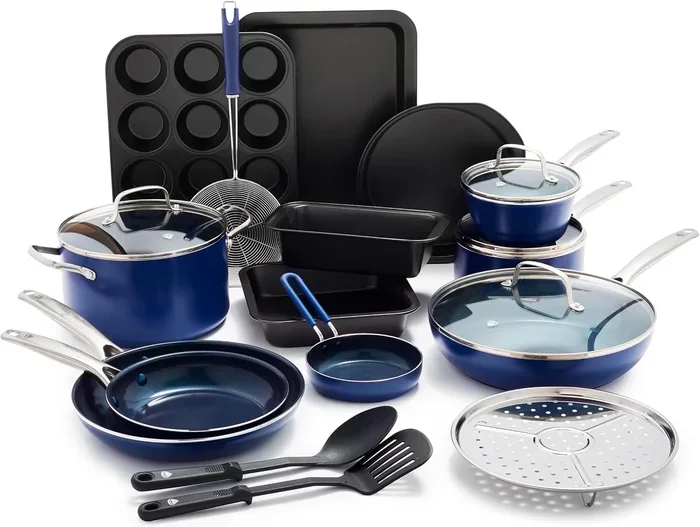
Blue Diamond offers several cookware lines, and each one has slightly different features. The original Blue Diamond line uses a pure ceramic non-stick surface with diamond particles. There are also newer lines that incorporate different materials and coatings. Some lines are designed specifically for high-heat cooking, while others focus on everyday low-fat cooking.
Because the product lines vary, the oven safe capabilities differ too. This is why it is so important to check the specific product details before putting any pan in the oven. Not every Blue Diamond pan shares the same heat resistance level.
Is Blue Diamond Cookware Oven Safe? The Answer
The short answer is yes, but with important caveats. Is Blue Diamond Cookware Oven Safe for your specific pan? That depends on the model, the coating type, and the manufacturer’s guidelines. Most Blue Diamond pans are designed to be oven safe up to a certain temperature threshold. Going beyond that limit can damage the coating and void your warranty.
Here is what you need to know. Blue Diamond pans are generally safe for oven use at temperatures up to 350°F or 450°F. The exact limit depends on the product line. The handles, lids, and any additional components also play a role in determining whether a pan is fully oven safe. For example, some models have phenolic resin handles that can only handle up to 350°F, while others use stainless steel handles that tolerate higher heat.
Always refer to the product packaging or the manufacturer’s website for the exact oven safe temperature. When in doubt, err on the side of caution and keep the temperature lower. Protecting your cookware is always better than risking damage.
Checking Your Specific Pan
Not sure about your particular Blue Diamond pan? There are a few easy ways to find out. First, check the bottom of the pan for any printed symbols or text. Many manufacturers stamp the oven safe temperature right on the cookware. Second, look at the original packaging or instruction manual if you still have them. Third, visit the Blue Diamond website and search for your specific product model.
If you bought your pan secondhand and do not have any documentation, a quick online search of the model number can usually provide the answer. Taking these few minutes to verify can save you from a costly mistake.
Understanding Blue Diamond’s Oven Safe Temperature Limits
Temperature limits are the most critical factor when it comes to oven safety. Every type of non-stick coating has a threshold beyond which it starts to break down. For Blue Diamond pans, these limits are clearly defined but vary by product line.
The 350°F Limit
Many Blue Diamond pans with traditional non-stick handles are rated for oven use up to 350°F. This covers most everyday cooking tasks such as baking casseroles, roasting vegetables, or finishing a steak in the oven. At 350°F, the diamond-reinforced coating remains stable and performs as expected.
This temperature range is perfect for most home cooks. You can easily sear meat on the stovetop and then transfer the pan to the oven for even finishing. The 350°F limit also means you can use the broiler for short periods, as long as you keep an eye on the pan.
The 450°F Limit
Some Blue Diamond products are rated for higher oven temperatures of up to 450°F. These pans typically feature stainless steel or heat-resistant handles that can tolerate the extra heat. If you love high-heat roasting or baking, these models give you more flexibility.
The 450°F rating makes these pans suitable for a wider range of cooking techniques. You can broil, roast at high temperatures, and even use them for recipes that require sustained oven heat. However, even with a 450°F rating, you should never preheat an empty pan in the oven. Always add food or liquid before heating.
What Happens If You Exceed the Temperature Limit?
Exceeding the oven safe temperature can cause serious problems. The non-stick coating begins to degrade at high heat, releasing fumes that may be harmful. The coating can also bubble, peel, or flake, ruining the pan’s performance. In addition, the diamond-reinforced layer may lose its effectiveness, causing food to stick more than usual.
Warping is another risk. Sudden or extreme temperature changes can cause the pan’s base to bend or deform. A warped pan sits unevenly on the stovetop, leading to poor heat distribution and frustrating cooking results. Always respect the temperature limits to keep your Blue Diamond cookware performing at its best.
| Blue Diamond Product Line | Max Oven Temperature | Handle Material | Dishwasher Safe |
|---|---|---|---|
| Blue Diamond Original | 350°F | Phenolic Resin | Hand Wash Recommended |
| Blue Diamond Extra Durable | 450°F | Stainless Steel | Top Rack Only |
| Blue Diamond Ceramic | 350°F | Phenolic Resin | Hand Wash Recommended |
| Blue Diamond Hard Anodized | 400°F | Stainless Steel | Hand Wash Recommended |
Note: Always double-check the specific product details, as specifications may vary by model and production year.
How to Safely Use Blue Diamond Cookware in the Oven
Now that you know the temperature limits, let us talk about how to use your Blue Diamond pans in the oven safely. Following proper techniques will extend the life of your cookware and keep your cooking results consistent.
Preheating Guidelines
Never preheat an empty Blue Diamond pan in the oven. The non-stick coating can overheat quickly without food or liquid inside. Always place food in the pan first, then put it in the oven. If you need to warm the pan, do so on the stovetop over low heat with a small amount of oil or butter.
When moving a pan from the stovetop to the oven, make sure the temperature change is gradual. If your pan was on high heat, let it cool for a minute or two before transferring it to the oven. This reduces thermal shock and helps prevent warping.
Handling Hot Pans Safely
Oven-safe cookware gets hot, and Blue Diamond pans are no exception. Always use oven mitts or heat-resistant gloves when handling hot pans. The handles can become surprisingly hot during oven use, even if they are rated for high temperatures. Some Blue Diamond models come with cool-touch handles, but it is still wise to use protection.
Place hot pans on a heat-safe surface such as a trivet or wooden cutting board. Never set a hot pan directly on a cold countertop or wet surface. The sudden temperature change can damage both the pan and the surface underneath.
Using Lids in the Oven
If your Blue Diamond pan comes with a lid, check whether the lid is oven safe too. Many glass lids have temperature limits around 350°F to 400°F. Silicone handles on lids usually cannot handle high oven temperatures. Using an oven-safe metal lid or covering the pan with aluminum foil is a great alternative when baking in the oven.
Quick Tips for Oven Use
- Always place food in the pan before putting it in the oven.
- Use oven mitts when handling hot pans.
- Let pans cool gradually before washing them.
- Never stack hot pans together; let them cool separately.
- Use wooden or silicone utensils to protect the non-stick surface.
- Avoid using metal utensils that can scratch the coating.
Blue Diamond Cookware: Pros and Cons for Oven Use
Every cookware brand has strengths and weaknesses. Let us look at the pros and cons of using Blue Diamond pans in the oven to help you make an informed decision.
Pros of Oven Safe Blue Diamond Cookware
- Excellent non-stick performance: The diamond-reinforced coating makes food release effortless, even after oven use.
- Even heat distribution: The diamond particles help spread heat evenly across the pan surface.
- Durable coating: The reinforced surface resists scratching better than many standard non-stick pans.
- Versatile cooking: Oven-safe capability allows you to start a dish on the stovetop and finish it in the oven.
- Attractive design: Blue Diamond pans look sleek and stylish, making them great for both cooking and serving.
Cons of Oven Safe Blue Diamond Cookware
- Temperature limitations: The oven safe cap of 350°F to 450°F is lower than some pure metal pans like cast iron.
- Handle restrictions: Phenolic resin handles limit oven use on many models.
- Hand washing required: Most Blue Diamond pans are not dishwasher safe, which adds extra cleanup time.
- Price point: Blue Diamond cookware tends to cost more than basic non-stick alternatives.
- Coating degradation over time: Like all non-stick pans, the coating will eventually wear and need replacement.
Weighing these pros and cons helps you decide if Blue Diamond oven-safe cookware fits your cooking style and kitchen needs. For most home cooks, the benefits of excellent non-stick performance and versatile oven use far outweigh the limitations.
Common Mistakes to Avoid with Blue Diamond Cookware
Even with the best cookware, mistakes happen. Knowing what to avoid will keep your Blue Diamond pans in excellent condition for a long time.
Overheating the Pan
One of the most common mistakes is overheating an empty pan. Non-stick coatings break down when exposed to high heat without food or liquid inside. This applies both on the stovetop and in the oven. Always ensure there is something in the pan before applying heat.
If you accidentally overheat a Blue Diamond pan, let it cool down naturally. Do not run cold water over a hot pan, as this thermal shock can warp the metal and damage the coating. Patience is your best friend when it comes to cookware care.
Using the Wrong Utensils
Metal forks, knives, and spoons can scratch the non-stick surface of your Blue Diamond pan. Over time, these scratches compromise the coating and reduce its non-stick performance. Stick to wooden, silicone, or nylon utensils to preserve the surface.
Ignoring the Warranty Terms
Blue Diamond offers warranties on their cookware, but those warranties come with conditions. Using a pan above its oven safe temperature or failing to follow care instructions can void the warranty. Read the warranty terms carefully and follow them to protect your investment.
Storing Pans Improperly
Stacking Blue Diamond pans without protective layers can scratch the non-stick surface. Place a paper towel or soft cloth between pans when storing them in cabinets. This simple habit goes a long way in preserving the coating.
Expert Tips for Getting the Most Out of Your Blue Diamond Cookware
To help you get years of great performance from your Blue Diamond pans, we spoke with kitchen experts who shared their top tips for oven-safe cookware care.
Season Your Pan Occasionally
Even though Blue Diamond pans are non-stick, a light layer of oil after each use can help maintain the surface. Apply a thin coat of cooking oil with a soft cloth, then wipe off any excess. This simple step keeps the non-stick performance at its peak.
Replace When Needed
No pan lasts forever. When you notice scratches, peeling, or flaking on the coating, it is time to replace the pan. Cooking with a damaged non-stick surface can affect food quality and may release harmful particles. Regular inspection keeps your kitchen safe and your cooking results consistent.
Use the Right Heat Settings
Blue Diamond pans work best on medium to medium-low heat. High heat is not only unnecessary but can also damage the coating over time. The diamond-reinforced surface distributes heat so well that you rarely need to crank up the burner. Save high heat for your oven tasks where it is appropriate.
Following these expert tips will keep your Blue Diamond cookware performing beautifully for years. Proper care is the secret ingredient that makes every meal taste better and every pan last longer.
Final Thoughts on Blue Diamond Oven Safe Cookware
So, is Blue Diamond cookware oven safe? The answer is a reassuring yes for most models, with temperature limits typically ranging from 350°F to 450°F depending on the product line. Understanding your specific pan’s capabilities and following proper care guidelines will help you enjoy safe, delicious oven-cooked meals for years to come.
Whether you are baking a casserole, roasting vegetables, or finishing a steak, Blue Diamond pans offer reliable performance when used within their recommended limits. The diamond-reinforced non-stick coating provides excellent food release and even heating, making these pans a valuable addition to any kitchen.
Remember to always check the temperature limits for your specific model, avoid sudden temperature changes, and treat your cookware with care. These simple habits make all the difference. With the right knowledge and a little attention, your Blue Diamond cookware will serve you well in both stovetop and oven cooking for many meals to come.
Is Blue Diamond Cookware Oven Safe? Now you have the complete answer. Go ahead, preheat that oven, and cook with confidence.
Frequently Asked Questions
Can I put my Blue Diamond pan in the oven at 400°F?
It depends on your specific model. Some Blue Diamond pans are rated for 450°F and can handle 400°F safely, while others are limited to 350°F. Always check the product label or manufacturer’s guidelines before placing any pan in the oven at 400°F.
How do I know if my Blue Diamond pan is oven safe?
Look for oven safe symbols on the bottom of the pan or check the product packaging. You can also visit the Blue Diamond website and search for your specific model number. When in doubt, contact Blue Diamond customer service for confirmation.
Can I use the broiler with Blue Diamond cookware?
Some Blue Diamond pans can handle the broiler if they are rated for 450°F or higher. However, always keep an eye on the pan when using the broiler, as the intense top heat can damage the non-stick coating if exposed for too long. Follow the manufacturer’s guidelines carefully.
How long does Blue Diamond non-stick coating last with oven use?
With proper care and adherence to temperature limits, Blue Diamond non-stick coating can last several years. Avoid overheating, use appropriate utensils, and wash the pan by hand to maximize the lifespan of the non-stick surface.
Are Blue Diamond pan lids oven safe?
It depends on the lid material and handle type. Glass lids typically have a temperature limit around 350°F to 400°F, and silicone handles usually cannot handle high oven temperatures. Check the lid specifications separately from the pan.
What should I do if my Blue Diamond pan is no longer non-stick after oven use?
If the non-stick coating has degraded, it is best to replace the pan. Cooking with a damaged surface can affect food quality and may release harmful particles. Proper oven use within temperature limits helps prevent premature coating failure.