Can Microwave Ovens Leak Radiation What You Need to Know
Can microwave ovens leak radiation? The short answer is yes, but only in tiny amounts that are considered safe. Modern microwave ovens are designed with multiple safety features that keep radiation exposure well below harmful levels. This guide explains how microwave ovens work, what causes leakage, and how you can stay safe in your kitchen.
Have you ever stood next to your microwave while it’s running and wondered, can microwave ovens leak radiation? It is a question that crosses a lot of minds. After all, the word “radiation” sounds scary. And your microwave sits right there in your kitchen, often just a few feet from where you cook, eat, and spend time with family.
The good news is that modern microwave ovens are incredibly safe. They are built with multiple layers of protection. The radiation they use is very different from the kind you might hear about in other contexts. Let us walk through everything you need to know about microwave radiation safety in a clear, simple way.
By the end of this article, you will understand how microwaves work, what causes leakage, how much radiation is actually dangerous, and what you can do to stay safe. Whether you use your microwave every day or just once in a while, this guide has practical advice that matters.
Key Takeaways
- Minimal Risk: Modern microwave ovens are built with strict safety standards that limit radiation leakage to safe levels.
- Door Seals Matter: A damaged or dirty door seal is the most common cause of microwave oven leakage.
- FDA Regulates Safety: All microwave ovens sold in the US must meet FDA radiation emission limits.
- Distance Reduces Exposure: Standing just a few feet away dramatically reduces any radiation exposure.
- Regular Maintenance Helps: Keeping your microwave clean and inspecting seals prevents most leakage issues.
- Non-Ionizing Radiation: Microwave radiation is different from harmful ionizing radiation like X-rays.
- Testing Is Easy: You can use a microwave leakage detector to check your oven at home.
📑 Table of Contents
- How Microwave Ovens Work
- Can Microwave Ovens Leak Radiation
- Is Microwave Radiation Dangerous?
- How to Test for Microwave Leakage
- Microwave Oven Safety Tips
- Microwave Ovens and Health Concerns
- Comparison: Microwave Radiation vs. Other Radiation Sources
- Expert Insights on Microwave Radiation Safety
- When to Replace Your Microwave
- Conclusion
How Microwave Ovens Work
Before we dive into leakage, it helps to understand what a microwave oven actually does. A microwave oven uses a component called a magnetron to produce electromagnetic radiation. This radiation is at a specific frequency, usually around 2.45 gigahertz. That frequency causes water molecules in food to vibrate. Those vibrations create heat, which is how your food gets warm or cooked.
Here is the key thing to remember. The radiation inside a microwave oven is non-ionizing radiation. This means it does not have enough energy to damage your DNA the way X-rays or gamma rays can. That is a huge difference. Microwave radiation safety depends on understanding this basic distinction.
The Role of the Microwave Shielding
Your microwave oven has several built-in shields. The metal cavity of the oven itself acts as a shield. The door has a special mesh screen with tiny holes. These holes are small enough to keep the microwave frequency waves inside. At the same time, they are big enough to let visible light pass through so you can see your food.
The door seal is another critical part. It creates a tight closure around the door edges. When everything works as designed, the microwave radiation stays inside the oven. The food gets heated, and you stay safe.
Can Microwave Ovens Leak Radiation
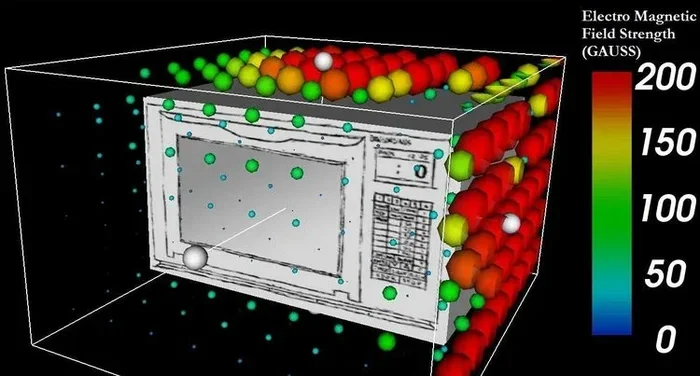
So, can microwave ovens leak radiation? Technically, yes. But the word “leak” can sound alarming. In reality, all microwave ovens leak a tiny amount of radiation. The question is whether that amount is dangerous. And the answer is almost always no.
The FDA microwave regulations set a strict limit. Every microwave oven must emit no more than 5 milliwatts of radiation per square centimeter at a distance of 2 inches from the oven surface. This limit is far below the level that could cause harm. Even a brand-new microwave will leak some radiation. But it will be well within safe radiation levels.
What Causes Microwave Oven Leakage
Most leakage happens for simple, fixable reasons. Here are the most common causes of microwave oven leakage:
- Worn or Damaged Door Seal: Over time, the rubber gasket around the door can crack, warp, or collect food grease. This breaks the tight seal and allows small amounts of radiation to escape.
- Dirt and Food Buildup: Grease and food particles on the door or seal can prevent the door from closing properly. Even a thin layer of grime can create gaps.
- Dented or Damaged Door: A dent in the door or the oven cavity can warp the metal shielding. This creates openings where radiation can escape.
- Old or Faulty Latch: The door latch mechanism ensures the door closes tightly. If the latch is broken or loose, the seal is compromised.
- Damaged Mesh Screen: The mesh on the door can corrode or get punctured. Even a small hole can increase leakage.
How Much Leakage Is Too Much?
The FDA microwave regulations require that all ovens meet the 5 milliwatt per square centimeter limit throughout their lifetime. That includes after years of use. Most ovens leak far less than this maximum. In fact, studies show that even older microwaves typically emit only a fraction of the allowed limit.
To put this in perspective, standing two inches from a leaking microwave is still much safer than standing in direct sunlight. The radiation exposure from a leaking microwave is tiny compared to many everyday sources of energy.
Is Microwave Radiation Dangerous?
This is where many people get confused. The word “radiation” covers a wide range of energy types. Not all radiation is the same. Understanding the difference is key to microwave radiation safety.
Ionizing vs. Non-Ionizing Radiation
Ionizing radiation includes X-rays, gamma rays, and radon. This type of radiation has enough energy to remove electrons from atoms. It can damage cells and DNA. That is why doctors limit your exposure to X-rays.
Non-ionizing radiation includes microwaves, radio waves, and visible light. This type does not have enough energy to damage your DNA. The microwave frequency used in ovens heats food through molecular vibration. It does not make your food radioactive or change its chemical structure in harmful ways.
What the Research Says
Decades of research support the safety of microwave ovens when used properly. The World Health Organization, the FDA, and other health agencies all agree that microwave ovens are safe. They do not pose a health risk when they are in good condition and used according to instructions.
Some people worry about standing near microwave ovens while they run. The amount of radiation you would be exposed to is extremely low. The intensity drops off very quickly with distance. Even standing right next to the oven, the exposure is minimal.
How to Test for Microwave Leakage
If you are concerned about microwave oven leakage, you can test your oven. There are several ways to do this, ranging from simple home methods to professional tools.
DIY Leakage Test
One common home test uses a mobile phone. Place your phone inside the microwave and close the door. Call the phone from another phone. If you hear the ring, your oven may have a leakage issue. If you do not hear anything, the oven is likely blocking the signals properly.
Another simple test involves a microwave leakage detector. These devices are inexpensive and easy to use. You wave the detector around the door seal while the oven is running. The detector measures any radiation levels that escape.
Professional Testing
For the most accurate results, you can hire a professional to test your microwave. They use specialized equipment that can detect even the smallest amounts of leakage. This is a good option if you have an older oven or if you notice any damage to the door or seal.
Microwave Oven Safety Tips
Keeping your microwave in good shape is the best way to ensure safe operation. Here are some practical tips for microwave oven maintenance and safety:
Quick Tips for Safe Microwave Use
- Clean the door seal regularly: Wipe the rubber gasket with a damp cloth to remove grease and food buildup.
- Check for damage: Inspect the door, latch, and mesh screen for cracks, dents, or rust every few months.
- Do not operate a damaged microwave: If the door does not close properly or the seal is broken, stop using it.
- Keep your distance: Stand a few feet away while the microwave is running. The radiation drops off fast with distance.
- Do not run empty: Running a microwave with nothing inside can damage the magnetron and increase leakage risk.
- Use microwave-safe containers: This prevents damage to the oven and reduces the risk of fires or chemical leaching.
- Replace old units: If your microwave is over 10 years old, consider replacing it with a newer model that meets current safety standards.
Common Mistakes That Increase Leakage Risk
Some everyday habits can increase the risk of microwave oven leakage. Avoid these common mistakes:
- Slamming the door: This can dent the oven cavity and misalign the door seal.
- Using abrasive cleaners on the seal: Harsh chemicals can degrade the rubber gasket over time.
- Ignoring warning signs: If you notice sparking, unusual sounds, or the door does not latch properly, get it checked.
- Placing objects on top of the microwave: This can block ventilation and cause overheating, which may damage internal components.
- Using a microwave with a broken latch: The latch is essential for maintaining a proper seal.
Microwave Ovens and Health Concerns
Many people have questions about the long-term effects of using microwave ovens. Let us address some of the most common microwave health concerns.
Does Microwave Cooking Affect Food Nutrition?
Microwave cooking actually preserves more nutrients than many other cooking methods. Because microwave cooking times are shorter, vitamins and minerals are less likely to break down. The microwave radiation heats the food directly without making the food itself radioactive or harmful.
Can Standing Near a Microwave Cause Harm?
The radiation exposure from standing near a functioning microwave is extremely low. The oven’s shielding and door seal are designed to contain the radiation. Even if there is a small amount of leakage, the levels are far below what could cause any health effects.
Are Older Microwaves More Dangerous?
Older microwaves may not meet the same safety standards as newer models. However, even older ovens that are in good condition are generally safe. The key is regular maintenance and prompt repair of any damage. If your oven is very old and showing signs of wear, it may be time to consider a replacement.
Comparison: Microwave Radiation vs. Other Radiation Sources
| Radiation Source | Type | Typical Exposure Level | Health Risk |
|---|---|---|---|
| Microwave Oven (leakage) | Non-ionizing | Below FDA limit (5 mW/cm²) | None at safe levels |
| Sunlight (UV rays) | Non-ionizing / Ionizing | Varies by exposure | Skin damage with prolonged exposure |
| Medical X-rays | Ionizing | Low dose per scan | Minimal risk per scan |
| Cell phone (radiofrequency) | Non-ionizing | Very low | No proven harm at current levels |
| Radon gas | Ionizing | Varies by location | Health risk with long-term exposure |
As you can see from the table, microwave oven leakage is among the lowest-risk sources of radiation in your home. The non-ionizing radiation used in microwaves is fundamentally different from the ionizing radiation found in X-rays or radon gas.
Expert Insights on Microwave Radiation Safety
Health experts and regulatory agencies agree on the safety of modern microwave ovens. The FDA monitors microwave oven testing and enforces strict emission limits. The World Health Organization has reviewed the available evidence and found no health risks from properly functioning microwave ovens.
Experts recommend a simple approach. Keep your microwave clean and in good repair. Do not use a damaged oven. And do not worry excessively about radiation exposure from a functioning unit. The benefits of microwave cooking convenience and efficiency far outweigh the minimal risks when the oven is maintained properly.
When to Replace Your Microwave
Knowing when to replace your microwave is an important part of household appliance safety. Here are signs that it may be time for a new oven:
- The door seal is visibly damaged or worn beyond repair.
- The door does not close or latch properly.
- The oven is more than 10 years old and has not been regularly maintained.
- You notice sparking, arcing, or unusual sounds during operation.
- A leakage test shows radiation levels above the FDA limit.
- The oven has been physically damaged, such as from an impact or fire.
Replacing an old or damaged microwave is a smart investment in your kitchen food heating safety. Newer models are more energy-efficient and come with improved microwave shielding technology.
Conclusion
So, can microwave ovens leak radiation? Yes, but only in tiny amounts that are well within safe limits. Modern microwave ovens are designed with multiple safety features. The FDA microwave regulations ensure that every oven sold meets strict radiation emission standards. As long as your oven is in good condition and properly maintained, there is very little to worry about.
Understanding microwave radiation safety helps you use your oven with confidence. Clean the door seal, inspect for damage, and replace old units when needed. These simple steps go a long way in keeping your kitchen safe.
The bottom line is straightforward. Microwave ovens are one of the safest and most convenient appliances in your home. The non-ionizing radiation they use is not the kind that poses health risks. Enjoy the convenience of your microwave without worry, as long as you keep it well-maintained and use it properly.
Take a few minutes today to check your microwave door seal and give it a quick clean. That small effort goes a long way toward ensuring your microwave oven maintenance stays on track and your kitchen remains a safe place for everyone.
Frequently Asked Questions
Can standing near a microwave oven harm you?
No, standing near a functioning microwave oven is safe. The radiation levels that escape are far below the FDA safety limits. The intensity of any leakage drops off quickly with distance, so even standing close poses no health risk.
How do I know if my microwave is leaking radiation?
You can use a microwave leakage detector or the phone test to check for leakage. Signs of a problem include a damaged door seal, a door that does not close properly, or visible damage to the oven cavity. If you suspect leakage, stop using the oven and get it inspected.
Is microwave radiation the same as X-ray radiation?
No, they are completely different. Microwave radiation is non-ionizing, which means it does not have enough energy to damage DNA. X-ray radiation is ionizing and can damage cells at high exposure levels. This is a fundamental difference that makes microwave ovens safe for everyday use.
Does old microwave radiation differ from new ones?
Older microwaves may not meet the same strict safety standards as modern ones. However, even older ovens that are in good condition are generally safe. The key is regular maintenance and replacing any unit that shows signs of damage or wear.
Can microwave radiation make food unsafe to eat?
No, microwave radiation does not make food radioactive or unsafe. It simply heats water molecules in the food. The food retains its nutritional value, and there are no harmful chemical changes caused by the microwave process when proper containers are used.
What should I do if my microwave door seal is damaged?
If the door seal is damaged, stop using the microwave immediately. A broken seal can increase radiation leakage beyond safe levels. Have the oven repaired by a qualified technician or replace it with a new unit that meets current safety standards.
=== CONCLUSION ===
Can microwave ovens leak radiation? Yes, but the amounts are tiny and well within safe limits set by the FDA. Your microwave is designed with multiple layers of protection, from the metal cavity to the door mesh screen and rubber seal. As long as you keep the oven clean, inspect it regularly, and replace it when it shows signs of wear, you can use it with complete confidence. Microwave radiation safety is well understood and well regulated. Enjoy the convenience and efficiency of your microwave oven without worry.