The Best Water For Coffee Maker To Improve Your Brew
The water you use in your coffee maker matters more than you think. Choosing the right water for coffee maker can transform the flavor, aroma, and longevity of your machine. This guide covers the best water types, practical tips, and common mistakes to help you brew better coffee every single day.
You probably think about your coffee beans, your grind size, or your brew time. But the water for coffee maker often gets overlooked. And yet, water makes up more than 98 percent of every cup you brew. If your water tastes bad, your coffee will too. It is really that simple.
Whether you use a drip machine, a single-serve pod brewer, or a fancy espresso setup, the water you pour in sets the foundation for every cup. Bad water leads to flat flavors, bitter notes, or even a funky smell that no amount of good beans can fix. On top of that, poor water quality can gunk up your machine and shorten its life.
This guide breaks down everything you need to know about picking the right water for coffee maker. We will cover the different types of water, what to look for, and how to keep your brewer running its best. By the end, you will know exactly what kind of water to use and why it makes such a big difference.
Key Takeaways
- Water quality directly impacts coffee taste: Minerals, chlorine, and impurities in your water change how your coffee flavors.
- Filtered water is the best all-around choice: It removes bad tastes and excess minerals without stripping everything away.
- Hard water damages your machine over time: Mineral buildup causes scale, clogs, and reduces the lifespan of your coffee maker.
- Distilled water is too pure on its own: It lacks minerals that help extract flavor, so it needs to be balanced.
- Regular maintenance with clean water keeps your brewer running smoothly: Descaling and proper water habits make a big difference.
📑 Table of Contents
- Why Water Quality Matters So Much for Coffee
- Types of Water You Can Use for Brewing
- What to Look for in the Best Water for Coffee Maker
- How to Choose the Best Water Setup for Your Coffee Maker
- How Clean Water Protects Your Coffee Maker
- Common Mistakes People Make with Coffee Maker Water
- Expert Insights on Water and Coffee Brewing
- Final Thoughts on Choosing the Best Water for Your Coffee Maker
Why Water Quality Matters So Much for Coffee
Water is not just a filler in your coffee. It is the main ingredient. Every flavor compound in your coffee beans gets extracted through water. The type of water you use controls how well those flavors come out. If your water is full of chlorine or heavy minerals, it can mask the natural sweetness and brightness of your beans.
How Minerals Affect Extraction
Water contains dissolved minerals like calcium, magnesium, and sodium. These minerals play a big role in coffee extraction. Magnesium, for example, helps pull out bright, fruity flavors. Calcium tends to bring out heavier, bolder notes. Too much of either mineral, though, and you get a flat or chalky taste.
The Specialty Coffee Association actually has guidelines for water quality. They recommend a total dissolved solid (TDS) level between 75 and 250 parts per million. Water that is too soft or too hard both cause problems. Soft water under-extracts, giving you a weak, sour cup. Hard water over-extracts, leading to bitterness and scale buildup inside your machine.
The Role of Chlorine and Chemicals
Most tap water contains chlorine or chloramine to kill bacteria. These chemicals are great for public health but terrible for coffee. They add a chemical taste and smell that no one wants in their morning cup. Even small amounts of chlorine can throw off the balance of your brew and make it taste off.
Beyond chlorine, tap water can contain trace metals, pesticides, and other contaminants. These impurities do not just affect taste. Over time, they build up inside your coffee maker and cause damage. That is why choosing the right water for coffee maker is not just about flavor. It is also about protecting your investment.
Types of Water You Can Use for Brewing
Not all water is created equal. There are several options available, and each one has pros and cons. Let us walk through the most common types so you can decide what works best for your setup.
Tap Water
Tap water is the most convenient option. It costs nothing extra, and most people just use it straight from the sink. But tap water quality varies wildly depending on where you live. Some areas have soft, clean water that brews great coffee. Others have hard, heavily treated water that ruins every cup.
If you use tap water, consider getting a simple water test kit. These are cheap and tell you a lot about what is in your water. You want to know the hardness level, TDS, and chlorine content. If your tap water scores well on all three, you might be fine using it as-is.
Filtered Water
Filtered water is widely considered the best choice for coffee brewing. It removes chlorine, sediment, and many contaminants while keeping beneficial minerals. This balanced profile leads to clean, bright, and well-rounded coffee flavors.
You can filter water in several ways:
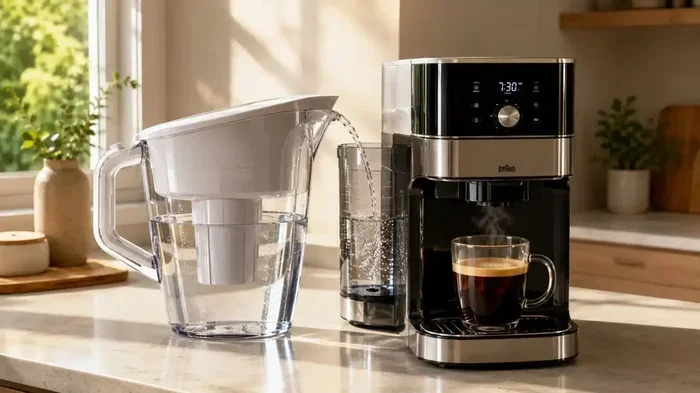
- Pitcher filters: Brands like Brita and PUR are affordable and easy to use. They work great for basic chlorine and taste removal.
- Faucet-mounted filters: These attach directly to your tap and provide filtered water on demand.
- Under-sink filtration systems: These offer the most thorough filtration and connect directly to your kitchen faucet.
- Built-in coffee maker filters: Some machines come with charcoal water filters that clean the water before brewing.
For most home brewers, a simple pitcher filter or a built-in coffee maker filter does the job perfectly. It is an easy upgrade that makes a noticeable difference in cup quality.
Distilled Water
Distilled water goes through a boiling and condensation process that removes nearly all minerals and impurities. On paper, this sounds ideal. But in practice, distilled water is actually too pure for brewing coffee. It lacks the minerals needed for proper extraction, which means your coffee can taste flat and lifeless.
Some coffee experts do recommend blending a small amount of distilled water with a mineral supplement. This gives you control over exactly what is in your water. But for everyday brewing, it is usually not the most practical choice.
Bottled Spring Water
Spring water comes from natural sources and contains a balanced mix of minerals. It is a solid option if your tap water is very hard or heavily treated. Look for spring water with a moderate TDS level, ideally in the 100 to 150 range. Some popular bottled spring waters work great for coffee and are widely available.
Just be careful with mineral water or sparkling water. These often have too much sodium or carbonation, which throws off your brew. Stick with still spring water for the best results.
Reverse Osmosis Water
Reverse osmosis (RO) water goes through a multi-stage filtration process that removes almost everything. Like distilled water, it is very pure but lacks minerals. RO water works well for coffee if you add a remineralization cartridge or blend it with a small amount of tap water. This restores the mineral balance needed for good extraction.
RO systems are more expensive upfront but produce excellent results. They are a great choice if you live in an area with very hard or contaminated water.
What to Look for in the Best Water for Coffee Maker
Now that you know the main water types, how do you pick the right one? Here are the key factors to consider when choosing water for coffee maker brewing.
Water Hardness
Water hardness measures the concentration of calcium and magnesium. Soft water has low mineral content, while hard water has high levels. For coffee brewing, moderately soft to moderately hard water works best. Very hard water causes scale buildup that clogs your machine and reduces efficiency.
If you are not sure about your water hardness, check with your local water utility or use a home test strip. Most areas fall somewhere between soft and hard, and a simple filter can fix minor issues.
Total Dissolved Solids (TDS)
TDS measures all the dissolved particles in water, including minerals, salts, and metals. The ideal TDS for coffee brewing is between 75 and 250 ppm. Water below 75 ppm tastes flat and under-extracts. Water above 250 ppm tastes harsh and can leave a mineral residue in your cup.
A cheap TDS meter lets you test your water at home. These small devices are very handy and give you instant readings. If your TDS is too high or too low, you can adjust by filtering or blending water sources.
pH Level
The pH level tells you how acidic or alkaline your water is. Neutral water sits at a pH of 7. For coffee brewing, slightly acidic water in the 6.5 to 7.5 range works best. Water that is too alkaline (above 8) tends to produce bitter, dull coffee. Water that is too acidic (below 6) can taste sour and thin.
Most municipal water supplies fall within a safe pH range. But if you use well water or live in an area with hard water, the pH might be off. A simple pH test strip can help you check this at home.
Chlorine and Odor
Your water should be odorless and free of chemical smells. If you can smell chlorine when you fill your coffee maker reservoir, that smell will show up in your coffee. A good carbon filter removes chlorine effectively and improves the overall taste of your brew.
Trust your nose here. If the water smells off, your coffee will too. Do not let bad-smelling water ruin a good bag of beans.
How to Choose the Best Water Setup for Your Coffee Maker
Choosing the right water setup depends on your budget, your machine, and your local water quality. Here are some practical scenarios to help you decide.
Budget-Friendly Setup
If you want to keep things simple and affordable, start with a basic carbon filter. A Brita pitcher or a built-in coffee maker filter costs very little and removes the most common culprits like chlorine and sediment. Pair this with good quality coffee beans, and you will notice a real improvement in your cup.
You can also run your tap water through a quick smell and taste test before brewing. If it passes both tests, you are probably in good shape. Many people brew excellent coffee with nothing more than a basic filter and clean tap water.
Mid-Range Setup
For a noticeable upgrade, consider an under-sink filtration system or a countertop water filter. These options provide better filtration than basic pitchers and give you filtered water on demand. They remove more contaminants and balance mineral content more effectively.
A mid-range setup is ideal if you drink several cups a day and want consistent results. It also protects your coffee maker from mineral buildup better than a basic filter alone.
Premium Setup
If you are a serious coffee enthusiast, invest in a reverse osmosis system with a remineralization stage. This gives you complete control over your water chemistry. You can adjust TDS, pH, and mineral levels to match your personal taste preferences perfectly.
Some coffee professionals even use third-party water testing labs to analyze their water and fine-tune their setup. But for most home brewers, a good RO system with a remineralization filter is more than enough.
Quick Tip: No matter which setup you choose, change your filters regularly. A clogged or expired filter does more harm than good. Follow the manufacturer’s replacement schedule to keep your water clean and your coffee tasting fresh.
How Clean Water Protects Your Coffee Maker
Using good water for coffee maker brewing is not just about taste. It also keeps your machine healthy and extends its lifespan. Let us look at how clean water protects your brewer from the inside out.
Preventing Scale and Mineral Buildup
Hard water leaves mineral deposits inside your coffee maker. These deposits, called scale, build up on the heating element, inside the tubes, and around the valves. Over time, scale reduces heating efficiency, slows brewing, and can eventually clog your machine completely.
Scale buildup is one of the most common reasons coffee makers break down early. It also forces your machine to work harder, which increases energy use and raises your electricity bill. Using filtered or softened water dramatically reduces scale formation.
If you already have scale buildup, you can remove it by decalcifying your coffee maker with a descaling solution or white vinegar. But prevention is always easier than fixing a problem after it starts.
Reducing Clogs and Blockages
Minerals, sediment, and other impurities in your water can clog the small passages inside your coffee maker. This is especially true for single-serve machines with narrow needle holes and internal tubing. Clogs lead to slow brewing, uneven extraction, and sometimes complete machine failure.
Filtered water removes most of the particles that cause clogs. It keeps the internal components clean and allows water to flow freely through the system. This means fewer maintenance headaches and more reliable brewing every day.
Extending the Life of Internal Parts
Beyond scale and clogs, poor water quality corrodes and damages internal parts over time. Metal components, rubber seals, and plastic fittings all suffer when exposed to contaminated water. Using clean, balanced water helps preserve these parts and keeps your machine running smoothly for years.
A well-maintained coffee maker with good water habits can easily last 5 to 10 years or more. The water you use plays a huge role in that timeline. Think of clean water as an investment in the longevity of your machine.
Common Mistakes People Make with Coffee Maker Water
Even coffee lovers who care about quality sometimes make water-related mistakes. Here are the most common ones to avoid.
Using Water That Is Too Hard
Hard water is the number one enemy of coffee makers. It causes scale, affects flavor, and shortens machine life. If you live in a hard water area and do not filter your water, you are setting yourself up for problems. Check your water hardness and take action if it is too high.
Using Distilled or RO Water Without Remineralizing
Distilled and RO water are too pure on their own. They strip away the minerals that help extract flavor from coffee grounds. The result is a flat, underwhelming cup. If you use distilled or RO water, add a remineralization filter or blend it with a small amount of tap water to restore balance.
Ignoring the Reservoir Cleaning
Even with good water, your coffee maker reservoir can get dirty. Old water sits in the tank and collects bacteria, mold, and mineral deposits. Clean your reservoir regularly with warm, soapy water and a rinse cycle. This keeps your machine hygienic and your coffee tasting fresh.
Using Hot Water from the Tap
Some people fill their coffee maker with hot tap water to save time. This is a bad idea. Hot water dissolves more contaminants from your pipes and can contain higher levels of lead or other metals. Always use cold, filtered water and let the machine heat it properly.
Overlooking Water Filter Replacement
Water filters do not last forever. They become less effective as they saturate with trapped contaminants. If you do not replace your filter on schedule, it stops working and may even release trapped particles back into your water. Set a reminder to swap out your filter every 2 months or as the manufacturer recommends.
Expert Insights on Water and Coffee Brewing
Professional baristas and coffee scientists agree that water quality is one of the most underrated factors in great coffee. Many specialty coffee shops invest in advanced water filtration systems precisely because they know how much it affects the final cup.
One expert tip from the coffee world is the 60:40 rule. This means using 60 percent water and 40 percent coffee grounds by weight for a balanced brew. But even the perfect ratio cannot save bad water. Start with clean, well-balanced water first, then fine-tune your ratios and grind size from there.
Another insight worth noting is that different coffee origins pair better with different water profiles. Light roasts from Africa tend to shine with slightly softer water that highlights their fruity and floral notes. Dark roasts from Brazil or Indonesia often benefit from slightly harder water that brings out their bold, chocolatey character. Experimenting with your water can help you discover new dimensions in your favorite beans.
If you are curious about how water affects other aspects of your coffee routine, you might enjoy learning how long coffee beans last after grinding, since freshness and water quality together determine your final cup. Also, if you love iced coffee, check out how to make your own Dunkin iced coffee for tips on using great water in cold brews too.
Final Thoughts on Choosing the Best Water for Your Coffee Maker
The best water for coffee maker brewing is clean, balanced, and free of harsh chemicals and excess minerals. Filtered water hits the sweet spot for most home brewers. It removes the bad stuff while keeping the minerals that help extract great flavor. Whether you use a simple pitcher filter or a full RO system, the key is to be intentional about your water choice.
Remember that your coffee maker is a long-term investment. The water you pour into it every day directly affects both your cup quality and the machine’s lifespan. Take a few minutes to understand your water quality, choose the right filtration method, and maintain your system regularly. The payoff is better-tasting coffee and fewer repair headaches down the road.
Start with one simple change today. Try a new filter, test your water, or switch to a different water source. Small adjustments lead to big improvements. Your morning coffee deserves better water, and once you taste the difference, you will never go back.
Frequently Asked Questions
Can I use tap water in my coffee maker?
Yes, you can use tap water if it is clean and tastes good. However, hard or heavily chlorinated tap water can affect coffee flavor and cause mineral buildup in your machine. A simple carbon filter can improve tap water quality significantly.
Is filtered water better than bottled water for coffee?
Filtered water is generally better because it removes chlorine and contaminants while keeping beneficial minerals. Bottled spring water can work well too, but it varies by brand. Avoid mineral water with high sodium content for brewing.
How often should I clean my coffee maker with water?
You should run a cleaning cycle with fresh water and descaling solution every 1 to 3 months. Daily habits like emptying the reservoir and using filtered water also help keep your machine clean between deep cleans.
Does water temperature matter as much as water quality?
Both matter. The ideal brewing temperature is between 195 and 205 degrees Fahrenheit. But even perfect temperature cannot fix bad water. Water quality and temperature work together to produce the best cup of coffee.
Can I use a coffee grinder for wet grinding?
Generally, no. Most coffee grinders are designed for dry beans only. If you are curious about wet grinding for other purposes, you can learn more about it here. However, for coffee brewing, always use dry grounds with clean water for the best results.
What happens if I use hard water in my coffee maker?
Hard water causes mineral scale to build up inside your machine. This leads to clogs, reduced heating efficiency, and bitter-tasting coffee. Over time, heavy scale can damage internal components and shorten the life of your coffee maker significantly.