Why Is My Pan Warping In The Oven And How To Stop It
Pan warping happens when your baking pan or skillet bends and buckles inside the oven due to uneven heat and thermal shock. Understanding the real causes behind why your pan is warping in the oven helps you protect your cookware and get better cooking results. This guide covers the top causes, material differences, prevention tips, and fixes so your pans stay flat and perform their best.
You pull your favorite pan out of the oven and notice something odd. The bottom is no longer flat. It rocks back and forth like a tiny boat on the kitchen counter. This is called pan warping and it happens to almost every home cook at some point.
Why is my pan warping in the oven? The answer comes down to heat, metal, and how you use your cookware. When metal heats up too fast or cools down too quickly, it bends. The good news is that you can prevent this from happening and even fix minor damage. In this guide, we will walk you through everything you need to know about pan warping causes, how to stop it, and when it is time to let go of a warped pan.
Whether you use a stainless steel pan, a nonstick pan, or a thin aluminum sheet pan, this article has practical tips that work. You do not need to be a professional chef to keep your cookware flat and functional. Let us dive in.
Key Takeaways
- Thermal shock is the #1 cause: Sudden temperature changes make metal expand and contract unevenly, leading to warping.
- Thin pans warp faster: Lightweight pans lack the thickness needed to handle high oven heat without bending.
- Material matters a lot: Thicker materials like stainless steel and cast iron resist warping far better than thin aluminum.
- Prevention is simple: Preheating gradually, using the right size pan, and avoiding cold water on hot pans stops most warping.
- You can fix minor warping: A flat surface and gentle hammering can restore slightly warped pans.
- Replace heavily warped pans: Deeply warped pans cause uneven cooking and should be replaced for safety and performance.
📑 Table of Contents
What Causes Pan Warping In The Oven
The most common reason pans warp comes down to one word: thermal shock. This happens when a pan goes from a cold surface to a very hot oven or the other way around too fast. The metal expands on one side faster than the other. That uneven expansion creates stress. Over time, the stress causes the pan to bend and buckle.
Here are the main warping causes you should know about:
- Sudden temperature changes: Placing a cold pan on a hot stove or moving a hot pan to a cold wet surface shocks the metal.
- Uneven heating: Ovens do not always distribute heat evenly. Hot spots can cause one side of the pan to expand faster.
- Thin or lightweight pans: Thin metal cannot handle rapid temperature swings. It simply does not have enough mass to stay stable.
- Oversized pans: A pan that is too big for the oven or burner heats unevenly, which increases the chance of bending.
- Rapid cooling: Running cold water over a hot pan is one of the fastest ways to cause warping.
Think of metal like a piece of clay. If you heat one side quickly, that side expands while the other side stays the same. The result is a bend. The same thing happens inside your oven every single time you cook at high temperatures.
How Oven Temperature Plays A Role
Your oven temperature matters more than you might think. When you set the oven to 450 degrees or higher, the metal in your pan heats up fast. If the pan is thin, it heats unevenly. The center gets hot before the edges. This uneven heat distribution creates pressure points that push and pull the metal in different directions.
Most oven warping happens between 400 and 500 degrees Fahrenheit. That is the range where many people roast vegetables, bake pizzas, and cook sheet pan dinners. If your pan is not built for high heat, it will struggle in this temperature range.
How Different Pan Materials React To Heat
Not all pans are created equal. The material your pan is made from plays a huge role in how well it handles oven heat. Some materials resist warping very well. Others warp almost every time you use them at high temperatures.
Aluminum Pans
Aluminum is lightweight and heats up quickly. That makes it great for baking. But thin aluminum pans warp very easily. A basic aluminum baking sheet from the dollar store will not last long in a hot oven if you use it every day. The metal simply does not have the strength to stay flat under high heat.
Thicker aluminum pans with a reinforced core do a better job. Look for pans labeled as hard-anodized aluminum. These are much more durable and resist warping prevention challenges better than standard thin aluminum.
Stainless Steel Pans
Stainless steel cookware is one of the best choices for oven use. It is heavier than aluminum and handles temperature changes much better. A good quality stainless steel pan with a thick bottom will stay flat even at high oven temperatures.
The key is thickness. A thin stainless steel pan can still warp. But a pan with a multi-ply or bonded bottom distributes heat evenly and resists bending. This is why most professional kitchens use stainless steel pans for oven work.
Cast Iron Pans
Cast iron is extremely heavy and very hard to warp. It can handle high oven temperatures without bending. In fact, a cast iron skillet will almost never warp because the metal is so thick and dense.
The downside is that cast iron is heavy and takes a long time to heat up. But for oven use, it is one of the most reliable materials you can choose. If warping is a concern for you, cast iron is a solid option.
Nonstick Pans
Most nonstick pans have aluminum cores with a coating on top. The problem is that the coating limits how hot you can go. Many nonstick pans are not safe above 500 degrees. And because the base is often thin, these pans are very prone to warping.
If you want a nonstick pan that can handle the oven, look for ones rated for high temperatures with a thick base. Even then, treat them gently to avoid pan damage.
Copper Pans
Copper pans heat up fast and cool down quickly. They are beautiful and perform well. But they are also expensive and can warp if they are thin. High-quality copper pans with a stainless steel core hold up much better in the oven.
| Material | Warping Risk | Oven Safe Temp | Best For |
|---|---|---|---|
| Thin Aluminum | High | Up to 450F | Occasional baking |
| Hard-Anodized Aluminum | Medium | Up to 500F | Everyday cooking |
| Stainless Steel | Low | Up to 600F | Roasting and baking |
| Cast Iron | Very Low | Up to 700F | High-heat cooking |
| Nonstick | Medium to High | Up to 500F | Low-heat oven use |
| Copper | Medium | Up to 500F | Specialty cooking |
Signs Your Pan Is Warping
It is not always obvious that your pan is warping right away. Sometimes the change happens slowly over months of use. Here are the signs to watch for:
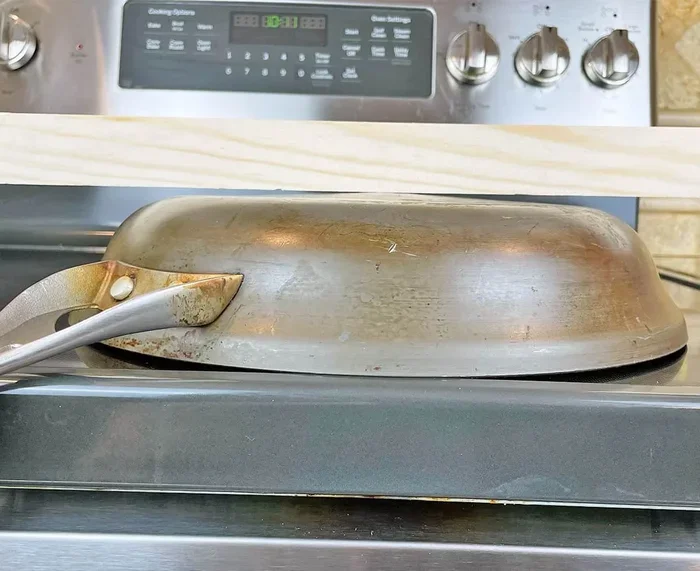
- The pan rocks on a flat surface: Set your pan on the counter. If it wobbles or rocks, the bottom is no longer flat.
- Food cooks unevenly: If one side of your cookies burns and the other stays pale, your pan is probably warped.
- Oil or liquid pools on one side: A flat pan should hold liquid evenly. If it pools to one side, the base is uneven.
- You hear popping sounds in the oven: A warped pan can make noise as it expands and contracts during cooking.
- The pan slides around on the oven rack: A flat pan sits snugly on the rack. A warped one moves and shifts.
If you notice any of these signs, your pan is likely warped. The question is whether it is mild or severe. A slightly warped pan can still be used carefully. A badly warped pan should be replaced.
How To Prevent Pan Warping
The best way to deal with a warped pan is to stop it from happening in the first place. Warping prevention is much easier than trying to fix a damaged pan. Here are the most effective tips to keep your pans flat and in great shape.
1. Preheat Your Oven Before Adding The Pan
Do not place a cold pan into a hot oven. The sudden heat causes thermal shock. Instead, put your pan in the oven before you turn it on. Then let both the oven and the pan heat up together slowly. This gives the metal time to expand evenly.
2. Avoid Rapid Temperature Changes
Never run cold water over a hot pan. Never place a hot pan on a cold or wet surface. Let your pan cool down naturally on a dry towel or trivet before washing it. This one habit alone will dramatically reduce warping.
3. Choose The Right Pan Thickness
Thicker pans handle heat better. When buying new cookware, look for pans with a heavy bottom. A heavy gauge pan costs more but lasts much longer. It resists warping and provides better even heat distribution for your food.
4. Use The Right Size Pan For Your Oven
A pan that is too big for your oven can touch the top or sides. This blocks heat flow and creates uneven temperatures. Use a pan that fits comfortably inside your oven with space around the edges for air to circulate.
5. Place Pans On Center Oven Racks
The center rack gets the most even heat in most ovens. When you place your pan on the center rack, it heats more uniformly. This reduces the hot spots that cause warped baking sheet problems.
6. Do Not Overheat Empty Pans
Heating an empty pan at high temperatures for a long time can damage the metal. Always add food or oil before heating. This helps regulate the temperature and protects the pan from extreme heat stress.
Quick Tips To Protect Your Pans
- Always let pans cool naturally before washing.
- Use oven mitts to handle hot pans carefully.
- Store pans stacked with paper towels between them to prevent scratches.
- Hand wash pans when possible to preserve the coating and structure.
- Rotate your pans in the oven halfway through cooking for even exposure.
Can You Fix A Warped Pan
If your pan is already warped, you might be able to fix it. The success of the fix depends on how badly the pan is bent and what material it is made from.
Method One: The Towel And Flat Surface Technique
This method works best for mildly warped pans. Lay a thick towel on a hard flat surface like a concrete floor or a sturdy table. Place the pan upside down on the towel. Gently press down on the bulging area with your hand or a rubber mallet. Go slowly. Do not hit too hard or you will damage the pan further.
Check the pan after each press. You want to flatten it gradually. Forcing it back into shape too quickly can crack the metal or ruin the coating on a nonstick pan.
Method Two: The Heat And Cool Method
For this method, you heat the warped pan on a stove over low heat. The metal becomes soft and flexible. Then you place the pan upside down on a flat surface and apply gentle pressure. The warm metal is easier to bend back into shape.
Be careful with this method on nonstick pans. High heat can damage the nonstick coating. Only use this on stainless steel or cast iron pans.
Method Three: Professional Flattening
If the pan is valuable or you are not comfortable fixing it yourself, take it to a professional. Some cookware shops and metalworkers offer flattening services. They use specialized tools to press the pan back flat without causing further damage.
Keep in mind that a fix is not always permanent. A pan that has warped once may warp again. If the warping is severe, it is usually better to replace the pan.
When To Replace A Warped Pan
Not every warped pan can be saved. Here are the signs that it is time to let go and buy a new one:
- The pan rocks severely: If the pan wobbles so much that it cannot sit flat on the stove or in the oven, it is done.
- The warping keeps coming back: If you fix it and it warps again after just one or two uses, the metal has lost its structural integrity.
- Food burns on one side every time: Uneven cooking is not just frustrating. It can also be unsafe if food does not cook to the right temperature.
- The pan is scratched or damaged inside: A warped pan with a damaged surface is a health concern. Bacteria can hide in scratches and coatings that are peeling.
- The pan is old and thin: Pans that have been used for years become thinner over time. A thin old pan is a warping waiting to happen.
When you replace a warped pan, choose one made for durability. Look for heavy gauge stainless steel or cast iron options. These materials last longer and resist warping much better than thin alternatives.
How To Choose A Warping Resistant Pan
When shopping for a new oven-safe pan, keep these things in mind:
- Check the base thickness: Thicker bases resist warping better. Look for pans with a base that is at least 4mm thick.
- Look for multi-ply construction: Pans with multiple layers of metal bonded together distribute heat more evenly.
- Read reviews: Other cooks will often mention if a pan warps after a few uses. Check reviews before you buy.
- Check the oven-safe rating: Make sure the pan is rated for the temperatures you plan to use.
- Choose a trusted brand: Quality brands invest in better materials and construction. They are less likely to warp.
Expert Insights On Pan Warping
Professional chefs and cookware experts agree on a few key points about pan warping in the oven. First, thermal shock is the enemy of every pan. Second, thickness is your best defense. Third, proper storage and care extend the life of your cookware significantly.
“The number one reason pans warp is rapid temperature change,” says cookware expert Mark Bittman. “Let your pan heat up and cool down gradually and it will last for years.”
Another expert tip from professional kitchens is to avoid stacking heavy items on top of pans during storage. The weight can slowly bend the pan over time, especially if the pan is already slightly warped from previous use.
Experts also recommend seasoning your stainless steel pans. A thin layer of oil helps protect the surface and can reduce the friction that contributes to uneven wear over time.
Final Thoughts
Why is my pan warping in the oven is a question many home cooks ask. The answer is usually simple. It comes down to heat, material, and how you treat your pans. Thermal shock from sudden temperature changes is the biggest culprit. Thin pans warp more easily than thick ones. And some materials like aluminum are more vulnerable than stainless steel or cast iron.
The good news is that you have the power to prevent most warping. Preheat your oven first. Let pans cool naturally. Choose thicker, higher quality cookware. And treat your pans with care every single time you use them.
If your pan is already warped, try the fix methods we shared. For mild warping, the towel and flat surface technique often works. For severe warping, replacement is the safest choice. A flat, stable pan cooks food more evenly and lasts much longer.
Take care of your cookware and it will take care of you. Your pans are an investment in better cooking. Treat them well and they will serve you for years to come.
Frequently Asked Questions
Can a warped pan cause uneven cooking?
Yes, absolutely. A warped pan does not sit flat on the stove or oven rack. This means heat does not spread evenly across the bottom. Food on one side may burn while the other side stays undercooked. A flat pan ensures even cooking and better results every time.
Is it safe to use a warped pan in the oven?
A slightly warped pan is usually safe to use but may cook unevenly. A severely warped pan can rock on the oven rack and cause spills or uneven heat exposure. If the warping is bad, it is best to replace the pan for safety and cooking quality.
How do I stop my baking sheet from warping?
To prevent warping, avoid placing a cold baking sheet into a hot oven. Let it heat up gradually. Also, avoid running cold water over a hot sheet. Choose a thicker baking sheet made of stainless steel or heavy-gauge aluminum for the best results.
Does warping affect the nonstick coating?
Yes, warping can damage nonstick coatings. When a pan bends, the coating can crack or peel. This not only ruins the nonstick surface but can also expose the base metal. Once the coating is damaged, the pan should be replaced to avoid health concerns.
What is the best pan material to avoid warping?
Cast iron and thick stainless steel are the best materials to avoid warping. Both are heavy and durable. They handle high oven temperatures without bending. If you want a lighter option, look for hard-anodized aluminum with a thick bonded base.
Can you put a warped pan back in the oven after fixing it?
You can, but only if the fix was successful and the pan sits flat. Test it on a flat countertop before using it in the oven. If it still wobbles, the fix did not work and the pan should be replaced. Using a pan that is not flat can cause cooking problems and spills.
=== CONCLUSION ===
Why is my pan warping in the oven is a common problem with clear solutions. Thermal shock, thin materials, and rapid temperature changes are the main causes. By choosing the right pan material, preheating gradually, and avoiding sudden temperature shifts, you can prevent most warping before it starts.
If your pan is already warped, try the gentle fixing methods we covered. For severely damaged pans, replacement is the smart choice. Invest in quality stainless steel pans or cast iron cookware for long-lasting performance. Your kitchen deserves cookware that stays flat, cooks evenly, and lasts for years.
Start taking better care of your pans today. Your future self will thank you with better meals and fewer kitchen frustrations.