Delonghi Coffee Machine Manual Descale Made Simple
Descaling your Delonghi coffee machine is one of the most important maintenance tasks you can do. This guide walks you through the manual descale process step by step so you can keep your machine in top shape. You will learn when to descale, what supplies you need, and how to avoid common mistakes that damage your machine.
Key Takeaways
- Regular descaling removes limescale buildup that can ruin your coffee taste and damage internal parts.
- Delonghi machines have a built-in descale indicator that tells you exactly when it is time to clean.
- You only need three things to perform a manual descale: water, a descaling solution, and about 30 minutes of your time.
- Skipping descaling leads to weaker brew temperatures and eventually a broken machine that needs expensive repairs.
- Using vinegar or citric acid works as a budget-friendly alternative to store-bought descaling solutions.
- Rinsing thoroughly after descaling is just as important as the cleaning cycle itself.
📑 Table of Contents
- Why Descaling Your Delonghi Coffee Machine Matters
- How Often Should You Descale Your Delonghi?
- What You Need Before Starting the Manual Descale
- Step-by-Step Guide to Delonghi Manual Descale
- Common Mistakes People Make When Descaling
- Tips for Keeping Your Delonghi Machine in Top Shape
- Final Thoughts on Delonghi Manual Descaling
Why Descaling Your Delonghi Coffee Machine Matters
Every morning, you rely on your Delonghi coffee machine to deliver a perfect cup. But over time, something invisible starts building up inside. Minerals from your water cling to the heating elements and tubes. This buildup is called limescale.
Limescale is the silent killer of coffee machines. It does not just affect taste. It actually blocks water flow and forces your machine to work harder. That means higher energy bills and a shorter lifespan for your beloved appliance.
When you perform a Delonghi coffee machine manual descale, you are essentially flushing out all that mineral deposits. Think of it like changing the oil in your car. You would never skip an oil change, right? Your coffee machine deserves the same care.
The good news is that descaling a Delonghi is surprisingly simple. You do not need any special tools or technical skills. In fact, once you do it a couple of times, it becomes second nature. Let us walk through everything you need to know.
If you also want to make amazing iced coffee at home after descaling, check out our guide on how to make your own Dunkin iced coffee for delicious recipes.
How Often Should You Descale Your Delonghi?
Most Delonghi machines come with a descale light or indicator on the display. This light will flash when the machine detects mineral buildup. Typically, this happens every two to three months for regular users.
However, several factors can change how often you need to descale:
- Water hardness in your area — Hard water means more minerals. You may need to descale monthly.
- How often you use the machine — Daily heavy use speeds up mineral buildup.
- The type of water you use — Filtered water slows down limescale but does not stop it completely.
- Your machine model — Some Delonghi models have larger water reservoirs and different internal pathways.
A good rule of thumb is to descale at least every three months. If you live in a hard water area, go ahead and do it every six to eight weeks. Your machine will thank you with better-tasting coffee and fewer repair bills.
For comparison with other machine types, here is how descaling frequency looks across popular brands:
- Delonghi (manual descale): Every 2-3 months
- Keurig (decalcify): Every 3-6 months depending on usage
- Nespresso: Every 6 months or after 600 capsules
Some people wonder if they can just ignore the descale light. The answer is no. Ignoring it will lead to reduced water flow, hotter-than-normal brewing temperatures, and eventually a machine that will not turn on at all. The coffee machine maintenance habit pays off in the long run.
What You Need Before Starting the Manual Descale
Before you begin your Delonghi coffee machine manual descale, gather everything you need. This way, you will not have to stop halfway through the process.
Supplies Checklist
- Delonghi descaling solution or a homemade alternative like white vinegar or citric acid
- Clean, fresh water — about 1 liter for a full cycle
- A large container or tray to catch the liquid that comes out
- A clean cloth for wiping down the exterior
- Your Delonghi user manual (optional but helpful for model-specific steps)
Most Delonghi machines work with their own branded descaling solution. This is the safest option because it is specially formulated for the internal components. However, many people successfully use white vinegar or citric acid. Both are affordable and easy to find at any grocery store.
If you choose vinegar, mix it with equal parts water. For citric acid, use about one tablespoon per liter of water. These homemade solutions work just as well as the store-bought version for most machines.
Make sure your machine is cold and turned off before you start. Never run a descaling cycle on a hot machine. It can cause uneven mixing and reduce the effectiveness of the cleaning solution.
Step-by-Step Guide to Delonghi Manual Descale
Now comes the part you have been waiting for. Here is the complete Delonghi coffee machine manual descale process broken down into simple steps. Follow along and your machine will be like new in no time.
Step 1: Prepare the Machine
First, make sure your machine is powered off and unplugged. Remove any coffee pods or grounds from the container. Take out the water tank and empty any remaining water. Place a large container or tray on the drip tray to catch the descaling solution that will come out.
If your Delonghi model has a removable drip tray, take it off entirely. This gives you more space and makes cleanup easier afterward.
Step 2: Fill the Water Tank with the Solution
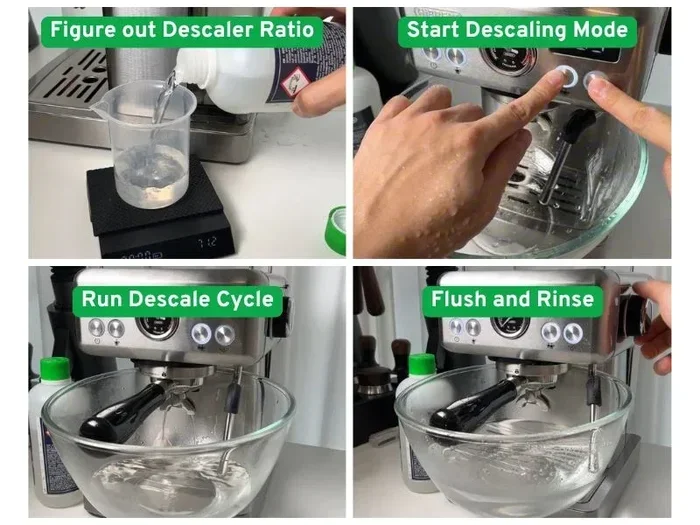
Fill the water tank with your chosen descaling solution. If you are using the Delonghi branded solution, follow the dilution instructions on the bottle. If you are using vinegar, mix it with water at a 1:1 ratio. For citric acid, one tablespoon per liter works perfectly.
Do not overfill the tank. Leave a little room at the top to prevent any spillage when you move the machine.
Step 3: Start the Descale Cycle
Place the water tank back on the machine. Plug the machine in and turn it on. Press and hold the power button or the descale button, depending on your model. The machine should start running the descale cycle automatically.
On some Delonghi models, you need to hold the on/off button for three seconds until the descale light starts flashing. This tells you the machine is in descale mode. Let the machine run through its full cycle. This usually takes about 20 to 30 minutes.
Do not interrupt the cycle. Let the solution do its work as it passes through the internal tubes and heating elements. You will see brownish or cloudy liquid coming out of the coffee spout. That is the limescale and mineral deposits leaving your machine.
Step 4: Rinse Thoroughly
Once the descale cycle is complete, empty the container that caught the dirty liquid. Refill the water tank with fresh, clean water. Run the machine again without any descaling solution. Let it brew a full tank of plain water.
You should run at least two full tanks of clean water through the machine. This ensures no descaling solution or vinegar taste remains in the internal pathways. After the second rinse, the descale light should turn off on most models.
If the light is still flashing after two rinses, run one more tank of plain water. Better safe than sorry when it comes to taste and machine health.
Step 5: Clean the Exterior and Accessories
While the machine is rinsing, take the opportunity to wipe down the exterior with a damp cloth. Clean the drip tray, the coffee spout, and the water tank. These areas can also collect mineral deposits and old coffee residue.
For the coffee spout and group head, use a soft brush or a damp cloth to remove any visible buildup. A clean exterior means a machine that looks and feels great every morning.
Some users also ask whether cleaning their coffee grinder helps the overall process. While the grinder is a separate component, keeping it clean does contribute to better overall coffee quality. You can learn more about grinder maintenance in our article on whether a coffee grinder can be used for wet grinding.
Common Mistakes People Make When Descaling
Even though descaling is straightforward, people still make mistakes that can cause problems. Here are the most common ones to avoid.
Skipping the Rinse Cycle
This is the number one mistake. Some people finish the descaling cycle and immediately start making coffee again. The descaling solution left inside the machine will affect the taste of your next few cups. Always rinse thoroughly with clean water at least two times.
Using the Wrong Descaling Solution
Not all descaling solutions are safe for every machine. Some harsh chemical cleaners can damage the internal seals and tubes of your Delonghi. Stick with the Delonghi branded solution, white vinegar, or citric acid. These are all safe and effective.
Ignoring the Descale Light
That little flashing light is there for a reason. When you ignore it, limescale continues to build up silently. By the time you notice a problem with taste or flow, the damage may already be done. Descale when the light tells you to.
Using Too Much Descaling Solution
More is not always better. Using too much solution can leave a residue that is hard to rinse out. Always follow the dilution instructions on the product label or use the recommended ratios for homemade solutions.
Forgetting to Clean the Water Tank
The water tank itself can collect mineral deposits. After descaling, give the tank a good wash with warm soapy water. Rinse it well and dry it before refilling. This keeps your fresh water clean from the start.
Tips for Keeping Your Delonghi Machine in Top Shape
Descaling is the most important maintenance task, but it is not the only one. Here are some extra tips to keep your Delonghi running beautifully for years.
- Use filtered water whenever possible. It reduces mineral buildup and means you descale less often.
- Clean the drip tray and coffee grounds container after every few uses. A quick wipe prevents stale residue from affecting flavor.
- Run a plain water cycle once a week if you use your machine daily. This flushes out any loose particles before they turn into limescale.
- Descale before storing the machine for long periods. This prevents mineral deposits from hardening while the machine sits unused.
- Replace water filters regularly if your Delonghi model uses them. Filters help keep the water clean and reduce scale formation.
After your machine is freshly descaled, you will notice a huge difference in taste and performance. The water flows faster, the brewing temperature is more consistent, and your coffee smells amazing. It is a small effort that delivers big results.
If you want to enjoy café-quality drinks at home, a clean machine is your best friend. A properly maintained Delonghi can produce drinks that rival any specialty coffee shop. That includes refreshing iced coffee drinks too. Once your machine is descaled and running perfectly, try making a delicious iced coffee at home using our guide on how to make your own Dunkin iced coffee for easy and tasty recipes.
Remember, the coffee machine maintenance routine you build today saves you money and frustration tomorrow. A few minutes of descaling every few months keeps your machine healthy and your coffee tasting its absolute best.
Final Thoughts on Delonghi Manual Descaling
Descaling your Delonghi coffee machine does not have to be intimidating. The process is simple, fast, and incredibly rewarding. You will taste the difference immediately in every cup you brew.
Stick to a regular descaling schedule. Use the right supplies. And never skip the rinse cycle. These three habits alone will extend the life of your machine and keep your coffee tasting fresh for years to come.
Your Delonghi machine works hard every day to give you that perfect morning caffeine boost. Taking 30 minutes every few months to perform a Delonghi coffee machine manual descale is the least you can do in return. Treat your machine well, and it will keep treating you right.
Now that you know exactly how to descale your Delonghi, there is no excuse to put it off. Grab your supplies, set aside half an hour, and give your machine the care it deserves. Your taste buds will notice the difference from the very first cup after descaling.
Frequently Asked Questions
How do I know when my Delonghi needs descaling?
Most Delonghi machines have a flashing descale light on the display. This indicator activates when the machine detects mineral buildup. You may also notice slower water flow, a change in coffee taste, or unusual noises during brewing. These are all signs that it is time to descale.
Can I use vinegar instead of a commercial descaling solution?
Yes, white vinegar works as an effective and affordable alternative. Mix it with equal parts water and run it through the descale cycle. Just make sure you rinse thoroughly afterward with at least two full tanks of clean water to remove any vinegar taste.
How long does a Delonghi descale cycle take?
A full manual descale cycle typically takes about 20 to 30 minutes. This includes the cleaning solution running through the machine and the subsequent rinse cycles. The exact time depends on your specific Delonghi model and the amount of limescale buildup present.
What happens if I never descale my Delonghi coffee machine?
Without regular descaling, limescale builds up inside the machine and blocks water flow. This leads to weaker coffee, inconsistent brewing temperatures, and eventually machine failure. Heavy limescale can cause irreversible damage that requires expensive repairs or full replacement.
Is descaling the same as decalcifying?
Yes, descaling and decalcifying mean the same thing. Both refer to the process of removing mineral deposits, mainly calcium and limescale, from the internal components of a coffee machine. The terms are used interchangeably across different brands and models.
Can I use lemon juice to descale my Delonghi?
Lemon juice is a mild natural acid that can help with light descaling. However, it is not as effective as vinegar or citric acid for heavy mineral buildup. If you choose to use lemon juice, use the juice of two lemons mixed with one liter of water and run it through a full cycle followed by thorough rinsing.