Do You Put The Cupcake Liners In The Oven Yes Or No
Do you put the cupcake liners in the oven? The answer is a simple yes. Cupcake liners are designed to go straight into the oven, and they help your baked goods cook evenly while making cleanup a breeze. Whether you use paper, silicone, or foil liners, placing them in the oven is safe and standard practice for cupcake baking.
Have you ever stood in front of your cupcake tin, holding a stack of colorful liners, and wondered if they can actually go in the oven? Maybe you are a beginner baker, or perhaps you are someone who has baked cupcakes for years but never stopped to question the process. Either way, the question do you put the cupcake liners in the oven comes up more often than you might think.
The short answer is yes. You absolutely put cupcake liners in the oven. They are made specifically for this purpose. Cupcake liners serve as a simple barrier between the batter and the metal tin. They prevent sticking, make removal easy, and add a touch of style to your baked treats. In this guide, we will walk you through everything you need to know about using cupcake liners in the oven, from the different types available to common mistakes you should avoid.
Whether you are baking a batch of vanilla cupcakes for a birthday party or preparing chocolate muffins for a weekend treat, understanding how liners work will improve your cupcake baking experience. Let us dive in and explore the world of muffin liners and oven-safe baking.
Key Takeaways
- Yes, cupcake liners go in the oven: They are safe and designed for oven use at standard baking temperatures.
- Paper liners are the most popular choice: They are affordable, disposable, and come in many colors and patterns.
- Silicone liners are reusable: They can handle high heat and last for hundreds of bakes.
- Foil liners work great for dense batters: They hold their shape and add a shiny finish.
- Never use liners without a cupcake tin: The tin supports the liners and keeps them upright during baking.
- Always check the liner package: Look for oven-safe labels and temperature guidelines.
- Grease-free liners work best: Adding extra grease can cause the liner to stick or collapse.
📑 Table of Contents
- Why Do People Use Cupcake Liners?
- Can You Put Cupcake Liners Directly in the Oven?
- What Happens If You Forget the Liners?
- Step-by-Step Guide to Using Cupcake Liners in the Oven
- Common Mistakes to Avoid When Using Cupcake Liners
- Expert Tips for Perfect Cupcakes Every Time
- Quick Tips for Choosing the Best Cupcake Liners
- Frequently Asked Questions
- Conclusion
Why Do People Use Cupcake Liners?
Before we get into the details of oven use, let us talk about why cupcake liners exist in the first place. They are not just a decorative addition. They serve several important functions in the baking process.
The Main Purpose of Cupcake Liners
The primary job of a liner is to line the inside of your cupcake tin. This creates a simple wall between the batter and the metal. Without a liner, the cupcake can stick to the tin. Removing it becomes a messy and frustrating task. Liners solve this problem completely.
Here is why most bakers reach for liners every time they bake:
- Easy removal: Cupcakes slide right out of the liner after cooling.
- No greasing needed: You skip the step of buttering or spraying the tin.
- Cleaner presentation: Liners give cupcakes a polished, professional look.
- Hygiene: They prevent direct contact between the batter and the metal surface.
- Portion control: Each liner holds a consistent amount of batter.
Types of Cupcake Liners You Can Use
Not all liners are the same. Different materials offer different benefits. Here is a quick look at the most common cupcake liners types available on the market today.
Paper liners are the most widely used option. They are inexpensive, come in countless designs, and work perfectly for most cupcake recipes. You can find them in any grocery store or bakery supply shop.
Silicone liners are a newer option that is gaining popularity. They are reusable, eco-friendly, and can withstand very high temperatures. If you bake often, silicone liners save money over time.
Foil liners are sturdier than paper. They hold their shape well and work great with heavier or denser batters. They also give cupcakes a shiny, attractive finish.
Greaseproof liners have a special coating that prevents batter from soaking through. They are ideal for recipes with very wet or sticky batters.
Can You Put Cupcake Liners Directly in the Oven?
This is the big question, and the answer is straightforward. Do you put the cupcake liners in the oven? Yes, you do. All standard cupcake liners are designed to be oven-safe. They are tested to handle the temperatures used in baking cupcakes, which typically range from 325°F to 375°F (165°C to 190°C).
Paper Liners in the Oven
Paper liners are the most common type, and they work perfectly in the oven. They are made from food-grade paper that can handle moderate heat. During baking, the paper may darken slightly, but this is completely normal. It does not affect the taste or safety of your cupcakes.
One thing to keep in mind: paper liners can become brittle if baked at very high temperatures for too long. Always follow the temperature recommendations on your cupcake recipe. Most standard baking temperatures work great with paper liners.
Silicone and Foil Liners
Silicone cupcake cups are oven-safe up to around 450°F (230°C). They are flexible, durable, and can be washed and reused many times. When using silicone liners, place them inside a cupcake tin for support. The silicone needs the tin to hold its shape during baking.
Foil liners are also fully oven-safe. They are slightly more heat-resistant than paper liners. Foil liners work well for recipes that require slightly higher temperatures or longer baking times. They are also great for recipes where you want a crispier exterior on your cupcakes.
Are Oven-Safe Liners Always Safe?
Most liners you buy from reputable brands are oven-safe. However, it is always a good idea to check the packaging. Look for labels that say oven-safe or list a maximum temperature. If you are using liners from a lesser-known brand or making your own liners, do a quick test first.
Never use liners made from materials not intended for baking. Some decorative liners may have coatings or glitters that are not food-safe at high temperatures. Stick to liners specifically designed for cupcake baking.
What Happens If You Forget the Liners?
Sometimes you forget to grab liners, or you simply run out. So what happens if you bake cupcakes without them? The good news is that your cupcakes will still bake just fine. The batter will cook directly on the metal surface of the cupcake tin.
However, there are a few things to consider:
- Sticking: Cupcakes are much more likely to stick to the tin without a liner. You will need to grease the tin thoroughly.
- Cleanup: Removing stuck-on cupcake residue from a metal tin is harder than peeling off a paper liner.
- Appearance: Without a liner, your cupcakes will not have that classic, polished look.
- Removal: You may need to run a knife around the edges to free the cupcakes from the tin.
So while you can bake without liners, using them makes the entire process smoother and more enjoyable. The cupcake liners vs no liners debate really comes down to convenience and presentation.
Step-by-Step Guide to Using Cupcake Liners in the Oven
Using cupcake liners is simple, but doing it the right way ensures the best results every time. Follow these steps for perfect baking cupcakes with liners.
- Choose your liners: Pick paper, silicone, or foil liners based on your recipe and preference.
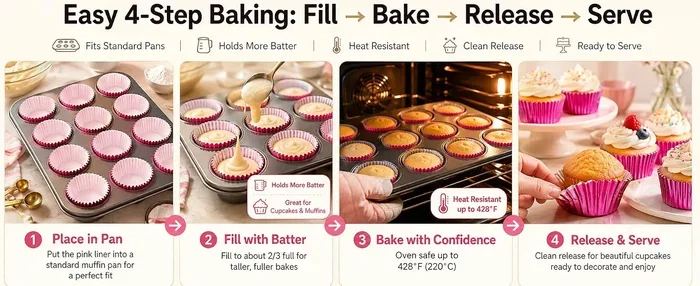
- Place liners in the tin: Press each liner firmly into the cups of your cupcake tin. Make sure the bottom is flat and the sides are smooth.
- Prepare your batter: Mix your cupcake recipe according to the instructions. Fill each liner about two-thirds full.
- Preheat the oven: Set your oven to the correct baking temperature before placing the tin inside.
- Bake for the recommended time: Most cupcakes bake for 18 to 25 minutes. Check for doneness with a toothpick.
- Cool before removing: Let the cupcakes cool in the tin for 10 minutes, then transfer them to a wire rack.
- Peel off the liner: Once cool, gently peel the liner away from the cupcake.
That is all there is to it. The process is quick and easy, and the results are consistently great. Lining cupcake pans correctly is one of the simplest steps in the entire baking process, yet it makes a huge difference in the final product.
Common Mistakes to Avoid When Using Cupcake Liners
Even experienced bakers make mistakes with cupcake liners from time to time. Here are some common errors to watch out for.
Using the Wrong Size Liner
Not all liners fit all tins. Using a liner that is too small means it will slip down into the cup during baking. A liner that is too big will flop over the edges. Always match your liner size to your cupcake tin size. Standard liners fit standard 12-cup or 24-cup tins perfectly.
Overfilling the Liners
It is tempting to fill the liners to the top, especially when you want big, beautiful cupcakes. But overfilling causes the batter to overflow during baking. It creates a mess in your oven and leads to unevenly shaped cupcakes. Fill each liner only about two-thirds full for the best results.
Forgetting to Support Silicone Liners
Silicone liners are flexible, which means they need support from a cupcake tin. Placing a silicone liner directly on a baking sheet without a tin underneath will cause it to flop over and the batter will spread out. Always use a tin with silicone liners.
Using Liners That Are Not Oven-Safe
This might sound obvious, but it happens more often than you would think. Some decorative liners come with non-food-safe coatings or embellishments. Always check that your liners are labeled as oven-safe before using them. When in doubt, stick with basic paper or silicone liners from trusted brands.
Expert Tips for Perfect Cupcakes Every Time
Want to take your cupcake baking to the next level? Here are some expert tips that make a real difference.
Grease the Bottom of the Liner
While most liners are non-stick, greasing the bottom of the liner with a small dab of butter or cooking spray adds extra insurance against sticking. This is especially helpful with greaseproof liners that have a smooth coating.
Use Room Temperature Batter
Let your batter come to room temperature before pouring it into the liners. Room temperature batter rises more evenly and creates a smoother texture. Cold batter can cause uneven baking and lumpy cupcakes.
Rotate the Tin Halfway Through
Ovens often have hot spots that can cause uneven baking. Rotating your cupcake tin halfway through the baking time ensures all cupcakes cook at the same rate. This simple step leads to perfectly baked cupcakes every time.
Let Cupcakes Cool Completely
Do not rush the cooling process. Removing cupcakes from the oven and immediately trying to peel off the liner will cause the cupcake to crumble. Wait at least 10 minutes in the tin, then transfer to a wire rack. Let them cool completely before frosting or decorating.
Store Lined Cupcakes Properly
Once your cupcakes are cool, store them in an airtight container with the liners still on. The liners protect the cupcakes and keep them fresh for up to three days. You can also freeze cupcakes in their liners for up to three months.
Quick Tips for Choosing the Best Cupcake Liners
With so many options available, choosing the right liners can feel overwhelming. Here are some quick tips to help you decide.
- For everyday baking: Standard white or pastel paper liners are affordable and versatile.
- For special occasions: Choose patterned or themed liners that match your event.
- For eco-conscious bakers: Silicone liners are reusable and reduce waste.
- For dense or heavy batters: Foil liners provide extra structure and support.
- For wet or sticky batters: Greaseproof liners prevent soaking and leaking.
- Always check the package: Look for oven-safe certifications and temperature limits.
Baking tips like these may seem small, but they add up to a much better baking experience. The right liner choice can elevate your cupcakes from simple to stunning.
Frequently Asked Questions
Can You Put Cupcake Liners in the Oven Without a Tin?
You can, but it is not recommended. Paper and foil liners will flop over without the support of a cupcake tin. Silicone liners also need a tin to hold their shape. The tin keeps the liners upright and ensures your cupcakes bake evenly. Always place liners inside a tin before putting them in the oven.
Are Paper Cupcake Liners Safe at High Temperatures?
Yes, standard paper liners are safe at typical baking temperatures between 325°F and 375°F (165°C to 190°C). They are made from food-grade paper designed to handle oven heat. However, avoid using paper liners at temperatures above 400°F, as they may darken excessively or become brittle.
Can You Reuse Silicone Cupcake Liners?
Absolutely. Silicone liners are one of the most reusable options available. After each use, wash them with warm soapy water and let them dry completely. A good set of silicone liners can last for hundreds of bakes, making them a cost-effective and eco-friendly choice for regular bakers.
Do Cupcake Liners Affect Baking Time?
Liners have a very minor effect on baking time. Paper liners may add a minute or two compared to baking without a liner, but the difference is negligible. Foil liners conduct heat slightly faster, which can result in a marginally shorter bake. Overall, the baking time remains the same for practical purposes.
Can You Use Wax Paper Instead of Cupcake Liners?
No, wax paper is not safe for oven use. It is coated with wax that can melt or catch fire at high temperatures. Always use liners specifically designed for baking. Look for liners labeled as oven-safe to ensure they can handle the heat without releasing harmful chemicals.
What Is the Difference Between Muffin Liners and Cupcake Liners?
In most cases, there is no real difference. Muffin liners and cupcake liners are essentially the same product. Some brands may size them slightly differently, but they are interchangeable for everyday baking. Use whichever term you prefer, as they serve the same purpose in the cupcake baking process.
Conclusion
The answer to do you put the cupcake liners in the oven is a clear and definitive yes. Cupcake liners are safe, effective, and designed to go straight into the oven. Whether you prefer paper, silicone, or foil liners, each option offers unique benefits that make your baking cupcakes experience better. They prevent sticking, simplify cleanup, and add a professional touch to your homemade treats.
By following the tips and guidelines in this article, you can bake with confidence every time. Choose the right liners for your recipe, avoid common mistakes, and enjoy the process. Cupcake baking should be fun and rewarding, and using the right liners is one of the easiest ways to make it even better.
So the next time you pull out your cupcake tin and reach for a stack of liners, remember that you are doing it the right way. Happy baking!