How Long To Cook Prime Rib In Oven At 250 For Perfect
How long to cook prime rib in oven at 250? This low-and-slow method delivers a juicy, tender roast with a beautiful crust. You’ll learn the exact cooking time per pound, ideal internal temperatures, and simple steps for a perfect prime rib every time.
Cooking a prime rib in the oven at 250 degrees is a game-changer. This low-and-slow method turns a tough cut into a tender masterpiece. Many home cooks ask, how long to cook prime rib in oven at 250. The answer depends on the size of the roast and your desired doneness. With the right approach, you’ll get a juicy, flavorful roast that impresses everyone. In this guide, I’ll share the exact timing, temperatures, and simple steps to achieve restaurant-quality results at home.
The low temperature might seem slow, but it’s the secret to a perfect prime rib roast. You’ll learn how to season it, how long to leave it in the oven, and when to pull it out. Whether you’re cooking for a holiday dinner or a special weekend meal, this method guarantees a stunning centerpiece. Let’s dive into the details.
Key Takeaways
- Low-and-slow at 250°F ensures even cooking and a juicy interior.
- Plan for about 15–20 minutes per pound for a medium-rare roast.
- Always use a meat thermometer to hit the exact internal temp.
- Rest the roast for 20–30 minutes before slicing to lock in juices.
- Sear after roasting for a flavorful crust (optional but recommended).
- Bone-in vs. boneless affects cooking time slightly.
- Season simply with salt, pepper, and garlic for the best results.
📑 Table of Contents
- Why Cook Prime Rib at 250°F?
- How Long To Cook Prime Rib In Oven At 250: Time and Temperature Guide
- Preparing Your Prime Rib for the Oven
- The Low-and-Slow Roasting Process
- Resting and Slicing Your Prime Rib
- Common Mistakes to Avoid
- Expert Insights for a Perfect Roast
- Key Takeaways for Prime Rib Perfection
- Conclusion
Why Cook Prime Rib at 250°F?
Cooking beef roast at a low temperature has many benefits. The low-and-slow method gently renders the fat and breaks down connective tissue. This creates a melt-in-your-mouth texture that high-heat roasting can’t match. When you cook prime rib at 250°F, the meat cooks evenly from edge to center. There’s less risk of a gray, overcooked outer layer.
This approach also gives you more control. You can set a timer and walk away. The oven does the work while you prepare sides and drinks. The result is a juicy, oven-baked prime rib with a beautiful, caramelized crust. It’s the ideal way to serve a bone-in prime rib or a boneless ribeye roast.
The Science Behind Low-and-Slow Cooking
At 250°F, the heat slowly penetrates the roast. Collagen in the meat converts to gelatin. This process takes time, but it’s what creates that incredible tenderness. The low temperature also prevents the muscle fibers from seizing up too quickly. Your roast stays moist and flavorful throughout. This method is perfect for a slow roast beef that wows a crowd.
How Long To Cook Prime Rib In Oven At 250: Time and Temperature Guide
This is the core section. I’ll explain the cooking time per pound and the temperature guide. You’ll also find a handy comparison table to plan your dinner.
Prime Rib Cooking Time Per Pound
The general rule for how long to cook prime rib in oven at 250 is about 15 to 20 minutes per pound. This estimate is for a medium-rare finish. If you prefer a different doneness, you’ll need to adjust the time slightly. Here’s a quick breakdown:
- Rare: 120°F internal temp, about 14–16 minutes per pound.
- Medium-Rare: 130°F internal temp, about 15–18 minutes per pound.
- Medium: 140°F internal temp, about 17–20 minutes per pound.
- Well-Done: 155°F internal temp, about 20–22 minutes per pound.
These times assume a starting roast temperature of around 40°F. Always use a meat thermometer to check the internal temperature. The roast will continue to rise a few degrees while resting.
Prime Rib Doneness Temperature Chart
Use this table to find your target temperature and expected time for a 5-pound roast.
| Doneness | Internal Temp (°F) | Time per Pound (min) | Total Time for 5 lb (hours) |
|---|---|---|---|
| Rare | 120–125 | 14–16 | 1 hr 10 min – 1 hr 20 min |
| Medium-Rare | 130–135 | 15–18 | 1 hr 15 min – 1 hr 30 min |
| Medium | 140–145 | 17–20 | 1 hr 25 min – 1 hr 40 min |
| Well-Done | 155–160 | 20–22 | 1 hr 40 min – 1 hr 50 min |
These numbers are for a bone-in prime rib at 250°F. A boneless roast may cook slightly faster. The type of oven also matters. Convection ovens can reduce time by about 10–15%. I’ll cover that in the tips section.
Preparing Your Prime Rib for the Oven
Proper prep makes a big difference. You want the roast to cook evenly and develop great flavor. Start by removing the roast from the refrigerator 1–2 hours before cooking. This brings it closer to room temperature. A room-temperature roast cooks more evenly than a cold one.
Simple Seasoning Blend
Keep the seasoning simple to let the beef shine. A classic prime rib seasoning includes coarse salt, black pepper, and minced garlic. Here’s what to do:
- Pat the roast dry with paper towels.
- Rub the entire surface with olive oil.
- Generously coat with salt and pepper.
- Add minced garlic and any herbs you like, such as rosemary or thyme.
- Let the seasoned roast sit on a rack for 30 minutes.
This dry-brine method helps create a flavorful crust. The salt draws out moisture, which then gets reabsorbed. The result is a seasoned, juicy garlic roast with a beautiful exterior.
Bone-In vs. Boneless Prime Rib
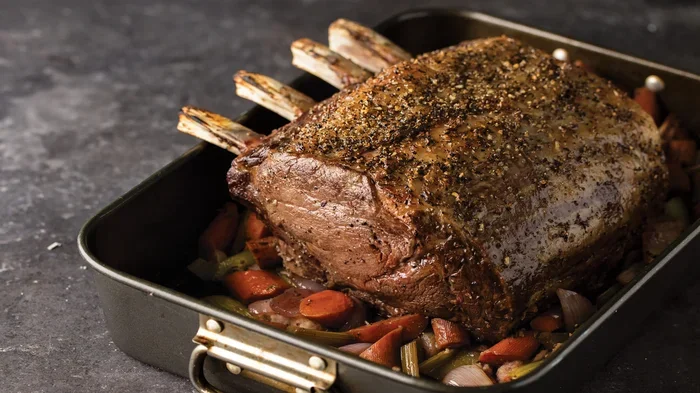
Both cuts work well at 250°F. A bone-in prime rib has the rib bones attached, which adds flavor and protects the meat. A boneless prime rib is easier to slice and serves more people per pound. Cooking times are similar, but bone-in roasts may take 10–15 minutes longer per pound. The bone acts as an insulator, so the meat near the bone cooks slightly slower.
The Low-and-Slow Roasting Process
Now it’s time to roast. Follow these steps for a flawless beef roast in your oven.
Step-by-Step Roasting Instructions
- Preheat the oven to 250°F (120°C). Let it fully heat before placing the roast inside.
- Prepare the roasting pan. Use a sturdy pan with a rack. Place the roast fat-side up on the rack. This allows hot air to circulate around the meat.
- Insert a probe thermometer into the thickest part of the roast. Avoid touching the bone or the pan.
- Put the roast in the oven and set a timer. For a 5-pound roast, expect about 1.5 to 1.5 hours for medium-rare.
- Monitor the temperature. Check the thermometer every 30 minutes after the first hour. You want a steady, gentle rise.
- Remove the roast when it’s 5°F below your target doneness temperature. The carryover cooking will bring it up to the perfect final temp.
Quick Tips for Success
Here are some quick tips to elevate your roast:
- Use an oven-safe meat thermometer. It’s the most important tool for this recipe.
- Don’t skip the rack. A rack promotes even airflow and prevents the bottom from steaming.
- Add water or broth to the pan. This creates steam and keeps the roast moist. It also makes cleanup easier.
- Convection fans: If your oven has a convection setting, use it. It reduces cooking time and promotes browning.
- Sear after roasting (optional): For a deep crust, sear the roast in a hot skillet with butter for 2–3 minutes per side. This step is not traditional for low-and-slow, but it adds a restaurant-quality finish.
Resting and Slicing Your Prime Rib
Resting is just as important as cooking. When you pull the roast from the oven, the juices are under pressure. Cutting too soon releases those juices onto the cutting board instead of keeping them in the meat.
Why Resting Matters
Let the roast rest for at least 20–30 minutes. Tent it loosely with aluminum foil. This allows the juices to redistribute. The internal temperature will also rise a few degrees during this time. This carryover cooking brings the roast to its final perfect temperature.
A properly rested prime rib is easy to slice. Use a sharp carving knife and cut against the grain. This shortens the muscle fibers and makes each slice tender. Serve immediately with your favorite sides. A simple prime rib recipe is only as good as the final resting step.
Common Mistakes to Avoid
Even experienced cooks can make errors. Here are the most common mistakes and how to avoid them.
Mistake 1: Cooking Too Fast
Some people raise the oven temperature to 300°F or higher to save time. This is the biggest mistake. High heat dries out the outer layer before the center is done. Stick to 250°F for the best results. Patience is the key to a juicy slow roast beef.
Mistake 2: Skipping the Rest
Cutting into the roast right out of the oven leads to dry slices. Always let it rest. The 20–30 minute wait makes a huge difference in juiciness. It’s the final step that separates a good roast from a great one.
Mistake 3: Not Using a Thermometer
Relying on time alone is risky. Ovens vary, and roast size differs. A meat thermometer removes guesswork. It ensures you hit the exact internal temperature you want. This is the single most important tool for a perfect oven-baked prime rib.
Mistake 4: Over-Salting Too Early
Salt too far in advance can draw out too much moisture. Season at least 1 hour before roasting, or right before. The dry-brine method works best when the roast has time to absorb the seasoning. Keep the prime rib seasoning simple and effective.
Expert Insights for a Perfect Roast
I’ve talked to several chefs about their prime rib recipe secrets. Here’s what they recommend.
What the Pros Say
Chef Michael Symon once said, “Low and slow is the only way for a perfect prime rib.” The idea is to let the oven do the work. You’re not trying to sear or crisp the meat. You’re gently rendering the fat and warming the protein. This method produces a roast that is evenly pink from edge to center.
Another pro tip: dry brine overnight. If you have time, salt the roast the night before and leave it uncovered in the fridge. This dries the surface, which leads to a better crust. It also seasons the meat deeper. The next day, take it out an hour before cooking, and you’re ready.
Quick Tips for Success
I’ll add another quick tips section focusing on oven and thermometer choices.
- Oven thermometer: Most oven dials are inaccurate. Use a separate oven thermometer to verify the actual temperature.
- Probe thermometer: A leave-in probe with an alarm is ideal. It beeps when the target temp is reached.
- Carryover cooking: Expect a 5–10°F rise after removing from the oven. Pull early to avoid overshooting.
- Slicing: Slice thin, about ½ inch thick, against the grain for the most tender bite.
Key Takeaways for Prime Rib Perfection
Here’s a quick recap of the most important points:
- Low-and-slow at 250°F is the secret to a juicy, tender roast.
- Plan for 15–20 minutes per pound for medium-rare.
- Always use a meat thermometer and pull the roast 5°F below target.
- Rest the roast for 20–30 minutes before slicing.
- Bone-in vs. boneless affects time slightly; bone-in takes a bit longer.
- Season simply with salt, pepper, and garlic for the best flavor.
- Sear after roasting for an extra crusty exterior (optional).
Conclusion
Cooking prime rib in oven at 250 is a simple, reliable method that yields incredible results. You now know exactly how long to cook prime rib in oven at 250, how to season it, and how to rest it. The low-and-slow approach takes a little patience, but the payoff is a show-stopping roast that will have everyone asking for seconds.
Next time you’re planning a special meal, give this method a try. Use a good thermometer, keep the temperature steady, and let the oven do the work. Your kitchen will fill with the mouthwatering aroma of a perfect prime rib roast. Enjoy the process, and savor every slice.
Frequently Asked Questions
How long does it take to cook a prime rib at 250 degrees?
This method answers the common question: how long to cook prime rib in oven at 250. At 250°F, a prime rib roast takes about 15 to 20 minutes per pound to reach medium-rare. For a 5-pound roast, that’s roughly 1 hour and 15 minutes to 1 hour and 40 minutes. Always use a meat thermometer to confirm the internal temperature, as oven variations can affect timing.
What internal temperature should prime rib be cooked to?
The ideal internal temperature for medium-rare prime rib is 130°F to 135°F. For rare, aim for 120°F to 125°F. Remember that the temperature will rise about 5°F during resting, so pull the roast out a few degrees early. This carryover cooking brings it to the perfect final doneness.
Do you sear prime rib before slow roasting it in the oven?
Searing is optional when using the low-and-slow method. Some cooks skip it because the long roast develops a natural crust. If you want a deeper, more caramelized exterior, you can sear the roast in a hot skillet with butter for 2–3 minutes per side after it comes out of the oven.
How long should prime rib rest after cooking?
Let the roast rest for at least 20 to 30 minutes before slicing. Tent it loosely with aluminum foil to keep it warm. This resting period allows the juices to redistribute throughout the meat, resulting in a much juicier and more flavorful slice.
Can you cook prime rib frozen at 250 degrees?
It’s not recommended to cook a frozen prime rib at 250°F. The outside will overcook while the inside is still thawing. Always thaw the roast in the refrigerator for 24–48 hours before cooking. This ensures even cooking and food safety.
What is the best seasoning for prime rib in the oven?
A simple blend of coarse salt, black pepper, and minced garlic works beautifully. Some cooks add rosemary or thyme for extra aroma. The key is to season generously and let the roast sit at room temperature for an hour before it goes into the oven. This helps the flavors penetrate the meat.