How To Cook Ham In A Roaster Oven For Perfect Results
Learning how to cook ham in a roaster oven is one of the easiest ways to achieve a tender, juicy centerpiece for any meal. A roaster oven provides even heat circulation, making it ideal for both spiral hams and whole bone-in hams. This guide covers everything from prep and temperature to glaze recipes and carving tips. Whether you are a beginner or a seasoned cook, you will find practical steps to elevate your ham game. Follow along for foolproof results that will impress your family and guests.
Cooking ham in a roaster oven is one of the most convenient and rewarding ways to prepare this beloved meat. Whether you are planning a holiday dinner or simply want a delicious weekend meal, a roaster oven makes the process simple and hands-off. How to cook ham in a roaster oven is a question many home cooks ask, and the answer is easier than you might think.
A roaster oven works by surrounding the food with consistent, even heat. This means your ham cooks more uniformly compared to a standard oven. The result is a moist, flavorful ham with a beautifully caramelized glaze on top. In this guide, we will walk you through every step, from choosing the right ham to serving it at the table.
Key Takeaways
- Even Cooking: A roaster oven distributes heat consistently, reducing the risk of dry spots.
- Flexible Size Options: Roaster ovens handle spiral hams, whole hams, and bone-in cuts with ease.
- Simple Prep: Minimal preparation is needed before placing the ham inside.
- Perfect Temperature: Cooking at the right internal temperature ensures food safety and great flavor.
- Glazing Made Easy: Homemade and store-bought glazes both work beautifully in a roaster oven.
- Resting Is Key: Letting the ham rest after cooking keeps it juicy and easier to carve.
📑 Table of Contents
- Why Use A Roaster Oven For Cooking Ham
- Choosing The Right Ham For Your Roaster Oven
- How To Prepare Your Ham Before Cooking
- The Best Temperature And Cooking Time For Roaster Oven Ham
- Making And Applying The Perfect Ham Glaze
- Cooking Steps: How To Cook Ham In A Roaster Oven
- Serving And Storing Your Roasted Ham
- Common Mistakes When Cooking Ham In A Roaster Oven
- Frequently Asked Questions
- Conclusion
Why Use A Roaster Oven For Cooking Ham
A roaster oven is a countertop appliance that functions like a small convection oven. It uses a heating element wrapped around the sides to distribute warmth evenly around the food. This design is especially helpful when you are cooking ham because it prevents hot spots that can dry out certain areas.
Even Heat Distribution
Traditional ovens can have uneven heat zones. With a roaster oven, the ham sits surrounded by warmth on all sides. This means every slice comes out cooked consistently. You will not find any cold spots or overcooked edges.
Convenience And Capacity
Roaster ovens come in various sizes, typically ranging from 12 to 22 quarts. A 16-quart model handles most whole hams and spiral hams easily. You can place the ham directly on the rack or use a roasting pan insert. The compact design also means it heats up faster than a full-sized oven.
Energy Efficiency
Because a roaster oven is smaller than a conventional oven, it uses less energy to preheat and maintain temperature. This is a great bonus if you are cooking during a hot summer day or want to keep your kitchen cool. Roaster oven ham preparation also frees up your main oven for side dishes.
Choosing The Right Ham For Your Roaster Oven
Not all hams are the same, and picking the right one matters for your final result. The type of ham you choose affects cooking time, flavor, and how you prepare it. Let us look at the most common options you will find at the grocery store.
Spiral Ham
A spiral ham is pre-sliced and tied in a spiral shape. It is one of the most popular choices for oven-baked ham because it is easy to serve and cooks evenly. Most spiral hams are fully cooked, so your goal is mainly to heat them through and add a glaze. The pre-sliced design also means you can fit more ham in your roaster oven without rearranging.
Whole Bone-In Ham
A whole bone-in ham is a large, uncut cut that includes the bone for extra flavor. These hams are often raw or partially cooked, so you will need to cook them to a safe internal temperature. The bone adds richness to the meat and makes the ham more impressive at a holiday table. Just make sure your roaster oven is large enough to hold the ham comfortably.
Boneless Ham
Boneless hams are trimmed of the bone and often rolled or pressed into a uniform shape. They are easier to carve and fit well in smaller roaster ovens. Boneless hams cook a bit faster than bone-in varieties because heat penetrates more evenly without a bone blocking the way.
Half Ham
A half ham is a smaller cut, perfect for intimate gatherings or smaller roaster ovens. It cooks faster than a whole ham and requires less glaze. Half hams are great for testing new recipes or when you do not need to feed a large crowd.
| Ham Type | Best For | Cooking Time (per lb) | Fully Cooked? |
|---|---|---|---|
| Spiral Ham | Easy serving, even heating | 10-12 minutes | Yes |
| Whole Bone-In Ham | Large gatherings, flavor | 15-20 minutes | Sometimes |
| Boneless Ham | Smaller ovens, faster cook | 10-15 minutes | Sometimes |
| Half Ham | Small groups, quick prep | 10-12 minutes | Varies |
How To Prepare Your Ham Before Cooking
Proper preparation sets the stage for a perfect ham. Taking a few extra minutes before cooking makes a big difference in flavor and texture. Here is what you should do before placing your ham in the roaster oven.
Remove Packaging And Rinse
Take the ham out of its packaging and remove any clips or ties. Rinse the ham under cold water to remove any excess brine or preservatives. Pat it completely dry with paper towels. This step helps the glaze adhere better during the ham preparation stage.
Score The Ham
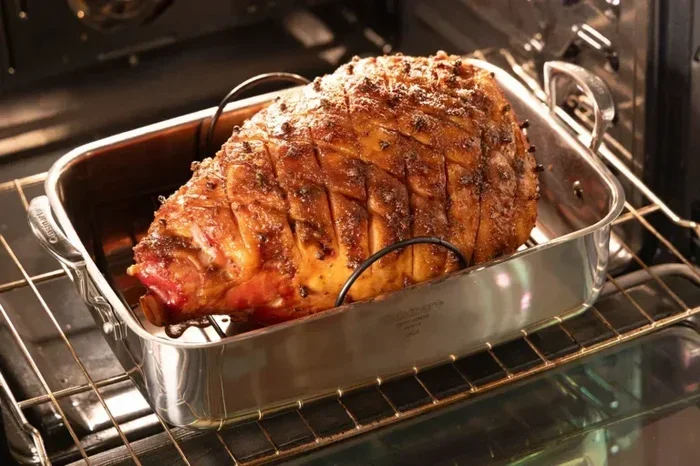
Scoring means cutting shallow diamond patterns into the surface of the ham. Use a sharp knife and cut about a quarter inch deep. Scoring allows the glaze to seep into the meat and creates an attractive presentation. It also helps the fat render more evenly during cooking.
Apply The Glaze Early
For the best flavor, apply a thin layer of glaze before the ham goes into the roaster oven. This gives the sugars time to caramelize. You can also reserve half the glaze to apply during the last 30 minutes of cooking. This two-step approach creates a deeper, more complex flavor profile.
Bring The Ham To Room Temperature
Take the ham out of the refrigerator about 30 minutes before cooking. Letting it sit at room temperature helps it cook more evenly. Cold ham placed directly into a hot roaster oven can result in uneven heating. This small step is often overlooked but makes a noticeable difference.
Quick Tips For Ham Prep
- Use a sharp knife for clean scoring lines.
- Pat the ham dry for better glaze adhesion.
- Reserve some glaze for basting during the last half of cooking.
- Let the ham rest at room temperature for 30 minutes before cooking.
- Place the ham fat-side up for maximum flavor and moisture.
The Best Temperature And Cooking Time For Roaster Oven Ham
Getting the temperature and timing right is the most important part of how to cook ham in a roaster oven. Too high a temperature can dry out the meat, while too low can leave it undercooked. Here is everything you need to know for perfect results every time.
Recommended Oven Temperature
The ideal temperature for cooking ham in a roaster oven is 325 degrees Fahrenheit. This moderate heat allows the ham to warm through without drying out. If you are reheating a fully cooked spiral ham, 325 degrees is the sweet spot. For raw or partially cooked hams, you can start at 325 degrees and adjust as needed based on internal temperature readings.
General Cooking Time Guidelines
As a rule of thumb, plan for about 15 to 20 minutes per pound for a bone-in ham. Spiral hams and boneless hams typically need 10 to 15 minutes per pound since they are thinner and fully cooked. Always use a meat thermometer to check the internal temperature, as these are guidelines and not exact rules.
Internal Temperature Targets
For fully cooked hams, heat them to an internal temperature of 140 degrees Fahrenheit. For raw or partially cooked hams, the target is 160 degrees Fahrenheit. Insert the thermometer into the thickest part of the ham, avoiding the bone. The ham internal temperature is your best indicator of doneness.
Expert Insight
According to the USDA, all hams should reach a safe minimum internal temperature. Using a reliable ham thermometer takes the guesswork out of cooking. Digital probe thermometers are especially helpful because you can monitor the temperature without opening the roaster oven lid repeatedly.
Common Cooking Time Chart
- Spiral ham (8-10 lbs): 1.5 to 2 hours at 325°F
- Whole bone-in ham (10-15 lbs): 2.5 to 3.5 hours at 325°F
- Boneless ham (4-6 lbs): 1 to 1.5 hours at 325°F
- Half ham (5-7 lbs): 1 to 1.5 hours at 325°F
Making And Applying The Perfect Ham Glaze
The glaze is what transforms a good ham into a great ham. A well-made glaze adds sweetness, depth, and a beautiful glossy finish. You can use store-bought glazes or make your own from scratch. Both options work wonderfully in a roaster oven.
Classic Brown Sugar Glaze
A brown sugar glaze is the most traditional choice for baked ham. Mix brown sugar, mustard, and a splash of pineapple juice for a tangy-sweet combination. Spread the glaze over the scored ham before cooking, and reserve extra for the last 30 minutes. The sugars caramelize beautifully in the roaster oven, creating a sticky, delicious crust.
Honey Mustard Glaze
For a slightly different flavor, try a honey mustard glaze. Combine honey, Dijon mustard, and a pinch of cloves. This glaze pairs well with both spiral hams and bone-in cuts. Apply it during the last hour of cooking for the best results.
Maple Bourbon Glaze
A maple bourbon glaze adds a rich, sophisticated flavor. Mix pure maple syrup, a splash of bourbon, and a touch of black pepper. This glaze works especially well with whole bone-in hams. The alcohol cooks off during the roasting process, leaving behind a deep, warm flavor.
Store-Bought Glazes
If you are short on time, store-bought glazes are a perfectly fine option. Look for glazes that contain real fruit juice and minimal preservatives. Simply heat the glaze slightly before brushing it onto the ham. You can also use the glaze as a dipping sauce on the side for extra flavor.
Common Mistakes To Avoid With Ham Glaze
- Applying too much glaze too early, which can burn during cooking.
- Using only sugar-based glazes without acid or mustard for balance.
- Forgetting to reserve glaze for the final 30 minutes of cooking.
- Brushing glaze over the ham while it is still very hot, causing it to slide off.
Cooking Steps: How To Cook Ham In A Roaster Oven
Now that you have your ham prepared and your glaze ready, it is time to cook. Follow these simple steps for a stress-free experience and delicious results.
Step 1: Preheat The Roaster Oven
Plug in your roaster oven and set the temperature to 325 degrees Fahrenheit. Allow it to preheat for about 15 minutes. Preheating ensures the ham starts cooking immediately and evenly.
Step 2: Place The Ham In The Roaster
Set the ham on the rack or roasting pan insert with the fat side facing up. The fat layer acts as a natural baste, keeping the ham moist throughout the cooking process. Make sure the ham fits comfortably without touching the sides of the roaster oven.
Step 3: Add Liquid To The Pan
Pour about one cup of water, apple juice, or broth into the bottom of the roaster oven. This creates steam that keeps the ham moist and prevents drippings from burning. You can also add whole cloves, cinnamon sticks, or orange slices for extra flavor.
Step 4: Cover And Cook
Place the lid on the roaster oven and cook the ham according to the time chart above. The lid traps moisture and heat, creating an ideal cooking environment. Avoid lifting the lid too frequently, as it releases heat and extends cooking time.
Step 5: Apply Glaze In The Final 30 Minutes
About 30 minutes before the ham is done, remove the lid and brush on your prepared glaze. Replace the lid for the remaining time to let the glaze set. You can apply a second coat of glaze right before checking the internal temperature.
Step 6: Check Internal Temperature
Use a meat thermometer to check the ham internal temperature in the thickest part. Once it reaches the target temperature, remove the ham from the roaster oven. Let it rest for 15 to 20 minutes before carving. Resting allows the juices to redistribute, making each slice more tender and flavorful.
Pro Tips For Roaster Oven Ham
- Always place the ham fat-side up for self-basting.
- Use the roaster oven lid to trap moisture during cooking.
- Add aromatic liquids like apple juice or broth to the pan.
- Do not skip the resting period after cooking.
- Save the pan drippings for making gravy or sauce.
- Let the ham rest for at least 15 minutes before carving.
Serving And Storing Your Roasted Ham
Once your ham is cooked and rested, it is time to serve. Proper serving and storage ensure that every slice tastes as good as the first.
How To Carve A Ham
Place the ham on a cutting board with the cut side down. Use a sharp carving knife to slice along the bone, following the natural lines of the meat. For spiral hams, simply follow the pre-sliced lines. For bone-in hams, cut thin slices parallel to the bone for the most tender pieces. Save any bone scraps for making soup stock or gravy.
Storing Leftover Ham
Wrap leftover ham tightly in plastic wrap or aluminum foil and refrigerate within two hours of cooking. Cooked ham keeps well in the refrigerator for up to five days. You can also freeze ham for up to two months. Slice before freezing for easier portioning later. Reheat individual slices in the microwave or oven at 325 degrees for 10 to 15 minutes.
Using Leftover Ham In Recipes
Leftover ham is incredibly versatile. Use it in sandwiches, soups, casseroles, and omelets. Ham and cheese sliders, ham fried rice, and ham and bean soup are all crowd-pleasers. The flavorful leftover meat adds depth to almost any dish you make.
Expert Insight On Leftover Ham
Chef and food writer Michael Ruhlman once said that leftover ham is one of the great gifts of holiday cooking. The meat is already seasoned and cooked, making it a powerhouse ingredient for quick weeknight meals. Store it properly and you will have delicious meals ready for days.
Common Mistakes When Cooking Ham In A Roaster Oven
Even experienced cooks can make mistakes when preparing ham. Being aware of these common errors helps you avoid them and achieve better results.
Cooking At Too High A Temperature
Some cooks set the roaster oven too high, thinking it will speed up the process. This often leads to a dried-out exterior while the center remains undercooked. Stick to 325 degrees Fahrenheit for the best results. Patience pays off with a moist, tender ham.
Not Using A Meat Thermometer
Guessing the doneness of your ham is a recipe for disaster. Without a ham thermometer, you risk either undercooking or overcooking the meat. A digital probe thermometer takes the guesswork out and gives you confidence in your results.
Skipping The Resting Period
Cutting into the ham immediately after cooking releases all the juices, leaving the meat dry. Always let the ham rest for at least 15 minutes. This simple step makes a noticeable difference in texture and flavor.
Using Too Much Glaze Too Early
Applying all the glaze at the start of cooking causes it to burn and turn bitter. Apply a light coat first and save the rest for the final 30 minutes. This layering technique creates a perfectly caramelized finish without any burnt spots.
Frequently Asked Questions
Can I Cook A Frozen Ham In A Roaster Oven?
Yes, you can cook a frozen ham in a roaster oven, but it will take significantly longer. Plan for about 50 percent more cooking time compared to a thawed ham. It is always best to thaw the ham in the refrigerator overnight for more even cooking and better flavor. If you must cook from frozen, use a meat thermometer to ensure it reaches 160 degrees Fahrenheit in the center.
What Is The Best Ham For A Roaster Oven?
Spiral hams are the most popular choice for roaster ovens because they are pre-sliced and cook evenly. Whole bone-in hams also work well if your roaster oven is large enough. Boneless hams are great for smaller roaster ovens and cook faster. Choose based on the size of your roaster oven and the number of people you are serving.
How Long Should I Let The Ham Rest After Cooking?
Let the ham rest for at least 15 to 20 minutes after removing it from the roaster oven. This resting period allows the juices to redistribute throughout the meat, making each slice more moist and flavorful. Tent the ham loosely with aluminum foil during resting to keep it warm without steaming the exterior.
Can I Use The Roaster Oven To Make The Glaze?
Yes, you can prepare the glaze on the stovetop while the roaster oven preheats. However, it is best to apply the glaze after the ham has been cooking for a while. Applying glaze too early can cause it to burn due to the prolonged heat exposure. Reserve your glaze application for the final 30 to 45 minutes of cooking for the best flavor and appearance.
Do I Need To Add Water To The Roaster Oven When Cooking Ham?
Adding about one cup of liquid to the bottom of the roaster oven is recommended. This can be water, apple juice, broth, or a combination. The liquid creates steam that keeps the ham moist and prevents drippings from burning. It also makes cleanup easier by preventing stuck-on residue on the bottom of the oven.
How Do I Know When The Ham Is Done?
The most reliable way to know when your ham is done is by checking the internal temperature with a meat thermometer. For fully cooked hams, the target is 140 degrees Fahrenheit. For raw or partially cooked hams, the target is 160 degrees Fahrenheit. The meat should also feel firm to the touch and have a slight give when pressed.
Conclusion
How to cook ham in a roaster oven is a straightforward process that delivers impressive results every time. From choosing the right ham to applying the perfect glaze and hitting the right internal temperature, each step plays an important role in the final dish. A roaster oven makes this process even easier by providing consistent, even heat and freeing up your main oven for other dishes.
Remember to take your time with preparation, use a reliable thermometer, and let the ham rest before serving. These simple habits turn an ordinary ham into a memorable centerpiece for any meal. Whether you are cooking for Christmas, Easter, a family reunion, or a simple Sunday dinner, your roaster oven has everything you need to succeed.
Now that you have all the tips and techniques, it is time to put them into practice. Pick your favorite ham, fire up your roaster oven, and enjoy the delicious results. Cooking ham in a roaster oven might just become your new favorite way to prepare this classic dish.