How To Prepare A Delicious Chuck Roast In The Oven
Discover how to prepare a tender, flavorful chuck roast in the oven with this complete guide. You will learn the best seasoning techniques, ideal cooking times, and temperatures to achieve a perfectly braised chuck roast every time. Whether you are a beginner or a seasoned cook, this chuck roast in the oven recipe will become your go-to dinner solution.
There is nothing quite like a chuck roast in the oven filling your kitchen with a rich, savory aroma. This classic cut of beef transforms into something truly magical when you cook it low and slow in a hot oven. The tough connective tissues break down, leaving you with a tender, juicy roast that practically melts in your mouth.
If you have ever wondered how to get that perfect pot roast at home, you are in the right place. This guide walks you through every step of preparing a beef chuck roast in your oven. From choosing the right cut at the butcher counter to slicing and serving, we have you covered. You will learn the best seasoning methods, the ideal cooking temperature, and how to tell when your roast is done to perfection.
Whether you are planning a Sunday family dinner or a cozy weeknight meal, a slow cooked chuck roast is one of the most rewarding dishes you can make. It requires minimal effort but delivers incredible results. Let us dive into everything you need to know about making the best oven-braised chuck roast of your life.
Key Takeaways
- Low and slow is the way: Cooking a chuck roast at 325°F for 3-4 hours ensures maximum tenderness and flavor.
- Sear first, then braise: Always sear the meat before placing it in the oven for a rich, deep flavor.
- Internal temperature matters: Aim for 190-200°F for a perfectly tender chuck roast that falls apart easily.
- Use the right cut: Choose well-marbled beef chuck roast for the best results in oven roasting.
- Rest the roast: Let the beef rest for 15-20 minutes after cooking to lock in the juices.
- Add vegetables for flavor: Onions, carrots, and potatoes complement the chuck roast beautifully in the oven.
- Make gravy from pan drippings: Use the leftover juices to create a rich, savory sauce for serving.
📑 Table of Contents
- Choosing the Right Chuck Roast
- Seasoning Your Chuck Roast for Maximum Flavor
- Setting Up the Oven and Cooking Process
- Checking Doneness and Resting the Roast
- Slicing and Serving Your Chuck Roast
- Common Mistakes to Avoid
- Expert Tips for the Perfect Chuck Roast
- Storing and Reheating Leftover Roast
- Frequently Asked Questions
- Conclusion
Choosing the Right Chuck Roast
The foundation of a great chuck roast in the oven starts at the meat counter. Not all chuck roasts are created equal, and selecting the right piece of meat sets you up for success. The beef chuck comes from the shoulder area of the cow, and it is naturally tough because the muscles in that region do a lot of work.
But here is the good news. That toughness is exactly what makes it perfect for slow cooking. When you apply gentle heat over several hours, the collagen in the meat breaks down into gelatin, creating that signature fall-apart tenderness.
What to Look for at the Store
When you are shopping for a beef chuck roast, look for a few key qualities. First, choose a cut that has good marbling. Those thin streaks of white fat running through the meat are your best friend. They melt during cooking and baste the roast from the inside out, keeping it moist and flavorful.
Second, look for a roast that is a deep red color. Avoid any cuts that look brown or gray, as that can indicate the meat has been sitting too long. The fat should be creamy white, not yellow. Yellow fat often comes from older cattle and can have a stronger flavor that some people find off-putting.
Third, consider the size. A typical oven beef roast for a family of four to six people should weigh between three and five pounds. If you buy a larger roast, simply adjust your cooking time accordingly. A good rule of thumb is about 30 minutes per pound at 325 degrees Fahrenheit.
Bone-In vs Boneless
You will also need to decide between bone-in and boneless chuck roast. Both work well in the oven, but they have slight differences. A bone-in roast takes a bit longer to cook because the bone insulates the meat. However, many cooks swear by bone-in roasts for extra flavor, as the bone adds richness to the braising liquid.
A boneless roast is easier to slice and serves more predictably in terms of timing. If you are short on time or prefer convenience, a boneless chuck roast in the oven is the way to go. Either choice will give you a delicious result when cooked properly.
Seasoning Your Chuck Roast for Maximum Flavor
Seasoning is where you can really make this dish your own. A simple chuck roast seasoning blend can elevate a basic cut of beef into a show-stopping meal. The goal is to create a flavorful crust on the outside of the roast before it goes into the oven.
The Basic Seasoning Blend
Start with the essentials. Salt and freshly ground black pepper form the backbone of any great roast seasoning. But do not stop there. A few additional ingredients can add depth and complexity to your braised chuck roast:
- Garlic powder or fresh minced garlic adds a savory, aromatic base note.
- Onion powder brings a subtle sweetness and depth.
- Paprika contributes a mild smokiness and a beautiful reddish color.
- Dried thyme or rosemary adds an earthy, herbal fragrance that pairs perfectly with beef.
- A pinch of cayenne pepper gives a gentle warmth without overwhelming the dish.
- Worcestershire sauce brushed on the meat adds umami and tang.
Rub your seasoning blend generously over all sides of the roast. Do this at least 30 minutes before cooking, or even the night before. Letting the seasonings sit on the meat allows them to penetrate deeper and build more flavor. Some cooks even like to wrap the seasoned roast in plastic wrap and refrigerate it overnight for the best results.
Why Searing Matters
Before your chuck roast in the oven ever sees the heat, you need to sear it. Searing is the process of browning the surface of the meat at high heat. This step is absolutely non-negotiable if you want a truly flavorful roast.
When you sear meat, a chemical reaction called the Maillard reaction takes place. This reaction creates hundreds of new flavor compounds that give your roast that deep, rich, brown crust. Without searing, your roast will taste flat and one-dimensional.
Heat a heavy-bottomed Dutch oven or oven-safe pot over medium-high heat. Add a high-smoke-point oil like avocado oil or vegetable oil. Once the oil is shimmering, place the seasoned roast in the pot. Let it sear undisturbed for about four minutes on each side until you get a beautiful golden-brown crust. Then transfer the pot to your preheated oven.
Setting Up the Oven and Cooking Process
The cooking method for a chuck roast in the oven is called braising. Braising combines dry heat from the oven with moist heat from the liquid in the pot. This dual approach is what turns a tough cut of beef into something incredibly tender and succulent.
Ideal Oven Temperature
Set your oven to 325 degrees Fahrenheit. This is the sweet spot for cooking a beef chuck roast. It is hot enough to cook the meat efficiently but low enough to allow the collagen to break down slowly over time.
Some recipes call for 300 degrees for an even slower cook, and that works too. It just adds about 30 to 60 minutes to the total cooking time. If you are in a hurry, you can go up to 350 degrees, but be careful not to let the oven get too hot, or the outside of the roast will dry out before the inside has a chance to become tender.
Adding Liquid and Vegetables
After searing your roast, it is time to add the braising liquid. You do not need to cover the roast completely. About one cup of liquid is enough for a three to four pound roast. Here are some great options for your braising liquid:
- Beef broth or stock provides a rich, savory base.
- Red wine adds depth, acidity, and complexity. A dry Cabernet Sauvignon or Merlot works wonderfully.
- A mix of broth and red wine gives you the best of both worlds.
- Tomato paste mixed with broth adds a subtle richness and body to the sauce.
Add your chopped vegetables to the pot at this stage. Onions, carrots, celery, and garlic are classic choices. They cook alongside the roast and absorb all those wonderful flavors. Potatoes also work great if you want a complete one-pot meal. Arrange the vegetables around and under the roast so they can soak up the juices as everything cooks.
Cooking Time Guidelines
The general rule for a slow cooked chuck roast is about three to four hours at 325 degrees Fahrenheit for a three to four pound roast. However, cooking time varies based on several factors:
- Size of the roast: A larger roast needs more time. A five-pound roast may need four to five hours.
- Shape of the roast: A thicker roast takes longer than a thinner one because the heat has to penetrate deeper.
- Starting temperature: If you cook the roast straight from the refrigerator, it will take longer than if you let it come to room temperature first.
- Your specific oven: All ovens are slightly different. Get to know your oven and adjust as needed.
The best way to know when your beef roast in oven is done is not by the clock alone. Use a meat thermometer. The internal temperature should reach between 190 and 200 degrees Fahrenheit for a perfectly tender result.
Checking Doneness and Resting the Roast
Patience is the hardest part of making a chuck roast in the oven. The house smells incredible, and you probably want to dig in right away. But letting the roast rest after cooking is just as important as the cooking process itself.
How to Tell When It Is Done
There are three reliable ways to check if your oven beef roast is done:
- Internal temperature: Insert a meat thermometer into the thickest part of the roast. 190 to 200 degrees Fahrenheit is the target range. At this temperature, the collagen has fully broken down and the meat is incredibly tender.
- The fork test: Insert a fork into the thickest part of the roast and twist gently. If the meat shreds easily with very little resistance, it is done.
- The probe test: A cake tester or thin skewer should slide into the meat with almost no friction. If it feels like pushing through warm butter, your roast is ready.
Do not pull the roast out too early. Undercooked chuck roast will be tough and chewy. If it is not yet at the right temperature, simply cover the pot with foil and continue cooking for another 30 minutes. Check again and repeat as needed.
The Importance of Resting
Once your chuck roast in the oven reaches the right temperature, remove it from the oven and the pot. Place it on a cutting board and tent it loosely with aluminum foil. Let it rest for 15 to 20 minutes before slicing.
Why is resting so important? When the roast is cooking, the juices inside are forced toward the center by the heat. If you cut into it immediately, those juices will run out onto the cutting board instead of staying in the meat. Resting allows the juices to redistribute evenly throughout the roast, giving you a moist, flavorful slice every time.
While the roast is resting, you can use the pan drippings to make a quick and delicious gravy. Simply pour the liquid from the pot into a saucepan, skim off the excess fat, and simmer until it thickens slightly. Season with salt and pepper to taste. This homemade gravy is the perfect finishing touch for your braised chuck roast.
Slicing and Serving Your Chuck Roast
How you slice your roast matters more than you might think. The right cutting technique ensures each serving is juicy and tender. The wrong technique can make even a perfectly cooked roast seem dry.
Cutting Against the Grain
Always slice your beef chuck roast against the grain. The grain refers to the direction of the muscle fibers in the meat. If you slice with the grain, each piece will be long and fibrous, making it chewy to eat. If you slice against the grain, you are cutting those fibers into short pieces, which makes the meat much easier to chew and more tender in your mouth.
To find the grain, look at the surface of the roast. You will see lines or fibers running in a specific direction. Position your knife perpendicular to those lines and slice into pieces about a quarter inch thick. This works beautifully for both rare and well-done roasts.
Serving Suggestions
A perfectly cooked chuck roast in the oven pairs well with a variety of sides. Here are some classic and delicious options:
- Creamy mashed potatoes: The ultimate comfort food pairing. The rich gravy soaks right into the potatoes.
- Steamed green beans or broccoli: A simple, fresh vegetable balances the richness of the roast.
- Crusty bread or dinner rolls: Perfect for soaking up every last drop of the braising liquid.
- Creamy polenta: This Italian staple makes a wonderful base for braised beef.
- Buttered egg noodles: A classic pairing that soaks up the savory gravy beautifully.
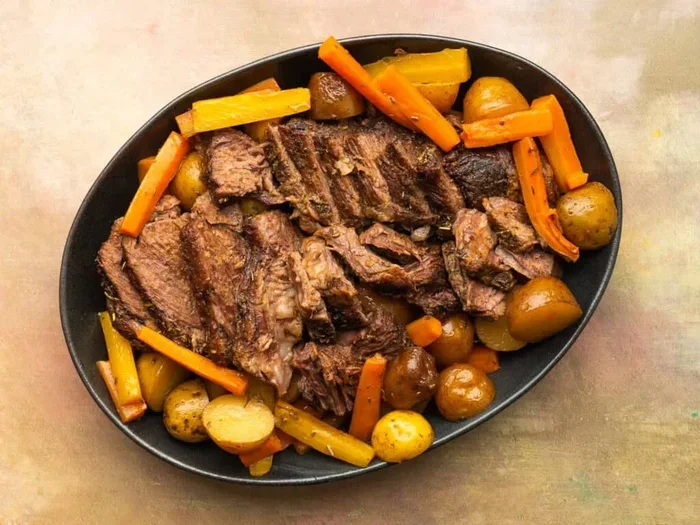
Serve the sliced roast on a warm platter surrounded by the cooked vegetables. Spoon the gravy generously over the top. Your family and guests will be impressed by this beef roast recipes effort, and it is simpler than you might think.
Common Mistakes to Avoid
Even experienced cooks can make mistakes when preparing a chuck roast in the oven. Learning from these common errors will help you achieve better results every single time.
Skipping the Sear
This is the number one mistake people make. Some recipes skip the searing step to save time, but the flavor difference is enormous. That golden-brown crust adds a depth of flavor that you simply cannot get any other way. Take the extra 15 minutes to sear your roast properly. Your taste buds will thank you.
Using Too Much Liquid
It might seem logical to fill the pot with as much liquid as possible, but this is a mistake. You only need enough liquid to come about one-third to halfway up the sides of the roast. Too much liquid dilutes the flavor and turns your braise into a soup instead of a rich, concentrated sauce.
Opening the Oven Door Too Often
Every time you open the oven door, you lose heat and extend the cooking time. Try to resist the urge to check on the roast constantly. Trust your thermometer and check the internal temperature only once or twice during the cook. Keep the oven door closed as much as possible for the best results.
Cutting Too Soon
We already covered this, but it bears repeating. Cutting into your roast immediately after removing it from the oven causes the juices to run out, leaving you with a drier piece of meat. Be patient. Let it rest. The few extra minutes make a huge difference in the final result.
Choosing the Wrong Cut of Meat
Not every cut of beef works for oven braising. Avoid lean cuts like sirloin or tenderloin for this cooking method. They will dry out in the oven. Stick with well-marbled cuts like beef chuck, which have enough fat and connective tissue to become tender during the long cooking process.
Expert Tips for the Perfect Chuck Roast
Take your chuck roast in the oven to the next level with these expert tips that professional chefs swear by:
- Dry brine overnight: Salt the roast generously and leave it uncovered in the refrigerator overnight. This draws out moisture, which then gets reabsorbed along with the salt, seasoning the meat deeply and creating a better crust.
- Deglaze the pot: After searing, scrape up any browned bits stuck to the bottom of the pot. Those bits are packed with flavor. Add a splash of broth or wine and scrape them up before adding your braising liquid.
- Use a Dutch oven: A heavy cast-iron Dutch oven distributes heat evenly and retains it well, making it the ideal vessel for oven braising.
- Add a splash of vinegar: A small amount of apple cider vinegar in the braising liquid helps tenderize the meat and adds a subtle brightness that balances the richness.
- Cook a day ahead: Beef roast recipes like this one often taste even better the next day. The flavors have time to meld and develop overnight in the refrigerator. Simply reheat gently on the stovetop before serving.
- Let the meat come to room temperature: Take the roast out of the refrigerator about 30 minutes before cooking. This helps it cook more evenly throughout.
Storing and Reheating Leftover Roast
A slow cooked chuck roast makes excellent leftovers. In fact, many people say the flavors improve after a day in the refrigerator. Here is how to store and reheat your roast properly:
- Storing: Place leftover roast and any vegetables or gravy in an airtight container. Refrigerate within two hours of cooking. The roast will keep in the refrigerator for up to four days.
- Freezing: You can freeze cooked chuck roast for up to three months. Wrap it tightly in plastic wrap and then aluminum foil, or place it in a freezer-safe bag. Remove as much air as possible to prevent freezer burn.
- Reheating: The best way to reheat a chuck roast in the oven is to add a splash of beef broth to keep it moist. Cover with foil and heat at 300 degrees Fahrenheit for about 20 to 30 minutes. Alternatively, you can reheat individual slices in a skillet with a little broth or gravy over medium-low heat.
Avoid reheating in the microwave if you can. It tends to dry out the meat unevenly and can make the outer edges tough while the center stays cold. Low and slow reheating on the stovetop or in the oven preserves the tenderness you worked so hard to achieve.
Frequently Asked Questions
How long does it take to cook a chuck roast in the oven at 325 degrees?
A three to four pound chuck roast at 325 degrees Fahrenheit typically takes about three to four hours. The exact time depends on the size and shape of the roast. Always use a meat thermometer to check the internal temperature rather than relying solely on the clock. The target temperature is 190 to 200 degrees Fahrenheit for optimal tenderness.
Can I cook a chuck roast at 350 degrees instead?
Yes, you can cook a chuck roast in the oven at 350 degrees, but it will cook faster and you need to be more careful. The higher temperature can cause the outside to dry out before the inside becomes tender. If you use 350 degrees, check the roast earlier than you normally would and consider covering it with foil partway through cooking to retain moisture.
What is the best liquid to use for braising a chuck roast?
A combination of beef broth and red wine is widely considered the best braising liquid for a braised chuck roast. The broth provides savory depth, while the wine adds acidity and complexity. You can also use just broth, just wine, or even beer as your braising liquid. The key is to have enough liquid to create steam but not so much that the roast is submerged.
How do I know when my chuck roast is done?
The most reliable way is to use a meat thermometer. Insert it into the thickest part of the roast and look for an internal temperature of 190 to 200 degrees Fahrenheit. At this temperature, the collagen has fully broken down and the meat will be incredibly tender. You can also check by inserting a fork and twisting gently. If the meat shreds easily, it is done.
Should I cover the roast while cooking in the oven?
Yes, for most of the cooking time, you should cover the pot with a tight-fitting lid or aluminum foil. This traps moisture and heat, creating the braising environment that makes the meat tender. You can uncover the roast for the last 30 minutes if you want to crisp up the top or reduce the sauce.
Can I add vegetables directly to the pot with the roast?
Absolutely. Vegetables like onions, carrots, celery, and potatoes cook beautifully alongside a chuck roast in the oven. Add them to the pot after searing the roast and before it goes into the oven. The vegetables absorb the rich flavors from the braising liquid and the meat juices, making them just as delicious as the roast itself.
Conclusion
Preparing a delicious chuck roast in the oven is one of the most satisfying things you can do in the kitchen. It is a dish that rewards patience and simplicity. You do not need fancy techniques or expensive equipment. A good cut of beef chuck, a few simple seasonings, a hot oven, and some time are all you need.
From selecting the right roast at the store to searing it to perfection, braising it low and slow, and letting it rest before serving, every step matters. Follow the tips in this guide, avoid the common mistakes, and you will be well on your way to making a tender, juicy chuck roast that will have everyone coming back for seconds.
The beauty of a slow cooked chuck roast is that it gets easier with practice. Each time you make it, you will learn a little more about your oven, your cut of meat, and your personal preferences. Before long, this beef chuck roast recipe will become a staple in your household, a reliable and impressive dish that you can prepare with confidence.
So fire up your oven, grab a chuck roast from the store, and get cooking. Your kitchen and your dinner table are about to become the best places in the house. Happy cooking!