How To Reheat Pizza In The Oven For Crispy Perfection
Reheating pizza in the oven is the best way to bring back that crispy crust and gooey cheese. Unlike the microwave, which makes pizza soggy, the oven restores the original texture and flavor of your leftover pizza. This guide covers everything you need to know about how to reheat pizza in the oven for crispy perfection, from setup to serving.
There is nothing quite like a slice of warm, crispy pizza. Whether you ordered too much last night or saved a few pieces from a weekend feast, leftover pizza is always a treat. But here is the thing — the way you reheat your pizza changes everything.
Many people reach for the microwave because it is fast and easy. But if you have ever microwaved pizza, you know the result. The crust turns rubbery, the cheese gets rubbery, and the whole thing feels sad and soggy. That is why how to reheat pizza in the oven is the real answer. The oven brings back the crunch, melts the cheese evenly, and makes your leftover pizza taste almost as good as fresh out of the box.
In this guide, we will walk you through every step of reheating pizza in the oven the right way. We will cover temperatures, timing, tools, and tricks that make a huge difference. By the end, you will never go back to the microwave again. Let us get started.
Key Takeaways
- Oven reheat wins: The oven delivers a crispy crust and evenly melted cheese that the microwave cannot match.
- Right temperature matters: Preheating to 375-400°F ensures your pizza heats through without burning the toppings.
- Prep before baking: Using a pizza stone or baking sheet and avoiding foil makes a big difference in texture.
- Timing is key: 8-12 minutes is the sweet spot for most slices, but thick-crust pizza may need longer.
- Avoid common mistakes: Skipping the preheat, using too high heat, and stacking slices leads to poor results.
- Different pizza, different approach: Thin crust, deep dish, and frozen pizza all need slightly different reheating techniques.
- Leftover storage counts: How you store your pizza affects how well it reheats in the oven.
📑 Table of Contents
Why Reheating Pizza In The Oven Is The Best Method
You might wonder why the oven is better than other methods. The answer comes down to heat distribution and moisture control. When you reheat pizza in the oven, the dry, circulating heat works from the outside in. This crisps up the crust while gently warming the toppings and melting the cheese evenly.
The microwave, on the other hand, uses steam. That steam gets trapped between the crust and the toppings. It makes the base soggy and softens the cheese into a rubbery blanket. Nobody wants that.
Here is a quick look at why oven reheating wins:
- Crispy crust: The oven dries out the surface just enough to bring back that satisfying crunch.
- Even heating: Hot air circulates around the slice, so there are no cold spots or overheated edges.
- Better texture: The cheese melts smoothly and the toppings stay in place.
- No sogginess: Unlike the microwave, the oven removes excess moisture instead of trapping it.
- Fresher taste: Pizza reheated in the oven closely mimics the taste and feel of a freshly baked pie.
When you learn how to reheat pizza in the oven properly, you unlock a level of flavor and texture that no other method can touch. It is a simple upgrade that makes a massive difference.
What You Need Before You Start
Before you start reheating pizza in the oven, gather your tools. You do not need much, but having the right equipment makes the process smoother and the results better.
Essential Tools For Oven Reheating
- Oven-safe baking sheet: A standard flat sheet works great for reheating individual slices.
- Pizza stone: This is the secret weapon for crispy crust. A pizza stone absorbs moisture and conducts heat evenly.
- Parchment paper: It prevents sticking and makes cleanup a breeze.
- Oven mitts: You will be handling hot trays, so protect your hands.
- Aluminum foil (optional): Foil can help with cleanup but is not always necessary.
Choosing The Right Pizza Slice
Not all leftover pizza is the same. The type of pizza you are reheating matters. Thin crust pizza reheats quickly and benefits from a slightly lower temperature. Thick crust or deep dish pizza needs more time and a steady, moderate heat. Frozen pizza that has been thawed also responds well to oven reheating.
If your pizza has been sitting in the fridge overnight, that is actually ideal. Cold pizza holds its shape better during reheating than room-temperature slices. So do not feel bad about saving your pizza — it works in your favor.
Step-by-Step Guide To Reheat Pizza In The Oven
Now let us get into the heart of the matter. Here is exactly how to reheat pizza in the oven for the best possible results. Follow these steps closely and you will be amazed at the difference.
Step 1: Preheat Your Oven
The first and most important step is preheating. Set your oven to 375°F (190°C). This temperature is the sweet spot for reheating pizza. It is hot enough to crisp the crust but not so hot that it burns the cheese or dries out the toppings.
Preheating is non-negotiable. If you put your pizza into a cold oven, it will cook unevenly. The crust will sit in moisture for too long and turn soft instead of crispy. Give your oven at least 10-15 minutes to reach the right temperature before the pizza goes in.
Step 2: Prepare Your Baking Surface
While the oven heats up, prepare your baking sheet or pizza stone. If you are using a pizza stone, place it in the oven during preheating. This allows the stone to absorb heat and transfer it directly to the crust, which is exactly what creates that crispy bottom.
If you are using a baking sheet, line it with parchment paper. This prevents the cheese from sticking and makes cleanup effortless. You can also use a lightly oiled sheet for extra crispiness, but it is not necessary.
Step 3: Arrange The Pizza Slices
Place your pizza slices on the baking sheet or pizza stone. Leave space between each slice. Do not stack them. Stacking traps steam and defeats the whole purpose of using the oven. Each slice needs room for hot air to circulate around it.
If you are reheating multiple slices, you can bake them in batches. It is better to do two rounds of five slices than to cram ten slices onto one sheet and end up with uneven heating.
Step 4: Bake At The Right Temperature
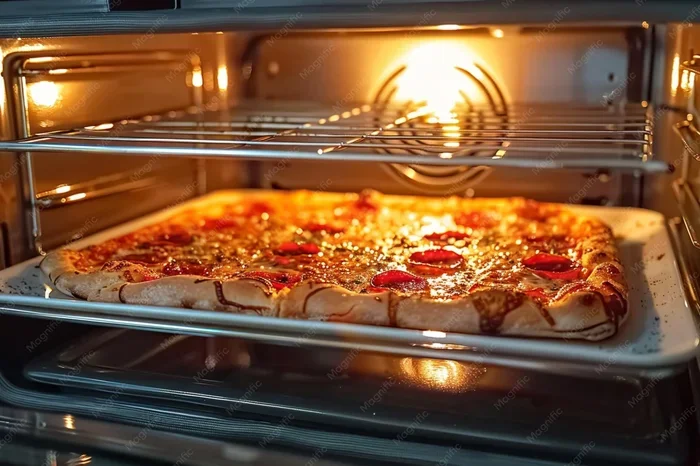
Once your oven is preheated and the pizza is ready, slide the tray into the oven. Set a timer for 8-12 minutes. Thin crust pizza usually needs about 8 minutes. Thicker crust or deep dish pizza may need the full 12 minutes or even a couple of extra minutes.
Watch the pizza closely during the last few minutes. You want the cheese to be bubbly and slightly golden. The crust should look browned and feel firm to the touch. If the cheese is browning too fast but the crust is still soft, lower the temperature by 25°F and give it a couple more minutes.
Step 5: Let It Cool Slightly Before Eating
This step is easy to skip, but it matters. When you pull the pizza out of the oven, let it rest on the counter for 2-3 minutes. The cheese will set slightly, the toppings will stop sliding around, and the internal temperature will even out. It also gives you time to resist the urge to burn your mouth.
Use a spatula to transfer the slices to a plate. If you used parchment paper, just lift the whole sheet and slide the slices off. Enjoy your perfectly reheated pizza.
Tips For Different Pizza Types
Not all pizza is created equal, and different styles require slightly different approaches when reheating in the oven. Here are some tailored tips to get the best results no matter what kind of pizza you are working with.
Thin Crust Pizza
Thin crust pizza is delicate. It can go from perfectly crispy to burnt quickly. For thin slices, lower the oven temperature to 350°F and reduce the baking time to 6-8 minutes. Keep a close eye on the cheese. Thin crust pizza reheats fast, so check it a minute or two before the timer goes off.
Thick Crust And Deep Dish Pizza
Thick crust and deep dish pizza has more mass, which means it needs more time to heat through. Stick with 375°F and bake for 12-15 minutes. The thicker the crust, the longer it needs. If your deep dish pizza has a lot of sauce and cheese, the extra time ensures the center heats evenly without burning the top.
Frozen Pizza That Has Been Thawed
If you froze your pizza and then thawed it before refrigerating, treat it like fresh leftover pizza. Follow the standard steps at 375°F for 8-12 minutes. Thawed frozen pizza reheats very well in the oven because the moisture content has already stabilized.
Pizza With Toppings Like Vegetables Or Meats
Pizza loaded with vegetables or meats can be tricky. Heavier toppings hold more moisture, which can make the crust soggy if not managed properly. Place thicker toppings on top of the cheese rather than under it. This helps the crust stay crisp while the toppings warm through evenly.
Common Mistakes To Avoid When Reheating Pizza
Even with the best intentions, people make mistakes when reheating pizza in the oven. Knowing what to avoid saves you from disappointment and wasted food.
Skipping The Preheat
This is the number one mistake. Putting pizza into a cold oven means it cooks slowly and unevenly. The crust absorbs moisture instead of crisping up. Always preheat your oven and wait for it to reach the target temperature before inserting the pizza.
Using Too High A Temperature
Cranking the oven up to 450°F or higher might seem like a shortcut, but it backfires. High heat burns the cheese and dries out the toppings before the crust has a chance to crisp properly. Stick with 375°F for reliable, consistent results every time.
Stacking Pizza Slices
It might be tempting to fit all your slices on one tray, but stacking them traps steam. Steam is the enemy of crispy crust. Give each slice its own space on the baking sheet. If you need to bake more slices than fit on one tray, do it in two batches.
Reheating For Too Long
Overbaked pizza is just as bad as underbaked pizza. When the cheese turns dark brown and the edges start to char, you have gone too far. Set a timer and check the pizza a few minutes before it is supposed to be done. You can always add a minute or two, but you cannot undo a burnt slice.
Using The Wrong Pan
Not all pans work well for reheating pizza. Dark, non-stick pans can overheat the bottom of the crust. Glass pans heat unevenly. A light-colored aluminum baking sheet or a pizza stone gives you the most consistent results.
Expert Tips For Perfect Reheated Pizza Every Time
Once you master the basics of how to reheat pizza in the oven, you can start experimenting with pro-level techniques. These expert tips take your reheated pizza from good to outstanding.
Use A Pizza Stone For The Crispiest Bottom
A pizza stone is a game changer. It absorbs moisture from the crust and distributes heat evenly across the entire surface. If you are serious about pizza, invest in a good pizza stone. Preheat it in the oven for at least 30 minutes before baking your slices. The result is a bottom crust that is crispy and golden, just like it was when the pizza was first made.
Brush The Crust With A Little Olive Oil
This is a simple trick that makes a noticeable difference. Before placing the pizza in the oven, lightly brush the exposed crust with extra virgin olive oil. The oil adds flavor, promotes browning, and creates an extra layer of crispiness. It is especially helpful for reheated slices that have dried out a bit in the fridge.
Add A Fresh Layer Of Cheese
If your leftover pizza has lost some of its cheese appeal, sprinkle a small amount of fresh mozzarella on top before reheating. The fresh cheese melts beautifully and adds a creamy texture that complements the reheated base. This trick works especially well for pepperoni pizza and margherita pizza.
Try The “Broil” Finish
For an extra crispy top, switch your oven to broil during the last 1-2 minutes of baking. The intense top-down heat browns the cheese and caramelizes the toppings quickly. But be very careful — broiling happens fast. Watch the pizza closely to prevent burning.
Store Pizza Properly For Better Reheating
The way you store your leftover pizza affects how well it reheats. Wrap slices individually in parchment paper and then place them in an airtight container or zip-lock bag. This prevents the slices from drying out and absorbing odors from the fridge. Properly stored pizza reheats much better than pizza left uncovered on a plate.
Frequently Asked Questions
Can I Reheat Pizza In The Oven Without A Pizza Stone?
Absolutely. A pizza stone is great but not required. A standard aluminum baking sheet works just fine for reheating pizza in the oven. If you want extra crispiness, you can place the slice directly on the oven rack without a pan. Just put a baking sheet on the rack below to catch any drips.
How Long Should I Reheat Pizza In The Oven?
For most slices, 8-12 minutes at 375°F is the sweet spot. Thin crust pizza may be ready in 6-8 minutes, while thick crust or deep dish pizza might need 12-15 minutes. Always check the pizza a few minutes before the timer goes off to avoid overcooking.
Is It Better To Reheat Pizza In The Oven Or The Microwave?
The oven is far superior for reheating pizza. The microwave uses steam, which makes the crust soggy and the cheese rubbery. The oven uses dry heat, which crisps the crust and melts the cheese evenly. It takes a bit longer, but the results are worth the extra time.
Can I Reheat Pizza On Aluminum Foil In The Oven?
Yes, you can use aluminum foil as a lining for your baking sheet. However, avoid wrapping the pizza tightly in foil because it traps steam and prevents the crust from crisping. If you use foil, leave gaps or use it only as a loose cover for easy cleanup.
What Temperature Is Best For Reheating Pizza In The Oven?
375°F (190°C) is the ideal temperature for reheating pizza in the oven. It is hot enough to crisp the crust and melt the cheese but not so hot that it burns the toppings. For thin crust pizza, you can drop the temperature to 350°F for a gentler, more even heat.
Can I Reheat Pizza That Has Been Left Out Overnight?
It is not recommended to reheat pizza that has been left at room temperature for more than two hours. Bacteria can grow on food left out overnight, and reheating may not kill all of it. Always store leftover pizza in the refrigerator within two hours of cooking or receiving it.
Conclusion
Learning how to reheat pizza in the oven is one of the simplest kitchen skills you can develop, and the payoff is enormous. Instead of settling for soggy, sad leftover slices, you can enjoy crispy crust, perfectly melted cheese, and warm toppings that taste almost as good as the first time around.
The process is straightforward. Preheat your oven to 375°F, prepare your baking sheet or pizza stone, arrange the slices with space between them, and bake for 8-12 minutes. Avoid the common mistakes like skipping the preheat, stacking slices, or using too high a temperature. And if you want to go the extra mile, try a pizza stone, a light brush of olive oil, or a quick broil finish at the end.
Whether you are reheating thin crust, deep dish, or a classic pepperoni slice, the oven delivers results that no microwave can match. Next time you have leftover pizza, remember these tips and give your oven a chance to work its magic. Your taste buds will thank you.
Now that you know the best way to reheat pizza in the oven, you have no reason to settle for anything less than crispy perfection. Enjoy every bite.