How To Remove Stains From A Dutch Oven Effortlessly
Discover the easiest ways to remove stains from a Dutch oven and bring back its original shine. This guide covers simple home remedies like baking soda and vinegar, plus deep cleaning methods for tough burnt marks. You’ll learn how to care for both cast iron and enameled Dutch ovens without harsh chemicals. Say goodbye to stubborn stains and hello to a spotless cooking pot.
There is nothing worse than pulling out your favorite Dutch oven only to find it covered in dark, stubborn stains. Whether you braised short ribs or baked a crusty loaf of bread, those marks can make your pot look neglected. The good news is that how to remove stains from a Dutch oven is simpler than you think. You do not need expensive cleaners or harsh chemicals. With a few household ingredients and a little patience, you can restore your pot to its former glory.
This guide will walk you through every method you need. We will cover quick fixes for fresh stains and deep cleaning solutions for burnt-on messes. You will also learn how to care for both cast iron and enameled Dutch ovens properly. By the end, you will feel confident tackling any stain. Let us bring your pot back to life.
Key Takeaways
- Baking soda and vinegar are your go-to heroes for lifting most stains from a Dutch oven.
- Soak overnight to loosen burnt-on food, making cleanup a breeze.
- Avoid abrasive scrubbers on enameled surfaces to prevent scratching.
- Bar Keepers Friend works wonders on discoloration but use it carefully on cast iron.
- Prevent future stains by cooking with fats and cleaning promptly.
- Never put a hot Dutch oven in cold water to avoid warping or cracking.
- Hydrogen peroxide and cream of tartar can tackle rust spots safely.
📑 Table of Contents
Why Dutch Ovens Get Stained
Stains happen to every cook. They are not a sign of bad cooking. They are just a natural result of high heat and food reacting with the pot’s surface. Understanding why stains form helps you choose the right cleaning method.
The Science Behind Staining
When you cook at high temperatures, sugars and proteins in food break down. They bond to the metal or enamel. This creates a discoloration that we see as stains. In cast iron, these stains can also affect the seasoning layer. In enameled pots, they sit on the surface. Knowing this helps you pick a gentle but effective approach.
Cast Iron vs Enameled: Different Stain Personalities
Cast iron and enameled Dutch ovens react very differently to stains. Cast iron is porous. It absorbs oils and pigments over time. Enameled surfaces are non-porous. Stains sit on top and are easier to lift. However, enamel can chip if you use the wrong scrubber. Each type needs a specific cleaning strategy.
| Pot Type | Common Stains | Safe Cleaners | Avoid |
|---|---|---|---|
| Cast Iron | Dark discoloration, rust spots | Baking soda, salt, chainmail scrubber | Dishwasher, soap (if re-seasoning) |
| Enameled | Burnt marks, food residue, stains | Baking soda paste, vinegar, Bar Keepers Friend | Steel wool, abrasive pads |
Quick Fixes For Fresh Stains
If you just finished cooking and the pot is still warm, act fast. Fresh stains come out much easier than old ones. These quick methods take only minutes.
The Baking Soda Paste Method
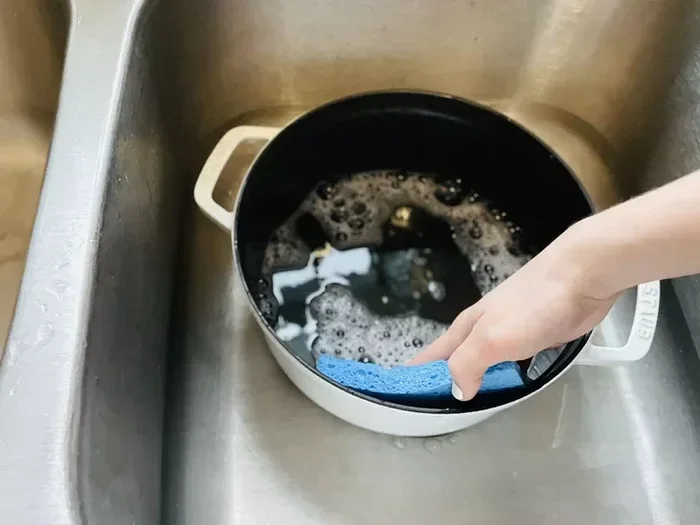
Make a thick paste with baking soda and a little water. Spread it over the stained area. Let it sit for 10 to 15 minutes. Then scrub gently with a non-abrasive sponge. The baking soda acts as a mild abrasive that lifts stains without scratching. Rinse with warm water and dry thoroughly. This works great for light discoloration and food residue.
Vinegar Soak For Light Discoloration
White vinegar is a natural acid that breaks down stains. Fill the pot with equal parts water and vinegar. Bring it to a gentle simmer on the stove. Let it cook for 10 minutes. Then turn off the heat and let it cool. The stains will loosen and wipe away easily. This is one of the simplest ways to remove stains from a Dutch oven when they are still fresh.
Quick Tip: Always dry your Dutch oven completely after washing. Moisture is the enemy of cast iron and can cause rust.
Deep Cleaning Methods For Stubborn Stains
Some stains have been sitting for days or weeks. They look dark and baked on. These need a deeper approach. Do not panic. You can still save your pot.
The Overnight Baking Soda Soak
For tough stains, create a thick baking soda paste and spread it over the entire stained area. Add a splash of water to make it spreadable. Cover the pot and let it sit overnight. The baking soda will slowly break down the burnt-on food. In the morning, use a soft scrub brush to lift the stains. Rinse well. This method is safe for both cast iron and enameled pots.
Bar Keepers Friend For Discoloration
Bar Keepers Friend is a powdered cleanser that works wonders on discoloration. It contains oxalic acid, which is gentle but effective. Sprinkle a small amount on the wet pot. Add a little water to make a paste. Scrub in circular motions with a soft sponge. Rinse completely. How to remove stains from a Dutch oven with Bar Keepers Friend is a trusted method among home cooks. Just avoid using it on cast iron too often, as it can strip seasoning.
Hydrogen Peroxide And Cream Of Tartar Paste
This combo is great for rust spots and dark stains. Mix equal parts cream of tartar and hydrogen peroxide to form a paste. Apply it to the affected area. Let it sit for 30 minutes. Then scrub gently and rinse. The hydrogen peroxide acts as a mild bleach, while the cream of tartar provides gentle abrasion. This method is especially useful for enameled Dutch ovens.
Common Mistakes: Many people reach for steel wool or harsh scrub pads. These can scratch enamel and ruin the seasoning on cast iron. Always use soft sponges or brushes. Another mistake is soaking cast iron in water for days, which invites rust. Keep soaks short and dry the pot immediately.
How To Clean Enameled Dutch Ovens Safely
Enameled Dutch ovens are beautiful but need gentle care. The enamel coating can chip if you are too rough. Follow these steps to keep the surface smooth and stain-free.
Gentle Cleaning With Mild Soap
Unlike cast iron, enameled pots can handle mild dish soap. Use a drop of gentle dish soap and warm water. Wash with a soft sponge. Rinse thoroughly. Dry with a towel right away. Soap will not damage the enamel or affect the non-stick properties. This is the safest daily cleaning method.
Removing Stains Without Scratching
For stains that soap cannot lift, make a paste of baking soda and water. Apply it to the stain and let it sit for 20 minutes. Use a non-scratch scrub brush to gently work the paste in. The fine grains of baking soda will lift the stain without leaving marks. Rinse well and dry completely. How to remove stains from a Dutch oven enameled version is all about patience and gentle action.
Expert Insights: Professional chefs recommend cleaning enameled Dutch ovens while they are still slightly warm. Stains set in faster when the pot cools completely. A quick warm water rinse after cooking can prevent most stains from forming in the first place.
Preventing Stains On Your Dutch Oven
Prevention is always easier than cleaning. A few simple habits will keep your Dutch oven looking new for years. These tips save you time and effort in the long run.
Seasoning And Oil Habits
For cast iron, proper seasoning creates a protective barrier. After cleaning, apply a thin layer of oil while the pot is still warm. Use a paper towel to wipe off excess. This prevents food from sticking and reduces staining. Enameled pots do not need seasoning, but a light coat of oil after drying helps maintain the exterior finish.
Cleaning Right After Cooking
Do not let food sit in the pot for hours. As soon as you are done eating, fill the pot with warm water. Let it soak for a few minutes. This loosens food particles before they bond to the surface. A quick wash right after use is the best stain prevention strategy.
Quick Tips:
- Always use wooden or silicone utensils with enameled Dutch ovens to avoid scratches.
- Store your Dutch oven with the lid slightly ajar to allow air circulation and prevent moisture buildup.
- For cast iron, avoid cooking highly acidic foods like tomatoes for long periods, as they can strip seasoning and cause stains.
When To Replace Your Dutch Oven
Even with great care, Dutch ovens do not last forever. Knowing when to replace one saves you from cooking in a damaged pot. Here are the signs to watch for.
Signs Of Permanent Damage
Check for deep chips in the enamel that expose the cast iron underneath. These spots can rust and affect your food. If the cast iron is cracked or warped, it is time for a new pot. A wobbly base means the pot can no longer heat evenly. Stains that will not come off after multiple treatments might also indicate permanent damage to the surface.
Caring For Your Investment
A good Dutch oven can last a lifetime. Proper care is the key. Clean it gently, dry it completely, and store it in a dry place. If you follow the cleaning methods in this guide, your pot will stay in great shape. How to remove stains from a Dutch oven is just one part of the equation. Regular maintenance ensures your pot always looks and performs its best.
Conclusion
How to remove stains from a Dutch oven does not have to be a chore. With the right methods, you can tackle any stain safely and effectively. Whether you use a simple baking soda paste, a vinegar soak, or Bar Keepers Friend, the key is to be gentle and consistent. Remember to always match your cleaning method to your pot type. Cast iron needs careful seasoning, while enameled surfaces need scratch-free cleaning. Prevention is your best friend. Clean your pot soon after cooking, dry it thoroughly, and store it properly.
Now you have all the tools and knowledge to keep your Dutch oven in perfect condition. Try these methods the next time you see a stain. Your pot will thank you with years of reliable cooking. Enjoy the process and the beautiful, clean results.
Frequently Asked Questions
Can I use bleach to remove stains from a Dutch oven?
No, bleach is too harsh and can damage the seasoning on cast iron or the enamel coating. Stick to natural cleaners like baking soda, vinegar, and Bar Keepers Friend for safe and effective stain removal.
Is it safe to put a Dutch oven in the dishwasher?
It depends on the type. Enameled Dutch ovens are generally dishwasher safe, but hand washing extends their life. Cast iron Dutch ovens should never go in the dishwasher, as the high heat and detergent strip the seasoning and promote rust.
How do I get burnt-on food out of a Dutch oven?
Fill the pot with water and add a cup of white vinegar. Bring it to a boil, then let it simmer for 10 minutes. Add two tablespoons of baking soda and let it fizz. The burnt-on food will loosen and wipe away easily.
Can I use steel wool on a cast iron Dutch oven?
Yes, but only if you are re-seasoning the pot. For routine cleaning, use a chainmail scrubber or a stiff nylon brush. Steel wool can be too abrasive for enameled surfaces and should be avoided there.
How often should I deep clean my Dutch oven?
Deep clean when you notice stains or discoloration that regular washing cannot remove. For most home cooks, this is once a month or as needed. Regular light cleaning after each use keeps deep cleaning sessions rare.
Will stains affect the taste of my food?
Surface stains on a well-maintained Dutch oven do not affect food taste. However, if the pot has rust or flaking enamel, those can impart off-flavors. Always inspect your pot before cooking if you notice damage.