Can I Use Dutch Oven On Induction Cooktop Without Worry
Yes, you can use a Dutch oven on an induction cooktop — but only if it has a magnetic, flat bottom. Not every Dutch oven works with induction cooking, so choosing the right one matters. Cast iron and certain stainless steel Dutch ovens are your best bets for induction compatibility. This guide covers everything you need to know about Dutch oven induction cooktop use, from materials to buying tips.
You just got a shiny new induction cooktop, and you are wondering about that beautiful Dutch oven sitting in your kitchen cabinet. Can you fire it up and get cooking? The short answer is yes, but there is a little more to it than that. Not every Dutch oven plays nice with induction technology. The material, the bottom shape, and even the thickness all matter when it comes to Dutch oven induction cooktop use. In this article, we will walk you through everything you need to know. You will learn which Dutch ovens work, why they work, and how to avoid common pitfalls.
Induction cooking has exploded in popularity over the last few years. It heats faster, cools down quicker, and uses less energy than traditional gas or electric burners. But it does have one big requirement — your cookware must be magnetic. This means your trusty Dutch oven might not cut it if it is made from the wrong material. Let us dive deep into the world of induction compatible cookware and make sure you get the most out of your kitchen setup.
Key Takeaways
- Not all Dutch ovens work on induction: Only those with a ferromagnetic, flat bottom are compatible.
- Cast iron and enameled cast iron are top choices: They respond well to magnetic induction fields.
- Check the bottom label or magnet test: A simple fridge magnet can tell you if your pot is induction safe.
- Flat bottoms matter more than ever: Warped or curved bases won’t make proper contact with the induction surface.
- Using the right Dutch oven improves cooking performance: You get even heat distribution and faster response times.
- Avoid common mistakes like sliding the pot: Lift it when placing or removing to protect the glass cooktop.
- Look for induction-compatible labels when buying: Reputable brands clearly mark their cookware as induction safe.
📑 Table of Contents
- What Makes a Dutch Oven Induction Compatible
- Types of Dutch Ovens That Work on Induction
- How Induction Cooktops Work with Dutch Ovens
- Benefits of Using a Dutch Oven on Induction
- Common Mistakes to Avoid
- How to Choose the Best Dutch Oven for Induction
- Expert Tips for Getting the Most from Your Dutch Oven on Induction
- Conclusion
What Makes a Dutch Oven Induction Compatible
The science behind induction cooking is simpler than most people think. An induction hob creates a magnetic field that directly heats the pot or pan. The cooktop itself does not get hot. Instead, the ferromagnetic material in your cookware absorbs the energy and turns it into heat. This is why your Dutch oven needs a magnetic bottom to work on an induction surface.
The Role of Ferromagnetic Materials
Ferromagnetic materials are metals that respond strongly to magnets. Iron and certain steel alloys fall into this category. When the induction coil beneath the glass surface sends out an alternating magnetic field, it creates tiny electric currents inside the ferromagnetic pot. These currents generate heat right inside the cookware itself. So the pot heats up from the inside out, which is incredibly efficient.
If your Dutch oven is made from cast iron, it will almost always work on induction. Cast iron is loaded with iron, making it highly magnetic. Pure aluminum or copper Dutch ovens, on the other hand, will not work at all. These metals are non-magnetic and will not respond to the induction field. Some manufacturers add a magnetic disc to the bottom of non-ferrous pots, but the results can be inconsistent.
Why Flat Bottoms Are Essential
Induction cooktops need full, flat contact with the bottom of your pot. The magnetic field works best when the entire cooking zone touches the surface evenly. A warped or curved bottom will cause uneven heating and may trigger your induction hob to shut off. This is a safety feature that prevents damage to the cooktop and your food.
Before you place any Dutch oven on your induction hob, check the bottom carefully. Run your hand across it. Does it feel perfectly flat? Even a slight warp can cause problems. If you are shopping for a new flat bottom pot, look for ones specifically designed for induction. Many brands now produce induction-ready Dutch ovens with reinforced, perfectly flat bases.
Types of Dutch Ovens That Work on Induction
Not all Dutch ovens are created equal when it comes to induction safe cooking. Let us break down the most common types and see which ones belong on your induction cooktop.
Cast Iron Dutch Ovens
Cast iron Dutch ovens are the gold standard for induction cooking. Brands like Le Creuset, Staub, and Lodge make excellent options that work beautifully on induction hobs. The heavy iron construction provides outstanding heat retention and even heat distribution. You can sear meat, slow cook stews, bake bread, and so much more.
The downside? Cast iron is heavy. If you have wrist or shoulder issues, lifting a full cast iron Dutch oven might be challenging. Also, bare cast iron requires seasoning and careful maintenance. Enameled cast iron solves many of these problems, and it works just as well on induction.
Enameled Cast Iron Dutch Ovens
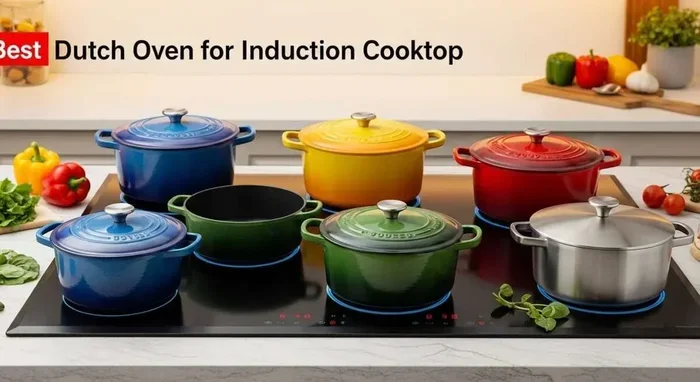
Enameled cast iron Dutch ovens give you all the benefits of traditional cast iron without the maintenance hassle. The enamel coating prevents rusting and makes cleaning a breeze. Since the core is still cast iron, magnetic induction works perfectly with these pots. They are slightly more expensive than bare cast iron, but many home cooks find the extra cost worth it.
Enameled Dutch ovens come in vibrant colors and sleek finishes. They look stunning on an induction cooktop and transition easily from stovetop to oven. Just be mindful of thermal shock — avoid plunging a hot enameled pot into cold water, as this can crack the enamel.
Stainless Steel Dutch Ovens
Not all stainless steel Dutch ovens are induction compatible. Pure stainless steel is non-magnetic, so it will not work on induction. However, many stainless steel Dutch ovens have a magnetic bottom or an aluminum or iron core sandwiched between layers of steel. These are designed specifically to work with induction hobs.
When shopping for a stainless steel Dutch oven, always check the product description for an induction compatible label. Brands like All-Clad and Tramontesta offer excellent stainless steel options that are fully induction ready. They tend to be lighter than cast iron and heat up quickly, though they do not retain heat as long.
Aluminum and Copper Dutch Ovens
Pure aluminum and copper Dutch ovens will not work on induction. These metals are non-ferromagnetic, meaning they do not interact with the induction field. Some brands attach a magnetic stainless steel disc to the bottom of these pots, but this can lead to uneven heating. The disc may create a hot spot directly above it while the rest of the bottom stays cooler.
If you love the look and feel of an aluminum Dutch oven, consider using a separate induction adapter disc. These flat magnetic plates sit between the cooktop and your pot, transferring the induction energy to non-magnetic cookware. They work, but they add an extra step and can reduce efficiency.
How Induction Cooktops Work with Dutch Ovens
Understanding how your induction hob interacts with your Dutch oven helps you get the best results. The process is quite different from gas or electric cooking, and it affects everything from preheating times to temperature control.
Instant Heat Response
One of the biggest advantages of induction cooking is the speed. When you turn on an induction burner, the magnetic field activates immediately. Your Dutch oven starts heating up within seconds. There is no waiting for a coil or element to warm up first. This instant response gives you incredible control over your cooking.
For tasks like searing a steak or bringing water to a boil, this speed is a game changer. You can go from cold to screaming hot in moments. Just remember that the pot itself gets very hot very fast, so always use oven mitts or pot holders.
Even Heat Distribution Across the Cooking Surface
A good Dutch oven on induction delivers remarkably even heat. The magnetic field energizes the entire bottom of the pot uniformly, which means no cold spots. This is especially important for slow-cooked dishes like braises, soups, and chili. Everything simmers at the same temperature from edge to center.
Cast iron excels at this because of its density and weight. The heavy material absorbs the induction energy and spreads it across the entire cooking surface. Thinner stainless steel pots may heat up faster but can develop hot spots if the bottom is not thick enough.
Energy Efficiency and Safety
Induction cooking is remarkably energy efficient. Because the magnetic field heats the pot directly, very little energy is wasted heating the air or the cooktop surface. Studies show that induction uses roughly 85 to 90 percent of the energy generated, compared to about 40 percent for gas burners.
Safety is another major benefit. The induction cooktop surface stays relatively cool because it is not heated by a flame or electric coil. If you accidentally leave a pot on the surface, it will not burn onto the glass like it might with a traditional electric hob. This makes cleanup much easier and reduces the risk of burns.
Benefits of Using a Dutch Oven on Induction
Pairing a quality Dutch oven with an induction cooktop offers some fantastic advantages. Let us look at why this combination works so well.
Superior Searing and Browning
Cast iron Dutch ovens on induction reach high temperatures quickly and hold that heat steady. This makes them perfect for searing meat before slow cooking it. The magnetic induction technology delivers consistent, powerful heat across the entire bottom of the pot, giving you a beautiful, even sear.
You can brown a full rack of ribs or a thick pork shoulder with ease. The heavy lid traps moisture while the intense bottom heat creates a deep, flavorful crust. This combination is hard to beat for braised dishes and one-pot meals.
Excellent Slow Cooking Performance
Dutch ovens are famous for slow cooking, and induction cooktops make this process even better. The precise temperature control on most modern induction hobs lets you maintain a gentle simmer for hours without hot spots or scorching. Your stew or chili will cook evenly from start to finish.
Because induction responds so quickly to temperature changes, you can adjust the heat instantly. Turn the dial down, and the pot cools almost immediately. This level of control is especially useful for delicate simmering tasks that require steady, low heat over a long period.
Versatility Across Cooking Methods
A Dutch oven on induction is not just for stovetop cooking. You can use it on the induction burner to sauté vegetables, sear meat, and build a flavorful base. Then transfer the entire pot to the oven for hours of gentle, even baking. This seamless transition from cooktop to oven is one of the main reasons Dutch ovens are so beloved.
You can also use your Dutch oven for baking bread, making soups, boiling pasta, and even deep frying. The induction cooktop provides the perfect starting point for all of these tasks, and the heavy Dutch oven lid keeps everything contained and moist.
Common Mistakes to Avoid
Even experienced cooks make mistakes when using a Dutch oven on induction. Here are the most common pitfalls and how to avoid them.
Using Non-Compatible Cookware
The most obvious mistake is grabbing a Dutch oven that is not induction compatible. If the pot is not magnetic, it simply will not work on an induction hob. Always check the bottom of your pot for an induction symbol or the words “induction compatible.” When in doubt, try the magnet test — stick a fridge magnet to the bottom. If it sticks firmly, you are good to go.
Sliding the Pot on the Glass Surface
Induction cooktops have smooth glass surfaces that scratch easily. Never slide your Dutch oven across the cooking zone. The heavy cast iron or enameled pot can grind the glass and leave permanent marks. Instead, always lift the pot when placing it or removing it from the burner.
This simple habit protects your cooktop and extends its life significantly. It also prevents the risk of chipping the enamel on the bottom of your Dutch oven if it catches on a rough surface.
Ignoring the Size of the Cooking Zone
Every induction burner has a specific cooking zone size. Your Dutch oven bottom must fit within this zone for the induction field to work properly. If the pot is too small, the hob may not detect it and will not turn on. If it is too large, it may extend beyond the heating area and heat unevenly.
Most induction hobs have a cooking zone that is about 12 to 14 inches in diameter. A standard 6-quart Dutch oven usually fits perfectly. Check your hob’s manual for the exact cooking zone dimensions and match your pot accordingly.
Overheating an Empty Pot
Never turn on an induction burner with an empty Dutch oven sitting on it. Cast iron heats up extremely fast on induction, and an empty pot can become scorching hot in seconds. This can damage the pot, warp the bottom, or even crack the enamel coating.
Always add oil, water, or food before you turn on the heat. If you need to preheat the pot, do so on the lowest setting and add your cooking medium within a minute or two.
How to Choose the Best Dutch Oven for Induction
Buying a Dutch oven for your induction cooktop is an investment. You want one that will last for years and deliver excellent cooking performance every time. Here is what to look for.
Check the Material
The material is the single most important factor. Cast iron and enameled cast iron are the top choices for induction cooking. They are magnetic, heavy, and excellent at retaining and distributing heat. If you prefer lighter cookware, look for stainless steel Dutch ovens with a magnetic bottom or an induction-compatible disc.
Avoid pure aluminum, pure copper, or ceramic Dutch ovens unless they have a specially designed induction-compatible base. These materials will not work on their own with magnetic induction technology.
Look for the Induction Symbol
Most cookware brands place an induction symbol on the bottom of their pots. It looks like a coil of wire with four or five loops. If you see this symbol, the manufacturer has confirmed the pot works on induction. You can also check the product listing online or on the box for explicit mention of induction compatibility.
Consider the Size and Weight
Dutch ovens come in sizes ranging from 2 quarts to 13 quarts. For a family of four, a 5 to 7 quart pot is usually the sweet spot. It is large enough to cook a full meal but not so heavy that it becomes unwieldy.
Keep in mind that cast iron Dutch ovens are heavy. A 6-quart cast iron Dutch oven can weigh 12 pounds or more when filled with food and liquid. Make sure you are comfortable lifting and handling the pot, especially when it is full of hot contents.
Read Reviews and Compare Brands
Before you buy, read reviews from other induction cooktop users. Pay attention to comments about heat distribution, durability, and ease of cleaning. Top brands like Le Creuset, Staub, Lodge, and Dutch Brands offer excellent induction-compatible options at various price points.
Compare features like lid design, handle comfort, and oven-safe temperature limits. A well-designed lid traps moisture and heat effectively, which is crucial for slow cooking and braising. Ergonomic handles make it easier to move the heavy pot safely.
Expert Tips for Getting the Most from Your Dutch Oven on Induction
A few insider tips can elevate your cooking experience and protect your cookware.
- Preheat gradually: Start on a low setting and increase the heat slowly. This prevents thermal shock and ensures even preheating across the entire bottom.
- Use the right amount of oil: Induction cooktops heat oil very quickly. Add a small amount first and let it warm before adding your ingredients.
- Clean gently: Avoid abrasive scrubbers on enameled Dutch ovens. Warm soapy water and a soft sponge work best.
- Store with care: Place a cloth or paper towel between stacked pots to prevent scratches and chips.
- Use lower heat settings: Induction is so efficient that you often need less heat than you think. Start low and adjust up as needed.
- Invest in a good lid lifter: The heavy lid of a Dutch oven can be tricky to remove safely. A dedicated lid lifter makes the job easier and safer.
Conclusion
The answer to the question Can I Use Dutch Oven On Induction Cooktop is a clear yes — as long as your Dutch oven is induction compatible. Cast iron, enameled cast iron, and certain stainless steel Dutch ovens all work beautifully on induction hobs. The key is to check for a magnetic, flat bottom and to use the pot correctly.
By following the tips in this guide, you will get the best performance from your Dutch oven induction cooktop setup. You will enjoy faster heating, more even cooking, and greater energy efficiency. Avoid the common mistakes, choose the right material, and you will be making amazing meals in no time.
Take a moment to check your current Dutch oven for induction compatibility. If it does not work, now is a great time to invest in a high-quality induction safe Dutch oven. Your kitchen, your cooking, and your taste buds will all thank you. Happy cooking!
Frequently Asked Questions
Can any Dutch oven be used on an induction cooktop?
No, only Dutch ovens with a magnetic, flat bottom work on induction. Cast iron, enameled cast iron, and certain stainless steel options are compatible. Always check for the induction symbol or test with a magnet before using.
How do I know if my Dutch oven is induction compatible?
Look for the induction symbol on the bottom of the pot, which looks like a coiled wire. You can also perform a simple magnet test — if a fridge magnet sticks firmly to the bottom, your Dutch oven will work on induction.
Is enameled cast iron safe for induction cooking?
Yes, enameled cast iron is perfectly safe and works excellently on induction cooktops. The enamel coating is just a glass-like layer over the cast iron core, which remains magnetic and responsive to induction.
Can I use an aluminum Dutch oven on induction?
Pure aluminum Dutch ovens do not work on induction because aluminum is non-magnetic. However, some aluminum Dutch ovens have a magnetic stainless steel disc bonded to the bottom, making them induction compatible. Always check the product specifications.
Do I need a special Dutch oven brand for induction?
No, you do not need a specific brand. Any Dutch oven made from magnetic material with a flat bottom will work on induction. Popular brands like Le Creuset, Staub, Lodge, and All-Clad all offer excellent induction-compatible options.
Will using a Dutch oven on induction damage my cooktop?
No, using a compatible Dutch oven will not damage your induction cooktop. Just be sure to lift the pot rather than sliding it to avoid scratching the glass surface. Also, ensure the bottom of the pot is clean and free of debris before placing it on the cooktop.
=== META TITLE ===
Can I Use Dutch Oven On Induction Cooktop Without Worry
=== URL SLUG ===
can-i-use-dutch-oven-on-induction-cooktop
=== SEO TITLE ===
Can I Use Dutch Oven On Induction Cooktop Without Worry