Is Cast Iron Oven Safe The Definitive Answer Inside
Yes, cast iron is completely oven safe and has been a trusted kitchen staple for centuries. Cast iron cookware handles extreme heat beautifully and distributes it evenly for perfect cooking results. Whether you use a skillet, Dutch oven, or baking pan, your cast iron pieces can go from stovetop to oven with ease. This guide covers everything you need to know about cast iron oven safe use, including temperature limits, care tips, and common mistakes to avoid.
Cast iron cookware has been a kitchen essential for hundreds of years. People love it for its durability and even heat distribution. But one question comes up again and again: is cast iron oven safe? The answer is a clear yes. Cast iron can go in the oven safely and perform beautifully at high temperatures.
Many home cooks worry about using their favorite cast iron skillet or Dutch oven in the oven. They wonder about temperature limits, handle safety, and whether the seasoning will hold up. This guide answers all of those questions and more. You will learn exactly how to use cast iron in the oven without any worries.
Whether you bake cornbread, roast vegetables, or make a hearty stew, your cast iron cookware can handle the job. Understanding cast iron oven safe practices keeps your food safe and your cookware in great shape for years. Let us dive into everything you need to know.
Key Takeaways
- Cast iron is fully oven safe: It can handle very high temperatures without damage.
- Check the handle material: Some handles with plastic or rubber parts are not oven safe.
- Preheat gradually: Avoid thermal shock by heating cast iron slowly in the oven.
- Temperature limits exist: Most cast iron can go up to 500°F, but enamel-coated versions have lower limits.
- Seasoning matters: Proper seasoning protects your cast iron and improves oven cooking results.
- Avoid sudden temperature changes: Never place cold cast iron on a hot surface or vice versa.
- Cast iron lasts forever: With proper care, your oven-safe cast iron cookware can last generations.
📑 Table of Contents
- What Makes Cookware Oven Safe?
- Is Cast Iron Oven Safe? The Short Answer
- Types of Cast Iron Cookware for Oven Use
- Common Mistakes People Make with Cast Iron in Ovens
- How to Use Cast Iron Safely in Your Oven
- Cast Iron Oven Safety: Pros and Cons
- Expert Tips for Getting the Most from Cast Iron in the Oven
- Conclusion
What Makes Cookware Oven Safe?
Not all cookware can go in the oven. Some materials warp or release harmful chemicals when heated too high. Cast iron, however, is one of the most oven-friendly materials you can find. But what exactly makes cookware safe for oven use?
Understanding Oven Safe Ratings
Every piece of cookware has an oven safe rating. This rating tells you the maximum temperature it can handle. For cast iron, the rating is usually very high. Most cast iron pans can withstand temperatures up to 500°F or even higher.
When you buy new oven safe cast iron, check the manufacturer’s label. Look for the oven safe symbol or temperature rating. This small step saves you from accidental damage. Some cheap cookware looks like cast iron but is actually a mix of metals that cannot handle high heat.
Materials That Work in Ovens
Different materials behave differently in ovens. Here is a quick look at common cookware materials:
- Cast iron: Extremely heat resistant and oven safe at very high temperatures.
- Stainless steel: Oven safe up to 500°F to 600°F depending on the handle.
- Aluminum: Oven safe but can warp at very high temperatures.
- Non-stick pans: Usually oven safe up to 450°F, but the coating may degrade.
- Glass bakeware: Oven safe but sensitive to sudden temperature changes.
Cast iron stands out because it handles extreme heat without warping or releasing toxins. It is truly one of the best oven safe cookware options available.
Is Cast Iron Oven Safe? The Short Answer
The short answer is yes. Cast iron is oven safe, and it has been used in ovens for generations. This heavy, durable material was designed to handle direct heat from fires and stoves long before modern ovens existed. So using it in today’s ovens is perfectly natural for it.
But “yes” comes with a few important conditions. You need to know the temperature limits, check the handle construction, and follow proper heating practices. Ignoring these details can lead to problems, even with the best cast iron cookware.
Why Cast Iron Handles High Heat So Well
Cast iron is made from iron and carbon. This combination creates a metal that can absorb and retain heat incredibly well. When you preheat a cast iron pan in the oven, it spreads heat evenly across the entire surface.
This even heat distribution is why many bakers love cast iron baking. Cornbread bakes with a perfect golden crust. Pizzas get a crispy bottom that is hard to achieve in other pans. The heat retention of cast iron makes it ideal for oven cooking.
Another reason cast iron excels in ovens is its high heat tolerance. Unlike non-stick coatings that break down at high temperatures, bare cast iron stays strong. It does not release harmful fumes or degrade when exposed to heat. This makes it a safe and healthy choice for oven cooking.
Temperature Limits for Cast Iron
While cast iron handles high heat well, it does have limits. Most bare cast iron cookware can safely go up to 500°F. Some seasoned cast iron pieces can handle even higher temperatures, around 600°F to 700°F.
However, enamel-coated cast iron has different limits. The enamel coating can crack or chip if exposed to temperatures above 450°F to 500°F. If you have enamel-coated cast iron oven safe pieces, always check the manufacturer’s recommended temperature. Exceeding it can ruin the coating and make the cookware unsafe.
Here is a quick comparison of cast iron types and their temperature limits:
- Bare cast iron: Safe up to 500°F to 700°F
- Enamel-coated cast iron: Safe up to 450°F to 500°F
- Cast iron with silicone handles: Safe up to 400°F to 450°F
- Cast iron with metal handles: Safe up to 500°F or higher
Knowing these limits helps you use your cookware safely. It also prevents costly mistakes that could damage your favorite cast iron pan.
Types of Cast Iron Cookware for Oven Use
Cast iron comes in many shapes and sizes. Each type serves a different purpose in the kitchen. Let us look at the most popular cast iron pieces and how they work in the oven.
Cast Iron Skillets in the Oven
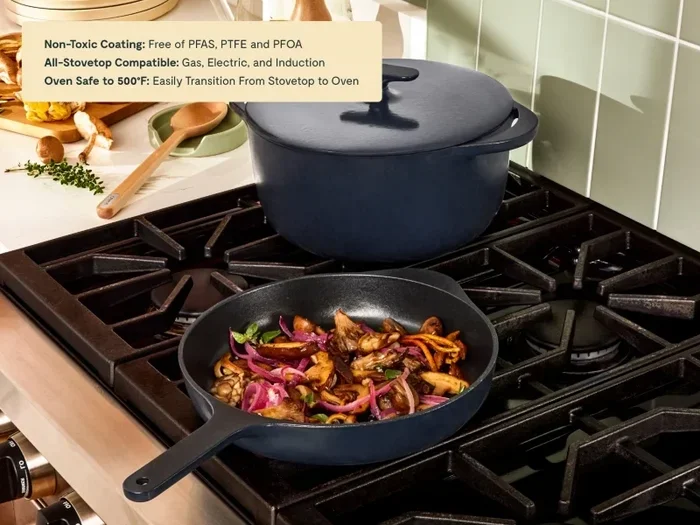
The cast iron skillet is the most popular piece of cast iron cookware. It is versatile, durable, and oven safe. You can sear meat on the stovetop and then move the skillet right into the oven to finish cooking.
Many recipes call for starting a dish on the stovetop and finishing it in the oven. A cast iron oven safe skillet makes this transition seamless. It holds heat steady during the oven phase, giving you consistent results every time.
When choosing a skillet for oven use, look for one with a metal handle. Skillets with plastic or wooden handles may not be safe at high oven temperatures. Always check the product details before placing any skillet in a hot oven.
Cast Iron Dutch Ovens and Baking
A cast iron Dutch oven is a heavy, deep pot with a tight-fitting lid. It is perfect for oven cooking because it traps heat and moisture inside. Dutch ovens are ideal for soups, stews, braised meats, and even baked goods.
Many bakers use Dutch ovens for cast iron baking projects. Artisan bread gets a perfect crust when baked in a Dutch oven. The lid traps steam, which helps the bread rise and develop a crispy exterior.
Enamel-coated Dutch ovens are very popular for oven use. They come in beautiful colors and do not require seasoning. However, they have lower temperature limits than bare cast iron. Always follow the care instructions for your specific Dutch oven model.
Cast Iron Baking Pans and Muffin Tins
Cast iron baking pans and muffin tins are excellent for oven use. They heat slowly but hold heat for a long time. This makes them perfect for casseroles, cobblers, and baked goods that need steady, even heat.
Cast iron muffin tins produce muffins with beautifully browned bottoms. The heavy iron conducts heat evenly, so every muffin bakes at the same rate. These pans are oven safe and built to last a lifetime.
Common Mistakes People Make with Cast Iron in Ovens
Even though cast iron is durable, people make mistakes that can damage it or create safety hazards. Knowing these common errors helps you avoid them and keep your cookware in great shape.
Thermal Shock and Why It Matters
Thermal shock happens when you expose cast iron to sudden temperature changes. For example, taking a cold cast iron pan from the fridge and placing it in a hot oven. Or moving a hot skillet directly onto a cold wet surface.
Thermal shock can cause cast iron to crack or warp. The sudden expansion and contraction of the metal creates stress that the iron cannot handle. This is one of the biggest enemies of cast iron oven safe use.
To prevent thermal shock, always let your cast iron come to room temperature before placing it in the oven. Never place hot cast iron on a cold or wet surface. Let it cool gradually on a wooden board or trivet.
Ignoring the Handle Material
The handle is often the weak point in cast iron cookware. Many skillets and pots have metal handles that are fully oven safe. But some models include silicone, rubber, or plastic grips on the handles.
These materials have lower heat tolerances than cast iron. Silicone handles may melt or release harmful fumes at high oven temperatures. Before placing any piece in the oven, check the handle construction. If it has any non-metal parts, verify that they are rated for oven use.
Some manufacturers sell replacement metal handles for cast iron cookware. Upgrading to a fully metal handle makes your pan completely cast iron oven safe at all temperatures. This is a smart investment for serious cooks.
Skipping the Preheating Step
Some people rush the preheating process. They place cold cast iron directly into a hot oven. While bare cast iron can handle this, it is not the best practice. Gradual preheating gives the iron time to expand evenly.
Preheating your cast iron slowly also helps food release more easily. When the pan heats evenly, it creates a natural non-stick surface. This is especially important for cast iron cooking in the oven.
How to Use Cast Iron Safely in Your Oven
Using cast iron in the oven is simple once you know the basics. Follow these steps for safe and effective oven cooking with your cast iron pieces.
Step-by-Step Oven Use Guide
- Check the handle: Make sure all handle materials are oven safe at your intended temperature.
- Preheat gradually: Place the cast iron in the oven as it heats up. Do not put cold iron into a preheated oven if you want to avoid thermal shock.
- Use oven mitts: Cast iron gets very hot. Always use thick oven mitts when handling it.
- Place on a stable surface: Set hot cast iron on a heat-safe trivet or baking sheet. Never place it directly on a cold countertop.
- Let it cool naturally: Allow the cast iron to cool in the oven or on the stove. Do not plunge hot iron into cold water.
- Clean properly: Wash with warm water and a stiff brush. Dry immediately to prevent rust.
- Re-season if needed: Apply a thin layer of oil after cleaning to maintain the seasoning.
Cleaning and Maintenance Tips
Proper cleaning keeps your cast iron in top condition for oven use. Never put cast iron in a dishwasher. The harsh detergents strip away seasoning and can cause rust.
After oven cooking, let the pan cool slightly. Then wash it with warm water and a small amount of mild dish soap. For stuck-on food, use a chainmail scrubber or stiff brush. Dry the pan completely with a towel, then place it on the stove over low heat for a minute to remove all moisture.
Apply a thin layer of flaxseed oil or vegetable oil after cleaning. This maintains the seasoning cast iron finish and keeps the surface smooth. Well-seasoned cast iron performs better in the oven and releases food more easily.
Cast Iron Oven Safety: Pros and Cons
Like any cookware material, cast iron has advantages and disadvantages for oven use. Understanding both sides helps you make informed decisions in the kitchen.
The Pros of Using Cast Iron in the Oven
- Extremely durable: Cast iron lasts forever with proper care.
- High heat tolerance: Handles temperatures that would destroy most other cookware.
- Even heat distribution: Cooks food evenly across the entire surface.
- Heat retention: Stays hot for a long time, keeping food warm at the table.
- Natural non-stick surface: Well-seasoned cast iron releases food easily.
- Versatile: Goes from stovetop to oven to table seamlessly.
- Affordable: Quality cast iron cookware is available at reasonable prices.
The Cons of Using Cast Iron in the Oven
- Heavy weight: Cast iron is very heavy, which can be difficult to handle.
- Handle limitations: Some handles are not rated for high oven temperatures.
- Requires maintenance: Needs regular seasoning and proper drying to prevent rust.
- Slow to heat: Takes longer to preheat than thinner materials like aluminum.
- Reactive with acidic foods: Tomatoes and citrus can strip seasoning if cooked too long.
- Not dishwasher safe: Requires hand washing to maintain the seasoning.
Despite these cons, most cooks find that the benefits of cast iron far outweigh the drawbacks. With a little care and attention, your cast iron cookware will serve you well for decades of oven cooking.
Expert Tips for Getting the Most from Cast Iron in the Oven
Experienced cooks know that cast iron oven use gets even better with a few pro tips. Here are some expert insights to elevate your cooking.
Preheat the cast iron with the oven. This ensures even heat distribution before food touches the surface. It also reduces the risk of hot spots that can cause uneven cooking or sticking.
Use the right oil for seasoning. Flaxseed oil creates a hard, durable seasoning layer. Grapeseed oil and vegetable oil are also excellent choices. Avoid olive oil for seasoning, as it can become sticky at high temperatures.
Store cast iron properly. Keep it in a dry place with good air circulation. If you stack cast iron pans, place a paper towel between them to absorb moisture and prevent rust.
Re-season after oven cooking. The high heat of the oven can sometimes strip away seasoning. A quick re-season after each use keeps the surface in perfect condition for your next cast iron cooking session.
Conclusion
Cast iron oven safe use is simple, reliable, and incredibly rewarding. Cast iron handles high oven temperatures with ease, distributes heat evenly, and lasts for generations. Whether you own a bare cast iron skillet or an enamel-coated Dutch oven, your cookware can handle oven cooking safely.
The key to safe cast iron oven use is understanding temperature limits, checking handle materials, and avoiding sudden temperature changes. With these basics in mind, you can confidently use your cast iron in the oven for roasting, baking, broiling, and more.
Take care of your cast iron, and it will take care of you. Preheat gradually, clean properly, and re-season regularly. Follow these simple practices, and your cast iron oven safe cookware will serve you beautifully for many years to come. Start using your cast iron in the oven today and enjoy the wonderful results that only this timeless material can deliver.
Frequently Asked Questions
Can I put a cast iron skillet in a 450°F oven?
Yes, most bare cast iron skillets can safely handle 450°F. Cast iron is one of the most heat-resistant cookware materials available. Just make sure the handle is also rated for that temperature before placing it in the oven.
Is enamel-coated cast iron oven safe?
Yes, enamel-coated cast iron is oven safe, but at lower temperatures than bare cast iron. Most enamel-coated pieces are safe up to 450°F to 500°F. Always check the manufacturer’s guidelines for your specific piece to avoid damaging the enamel coating.
Can cast iron go from the fridge to the oven?
No, this is a dangerous practice that can cause thermal shock. The sudden temperature change can crack or warp the cast iron. Always let cast iron come to room temperature before placing it in the oven for safe cooking.
How do I know if my cast iron is oven safe?
Check the product packaging or the manufacturer’s website for the oven safe rating. Most bare cast iron cookware is oven safe up to at least 500°F. Look for the oven safe symbol on the product or in the user manual to confirm.
Can cast iron handles melt in the oven?
Metal handles will not melt in the oven. However, silicone, rubber, or plastic handle grips can melt or release harmful fumes at high temperatures. Always check the handle material before using cast iron in the oven at temperatures above 400°F.
How often should I re-season cast iron used in the oven?
Re-season your cast iron every few weeks if you use it frequently in the oven. The high heat can gradually wear away the seasoning layer. A quick oil application after cleaning keeps the surface protected and maintains its natural non-stick properties.