Where To Place Toaster Oven In Kitchen And Why It Matters
Finding the right spot for your toaster oven is more important than most people think. Proper toaster oven placement affects kitchen safety, counter space, and cooking performance. This guide covers the best locations, safety tips, and common mistakes so you can set up your toaster oven in kitchen the right way. You will learn practical ideas for every kitchen size and layout.
You bought a toaster oven. Maybe it was the shiny new model that caught your eye at the store. Or perhaps you needed a second oven for holiday cooking. Either way, you now face a question that seems simple but really matters. Where exactly should you put this appliance in your kitchen?
The answer is not as obvious as it sounds. Plenty of people shove their toaster oven on the first flat surface they see. That might work for now. But over time, poor placement causes real problems. It can waste counter space. It can create a fire hazard. It can even make your kitchen feel cramped and frustrating. Where to place toaster oven in kitchen is a decision that affects your daily routine, your safety, and your overall kitchen flow.
This guide walks you through everything you need to know. We will cover the best locations, safety rules, small kitchen tricks, and common mistakes. By the end, you will know exactly where your toaster oven belongs. Let us get into it.
Key Takeaways
- Proper placement prevents fires: Keeping your toaster oven away from walls and cabinets reduces heat damage and fire risks.
- Counter space matters: The best location balances accessibility with enough clearance for heat dissipation.
- Small kitchens need creative solutions: Corner spots, appliance carts, and vertical storage can save precious space.
- Under-cabinet placement works but needs care: You must ensure proper ventilation and enough clearance.
- Avoid common mistakes: Placing it near curtains, plastic, or wet areas creates serious hazards.
- Consider your cooking habits: How often you use the toaster oven affects where it should live in your kitchen.
📑 Table of Contents
Why Toaster Oven Placement Matters
Some people treat a toaster oven like a temporary guest. They set it on the counter, use it, and leave it there forever. But your kitchen is a workspace. Every appliance needs a thoughtful spot. Toaster oven placement is not just about looks. It is about function, safety, and comfort.
First, think about safety. Toaster ovens get hot. Very hot. The outside surface can reach temperatures that burn skin or melt nearby plastics. The back and sides radiate heat too. If you place it too close to a wall or a curtain, you are asking for trouble. Toaster oven safety starts with choosing the right spot.
Second, consider your counter space. Kitchen counters are precious. A toaster oven takes up a good chunk of real estate. If you park it in the wrong place, it blocks your prep area. You might find yourself working around it every single day. That gets annoying fast. Kitchen counter space should work for you, not against you.
Third, think about heat and ventilation. Toaster ovens need airflow to work properly. They release heat during cooking. If you trap that heat between cabinets or against a wall, the appliance works harder. It can overheat. It can wear out faster. Proper ventilation for toaster oven keeps your appliance running smoothly and your kitchen safe.
Finally, placement affects your kitchen layout and flow. A well-placed toaster oven feels like it belongs. It is easy to reach. It does not block your path. A poorly placed one creates clutter and frustration. Kitchen layout ideas should always include where your appliances live.
Best Locations for Your Toaster Oven
Not every spot on your kitchen counter is created equal. Some locations work beautifully. Others are a bad idea. Let us explore the best places to put your toaster oven and why each one works.
On the Kitchen Counter
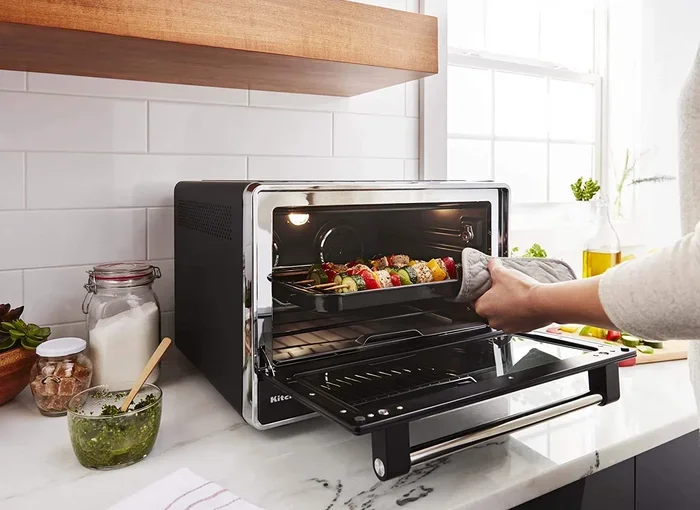
The kitchen counter is the most common spot for a toaster oven. It makes sense. Counters are flat, accessible, and at a comfortable height. But not every counter spot is ideal.
The best counter placement is away from the backsplash and walls. You want at least a few inches of space on all sides. This allows for toaster oven heat dissipation. The hot air needs somewhere to go. If the back of the oven sits flush against the wall, heat builds up. That is bad for the appliance and a potential fire risk.
Also, think about what is around the toaster oven. Keep it away from paper towels, plastic containers, and cloth towels. These items can catch fire easily when exposed to high heat. A clear zone around the appliance is essential for kitchen safety tips that actually work.
If you have a wide counter, try to place the toaster oven near an outlet but not directly under one. Overloading an outlet with a hot appliance is a real danger. Toaster oven cord management matters too. Keep the cord tidy and away from heat sources.
Under the Cabinet
Mounting a toaster oven under a cabinet is a popular choice. It saves counter space and keeps the appliance tucked away. This works well in kitchens with upper cabinets and enough vertical clearance.
But under-cabinet placement comes with rules. First, check the toaster oven clearance guidelines. Most manufacturers recommend at least 3 to 5 inches between the top of the oven and the cabinet bottom. Heat rises, and without that gap, the cabinet can absorb heat. Over time, this can damage wood or laminate.
Second, make sure the cabinet is ventilated. Solid cabinets trap heat. If possible, choose a cabinet with slats or open sides. Some people install small fans under cabinets to help with airflow. This is a smart move for toaster oven ventilation.
Third, be mindful of the weight. Toaster ovens are not light. Upper cabinets are not always built to handle the extra load on the wall. Check your cabinet’s weight rating before you mount anything. Safety always comes first.
On a Kitchen Island
If your kitchen has an island, you have a great option. An island provides a dedicated spot for a toaster oven. It keeps the appliance separate from your main prep area. This is especially helpful if you cook often and need every inch of counter space.
The island should have enough depth to hold the toaster oven securely. A standard depth of 25 to 30 inches works well. Make sure there is enough space around the oven for heat to escape. You do not want the toaster oven wedged between the island edge and a wall or another appliance.
One thing to watch is the outlet. Islands often have built-in outlets, which is convenient. But make sure the outlet is not directly behind the toaster oven. The heat from the appliance can damage the outlet over time. Countertop height for appliances should also be comfortable. You do not want to reach up too high or bend down too low to use it.
On a Dedicated Appliance Cart
A kitchen cart or trolley is a flexible solution. It gives your toaster oven a home that is easy to move. This is perfect for small kitchens or for people who only use the toaster oven occasionally.
Appliance carts come in many sizes and styles. Look for one with a sturdy shelf that can handle the weight of a hot toaster oven. Some carts have wheels, which makes it easy to roll the appliance out when you need it and tuck it away when you do not.
The beauty of a cart is that you can place it anywhere. Near the sink, next to the fridge, or in a corner. Just make sure the cart is stable and on a flat surface. A wobbly cart with a hot toaster oven on top is a safety concern. Kitchen organization tips like using a cart can transform a cramped space into something functional and pleasant.
Safety Considerations for Toaster Oven Placement
Safety is the biggest reason placement matters. A toaster oven is a small appliance that generates a lot of heat. When you do not give it enough room, things can go wrong quickly. Let us break down the key safety factors.
Clearance and Ventilation
Every toaster oven needs space to breathe. The sides, back, and top all release heat during use. Manufacturers usually specify minimum clearance distances. As a general rule, keep at least 3 to 5 inches on each side and at least 5 inches at the back.
Do not push the toaster oven against a wall. Even a few inches of space makes a big difference. The hot air needs to circulate. Without proper airflow, the appliance overheats. This can shorten its lifespan or, in worst cases, cause a fire. Toaster oven distance from wall is one of the most overlooked safety factors.
Ventilation also matters for the floor and surrounding surfaces. Do not place a toaster oven on a plastic surface or near items that can melt. A heat-resistant mat or trivet underneath adds an extra layer of protection. These small steps make a big difference in toaster oven safety.
Heat and Fire Safety
Toaster ovens are generally safe when used correctly. But placement plays a huge role in preventing accidents. Keep the appliance away from anything flammable. This includes curtains, paper, cardboard, and cleaning supplies.
If you have a window near your counter, do not place the toaster oven right below it. Sunlight and heat can combine to create problems. Curtains near windows are a particular fire risk when a hot appliance is nearby.
Also, never place a toaster oven near water. Keep it away from the sink and the stove. Water and electricity do not mix. A toaster oven near a wet counter or splashing sink is a serious hazard. Kitchen safety tips like keeping appliances away from water sources are simple but effective.
If you have children or pets, placement matters even more. A toaster oven on a low counter or the floor is within their reach. Hot surfaces and curious little hands do not mix well. Consider a higher shelf or a spot that is out of reach. Toaster oven fire hazard prevention starts with smart placement.
Small Kitchen Solutions
Not everyone has a spacious kitchen with plenty of counter room. Small kitchens are common, and they require creative solutions. The good news is that a toaster oven can still work beautifully in a compact space. You just need to think strategically.
Corner Placement Ideas
Corners are often wasted space. A toaster oven tucked into a corner can free up a huge portion of your counter. Look for compact or narrow toaster oven models that fit snugly into a corner. Some brands make smaller units specifically designed for tight spaces.
Corner placement works well as long as you maintain proper clearance. The two walls of the corner can trap heat if the oven is too deep. Leave enough space behind the appliance for airflow. A corner with a nearby outlet is ideal for toaster oven cord management and keeping cords tidy.
Vertical Storage Options
When floor space is limited, think vertically. Wall-mounted shelves, magnetic strips, and hanging racks can free up counter space. Some people install a narrow shelf above their toaster oven to store spices or small items.
But be careful with vertical storage above a toaster oven. The heat rising from the appliance can damage items stored above it. Keep shelves at a safe distance. Do not store paper, plastic, or fabric items above a toaster oven. Countertop appliance storage should always respect the heat output of the appliance.
Another option is a rolling cart that fits beside the fridge or stove. This gives you a dedicated spot for the toaster oven without eating into your main counter area. Small kitchen solutions like these can make a big difference in how functional and comfortable your kitchen feels.
Common Mistakes to Avoid
Even with the best intentions, people make mistakes when placing their toaster ovens. Here are the most common ones and how to avoid them.
- Placing it too close to the wall. This blocks ventilation and creates a fire risk. Always leave several inches of space behind and on the sides.
- Setting it on a flammable surface. Wood counters, plastic mats, and paper towels near a hot toaster oven are a danger. Use a heat-resistant surface.
- Ignoring cord placement. A dangling cord near heat or water is risky. Route cords safely and keep them away from the back of the oven.
- Blocking the vents. Many toaster ovens have vents on the sides or back. Covering these with clutter or other appliances traps heat inside.
- Placing it near the stove. The combined heat from both appliances is too much. It can damage the toaster oven and create a safety hazard.
- Forgetting about weight limits. Some shelves and carts cannot handle the weight of a toaster oven. Check the weight rating before you set it up.
Avoiding these mistakes keeps your kitchen safe and your toaster oven running well. A little thought goes a long way when you are deciding where to place toaster oven in kitchen.
Expert Tips for Perfect Placement
Here are some pro tips that make a real difference. These are the small details that separate a good setup from a great one.
- Measure before you buy. Know your counter space and choose a toaster oven that fits. Leave room for clearance on all sides.
- Use a heat-resistant mat. It protects your counter and adds stability. It also makes cleanup easier if food crumbs fall.
- Keep it near an outlet. Avoid using extension cords with a toaster oven. Plug it directly into a wall outlet for safety.
- Consider how often you use it. If you use the toaster oven daily, place it somewhere easy to access. If it is occasional, a cart or shelf works fine.
- Think about your cooking style. If you broil or bake frequently, the toaster oven gets hotter. Give it extra space in that case.
- Clean around the appliance regularly. Grease and crumbs buildup near the toaster oven can become a fire hazard. Keep the area clean.
These tips might seem small, but they add up. They protect your kitchen, your appliance, and your family. Toaster oven placement is one of those things that feels minor until it becomes a problem. A little planning now saves a lot of headaches later.
Toaster Oven vs. Full Oven: Does Placement Change?
Many people wonder if toaster oven vs full oven placement rules are different. The short answer is yes. A full-size oven is built into the kitchen and has dedicated ventilation. A toaster oven is a countertop appliance that needs more careful placement.
A full oven generates more heat overall, but it is enclosed and vented. A toaster oven sits on your counter and radiates heat in all directions. This means the clearance and safety rules for a toaster oven are stricter. You cannot treat a toaster oven the same way you treat a built-in oven.
If you have both a full oven and a toaster oven, give them space. Do not place them side by side. The combined heat output can overwhelm your counter area. Keep them separated by at least a few feet. This is one of the best kitchen organization tips for homes with multiple cooking appliances.
Final Thoughts on Toaster Oven Placement
So where should your toaster oven live? The answer depends on your kitchen, your habits, and your safety priorities. There is no one-size-fits-all solution. But there are clear rules that apply to everyone. Give your appliance enough space. Keep it away from flammable materials. Make sure it has proper ventilation. And choose a spot that makes sense for your daily routine.
Getting where to place toaster oven in kitchen right is one of the simplest things you can do for your kitchen. It improves safety, saves counter space, and makes your cooking experience more enjoyable. Take a few minutes today to evaluate your setup. Move the appliance if needed. Your future self will thank you.
A well-placed toaster oven is a quiet helper in the kitchen. It works hard every day. Give it the spot it deserves, and it will serve you well for years to come. Start with the tips in this guide and build a kitchen setup that is safe, efficient, and easy to love.
Frequently Asked Questions
What is the safest place to put a toaster oven on a kitchen counter?
The safest place is on a flat, heat-resistant surface away from walls, curtains, and flammable items. Leave at least 3 to 5 inches of space on all sides for proper ventilation. Keep it near an outlet but away from water sources like the sink.
Can I put a toaster oven under my kitchen cabinets?
Yes, but you need to follow clearance guidelines. Most manufacturers recommend at least 3 to 5 inches between the top of the oven and the cabinet bottom. Make sure the cabinet is ventilated and can handle the heat. Never block the vents of the toaster oven.
How much clearance does a toaster oven need from the wall?
Keep at least 5 inches of space between the back of the toaster oven and the wall. This allows hot air to escape properly. Without enough clearance, heat builds up and can damage the wall or create a fire risk.
Is it safe to use a toaster oven on a wooden countertop?
Yes, as long as you use a heat-resistant mat or trivet underneath. Direct contact with a hot toaster oven can scorch or damage wood over time. Always place the appliance on a stable, flat surface to prevent tipping.
What should I do if my kitchen is too small for a toaster oven?
Consider using a rolling appliance cart or placing the toaster oven in a corner. You can also look for compact models designed for small spaces. Vertical storage solutions like wall-mounted shelves can also help free up counter room.
How do I manage the toaster oven cord safely?
Keep the cord short and tidy. Route it away from heat sources and water. Never use an extension cord with a toaster oven. Plug it directly into a wall outlet to avoid overheating and potential fire hazards.
=== CONCLUSION ===
Deciding where to place toaster oven in kitchen is one of the easiest ways to make your kitchen safer and more efficient. A thoughtful setup protects your counters, prevents fire hazards, and keeps your appliance working at its best. Whether you choose the counter, under a cabinet, an island, or a cart, the key is giving the toaster oven enough space and keeping it away from dangers.
Use the tips and ideas in this guide to find the perfect spot. Think about your kitchen layout, your counter space, and your safety needs. Small changes in placement can make a big difference in how your kitchen looks and feels. Take action today and enjoy a better-organized, safer kitchen tomorrow.