Who First Brewed Coffee and Started a Global Obsession
Who first brewed coffee? The story begins in Ethiopia with a goat herder named Kaldi, who noticed his goats becoming energetic after eating red coffee cherries. From there, coffee brewing spread to Yemen, where Sufi monks used it to stay awake during long prayers. Today, coffee is a global obsession enjoyed by billions every single day.
The story of who first brewed coffee is one of the most fascinating journeys in food history. It spans centuries, continents, and countless cups. From a mysterious discovery in the highlands of Ethiopia to the coffee shops on every corner today, the path of coffee brewing is nothing short of extraordinary.
If you drink coffee every morning, you are part of a tradition that is thousands of years old. People have been roasting, grinding, and brewing coffee beans for so long that the exact origin has become a mix of legend and documented history. This article walks you through that journey step by step.
What you will learn here is simple but powerful. You will discover who brewed coffee first, how it spread across the world, and why it became the global obsession it is today. So grab your favorite mug, settle in, and let us explore the rich history behind every cup.
Key Takeaways
- Ethiopian Origins: The legend of Kaldi and his goats marks the earliest known discovery of coffee’s energizing effects.
- Yemeni Coffee Trade: Yemen was the first place where coffee was systematically cultivated and brewed for trade.
- Sufi Monks: Religious communities played a key role in popularizing coffee for its ability to aid meditation and late-night prayers.
- Global Spread: Coffee traveled from the Middle East to Europe, Asia, and the Americas through trade routes and colonization.
- Brewing Evolution: Early methods like boiling gave way to modern techniques like espresso and pour-over brewing.
- Cultural Impact: Coffeehouses became centers of social and intellectual life in cities around the world.
📑 Table of Contents
The Ethiopian Legend: Where Coffee Was Born
The most famous story about the origin of coffee comes from Ethiopia. According to legend, a goat herder named Kaldi noticed something strange one day. His goats had eaten berries from a certain tree. After eating them, the goats became full of energy and would not sleep at night.
Kaldi was curious. He tried the berries himself and felt a burst of alertness. He brought his discovery to a local monastery. The monks there were skeptical at first. But they soon found that chewing the berries helped them stay awake during long evening prayers.
This coffee discovery story has been passed down through generations. While we cannot prove every detail, historians agree that Ethiopia is the birthplace of coffee. Wild coffee plants still grow in the Ethiopian highlands today. The Ethiopian coffee legend remains the most widely accepted origin story.
The origin of coffee is deeply tied to the land and people of Ethiopia. The highland climate and rich soil created perfect conditions for wild coffee plants to thrive. Over time, local communities learned how to harvest, dry, and prepare the beans. What started as a natural curiosity became a cherished tradition.
Coffee Goes Global: The Yemen Connection
From Ethiopia, coffee traveled south to the Arabian Peninsula. This is where the real story of coffee brewing begins to take shape. Yemen became the first place where people grew coffee on purpose and traded it widely.
By the 15th century, farmers in Yemen were cultivating coffee plants in the fertile highlands. They dried the beans, roasted them, and boiled them to make a drink called qahwa. This early form of brewed coffee was very different from what we drink today. It was thick, often spiced, and served in small cups.
The Yemeni coffee trade was a game changer. Yemeni merchants shipped coffee beans to nearby regions. The port city of Mocha became one of the most important coffee trade routes in the world. The name “mocha” still reminds us of that era every time we order a chocolate-flavored coffee drink.
Sufi monks in Yemen were among the earliest regular coffee drinkers. They used coffee beans to stay alert during long nights of prayer and meditation. The monks believed that coffee helped them focus and connect more deeply with their spiritual practices.
This connection between coffee and religion helped spread its popularity. Monks shared their knowledge with travelers and traders. Soon, coffee brewing was no longer just a local habit. It was becoming a cultural tradition that crossed borders.
The Rise of Coffeehouses and Global Culture
As coffee grew in popularity, it moved beyond Yemen. Coffee culture began to take root in cities across the Middle East and North Africa. Cairo, Constantinople, and Damascus all became early centers of coffee drinking.
One of the most important developments was the rise of the coffeehouse. These were public spaces where people gathered to drink brewed coffee, talk, play games, and discuss ideas. Coffeehouses became known as “schools of the wise” because intellectuals, writers, and politicians often met there.
The role of coffeehouses in society was huge. They were places where news was shared, business deals were made, and debates were held. In many ways, the coffeehouse was the original social media platform. People came for the drink but stayed for the conversation.
By the 16th century, coffee had reached the Ottoman Empire. The Ottoman Turks developed their own rich coffee culture. They perfected the art of brewing very strong, unfiltered coffee in a small pot called a cezve or ibrik.
The Ottoman coffee tradition spread quickly. Turkish coffee brewing methods influenced how people prepared coffee across Europe and Asia. The idea of sitting down with a small cup of strong, flavorful brewed coffee became a beloved ritual in many cultures.
How Coffee Reached Europe and the Americas
Coffee reached Europe in the 17th century, and it was not always welcomed. Some people called it “the bitter invention of Satan.” Religious leaders and even kings tried to ban coffee drinking. But the popularity of coffee was too strong to stop.
When Pope Clement VIII tasted brewed coffee, he loved it so much that he gave it his approval. Legend says he baptized coffee as a Christian drink. After that, coffeehouses began popping up all across London, Paris, and Vienna.
European coffeehouses played a big role in the Enlightenment. Thinkers like Voltaire and Benjamin Franklin were known to spend hours in coffeehouses, drinking brewed coffee and debating ideas. These spaces helped fuel the Age of Reason and the spirit of open discussion.
The global coffee trade expanded rapidly. European colonial powers set up coffee plantations in tropical regions around the world. The Dutch grew coffee plants in Java, the French in the Caribbean, and the Portuguese in Brazil.
This expansion changed the coffee industry forever. Coffee cultivation became a major global business. Countries that had never seen coffee beans before were now growing and exporting them by the millions of pounds.
The Evolution of Coffee Brewing Methods
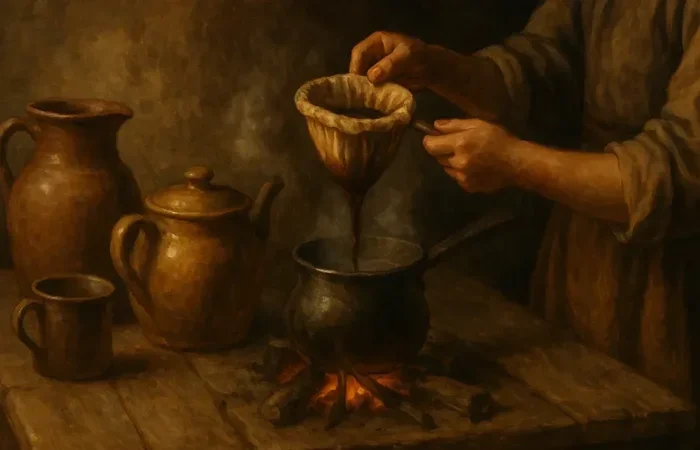
The way people brew coffee has changed a lot over the centuries. Early methods were simple. People boiled crushed coffee beans in water and drank the liquid. This was the most common way to prepare brewed coffee for many centuries.
In the 15th century, Yemeni traders began roasting coffee beans before boiling them. This simple step changed the flavor completely. Roasted coffee tasted richer and more aromatic than boiled unroasted beans.
The invention of the espresso machine in the early 20th century was another turning point. Italian inventors created machines that forced hot water through finely ground coffee beans at high pressure. The result was a strong, concentrated shot of coffee with a creamy layer on top.
Interestingly, the history of early kitchen tools also connects to coffee brewing. The development of early heat-based cooking equipment, such as those explored in early oven invention history, helped shape how people roasted and processed coffee beans over the centuries. The same innovation that drove cooking advancements also refined how we prepared our favorite morning drink.
Today, there are many ways to brew coffee at home. You can use a French press, a pour-over cone, an automatic drip machine, or a cold brew jar. Each method brings out different flavors and textures in the coffee beans.
Modern coffee roasting is both an art and a science. Roasters carefully control temperature and time to bring out the best flavors in each batch of coffee beans. Light roasts preserve the original characteristics of the bean, while dark roasts bring out bold, smoky notes.
The history of early kitchen tools played a surprising role in this evolution. From the earliest primitive ovens to modern roasting equipment, heat-based tools have always been central to coffee preparation. The invention of controlled heat sources allowed roasters to develop consistent, high-quality roasts that define specialty coffee today.
Here is a quick look at how different brewing methods compare:
- Boiled Coffee (Traditional): Simple, ancient method. Crushed beans boiled in water. Thick texture, strong flavor.
- French Press: Steeping coarse grounds in hot water. Full body, rich flavor, natural oils retained.
- Pour-Over: Slow, controlled pouring over a filter. Clean cup, bright acidity, highlights origin flavors.
- Espresso: High-pressure extraction. Concentrated, bold, creamy crema on top.
- Cold Brew: Long steeping in cold water. Smooth, low acidity, naturally sweet.
Each method tells a story. From the simplest boiling techniques to the precision of modern espresso machines, coffee brewing has always been about bringing out the best in every bean.
The Global Coffee Industry Today
The coffee industry today is worth hundreds of billions of dollars. It is the second most traded commodity in the world, right after oil. Millions of people depend on coffee cultivation for their livelihoods, especially in countries like Brazil, Vietnam, Colombia, and Ethiopia.
The rise of specialty coffee has changed how people think about their daily cup. Third-wave coffee roasters focus on quality, sustainability, and transparency. They source beans directly from farmers and roast them in small batches to highlight unique flavors.
Coffee culture continues to evolve. Cold brew coffee, nitro coffee, and oat milk lattes are just a few examples of how the drink keeps reinventing itself. People are more curious than ever about where their coffee beans come from and how they are grown.
The coffee ceremony in Ethiopia is still practiced today much as it was centuries ago. It is a ritual of roasting, grinding, and brewing coffee that brings families and communities together. The ceremony can take over an hour and is considered a time of respect and hospitality.
In many countries, coffee is more than just a drink. It is a social tradition, a cultural identity, and a daily ritual. The Japanese have their kissaten, the Italians have their espresso bars, and the Americans have their drive-through coffee shops.
The story of who first brewed coffee reminds us that great things often start small. A goat herder in Ethiopia noticed something unusual. A few monks tried it. A trader shipped it across the sea. And before long, the whole world was hooked on brewed coffee.
Today, we are part of that same story. Every time we grind coffee beans and brew a fresh cup, we connect with a tradition that spans thousands of years and crosses every continent. Coffee is not just a beverage. It is a shared human experience.
The global coffee obsession shows no signs of slowing down. New brewing methods, new flavors, and new ways of enjoying coffee continue to emerge. The future of coffee is bright, and it all started with one curious herder and a handful of red berries.
The difference between Arabica coffee and Robusta coffee is also worth noting. Arabica grows best at higher altitudes and produces a smoother, more complex flavor. Robusta has more caffeine but a harsher taste. Most of the coffee beans you buy today are a blend of both. Specialty roasters often focus on high-quality Arabica beans for their nuanced profiles.
From the earliest early oven invention history that enabled controlled roasting to the modern single-origin beans on your shelf, the journey of coffee is a testament to human curiosity and innovation. The same drive that led early cooks to build the first ovens also led communities to perfect the art of brewing coffee across generations.
Frequently Asked Questions
Who is credited with discovering coffee?
Kaldi, an Ethiopian goat herder, is widely credited with the discovery of coffee. Legend says he noticed his goats becoming energetic after eating red coffee cherries. While this story cannot be proven, it remains the most popular origin tale for coffee.
When was coffee first brewed?
Coffee was first brewed around the 15th century in Yemen. Sufi monks and early traders began roasting and boiling coffee beans to make a stimulating drink. This is the earliest documented practice of coffee brewing as we understand it today.
Why is Yemen important in coffee history?
Yemen was the first country to cultivate and trade coffee on a large scale. The port of Mocha became a hub for the coffee trade. Yemeni farmers developed the methods for roasting and brewing that influenced coffee culture worldwide.
How did coffee spread to Europe?
Coffee reached Europe through trade routes in the 17th century. Ottoman traders and Venetian merchants played a key role in bringing coffee beans to the continent. European coffeehouses quickly became popular social and intellectual gathering spots.
What is the difference between Arabica and Robusta coffee?
Arabica coffee grows at higher altitudes and has a smoother, sweeter flavor. Robusta coffee contains more caffeine and has a harsher, more bitter taste. Most commercial coffee is a blend of both, but specialty roasters often focus on high-quality Arabica beans.
How has coffee brewing changed over time?
Early coffee brewing involved simply boiling crushed beans in water. Over time, roasting before brewing became standard. The invention of the espresso machine in the 1900s revolutionized coffee preparation. Today, methods range from French press to cold brew to single-serve pods.
=== CONCLUSION ===
The journey of who first brewed coffee is a story of curiosity, culture, and connection. From the Ethiopian highlands to Yemeni trade routes, from Ottoman coffeehouses to modern specialty roasters, coffee has shaped human history in remarkable ways. Every cup you brew carries a piece of that legacy.
Coffee brewing is more than a morning habit. It is a link to centuries of tradition, innovation, and shared experience. The next time you prepare your coffee, take a moment to appreciate the long journey that brought it to your cup. The global obsession with coffee is not just about caffeine. It is about community, ritual, and the simple joy of a great cup.