How Long To Cook Salmon In The Toaster Oven Perfectly
Cooking salmon in a toaster oven is one of the fastest and easiest ways to enjoy a healthy, delicious meal at home. In this guide, you will learn the exact how long to cook salmon in the toaster oven for every thickness and preference. You will also discover simple tips for crispy skin, perfect seasoning, and juicy results every time.
There is something truly magical about how long to cook salmon in the toaster oven. It is one of the simplest yet most impressive meals you can prepare at home. Whether you are a busy weeknight cook or a weekend foodie, a perfectly baked salmon fillet can turn an ordinary dinner into something special.
A toaster oven works wonders for salmon. It heats up fast, uses less energy than a full-sized oven, and gives you that beautiful crispy skin without any fuss. In this guide, we will walk you through everything you need to know about cook salmon in toaster oven methods. You will learn exact times, temperatures, and tips that guarantee juicy, flavorful results every single time.
Let us dive in and make your next salmon dinner the best one yet. Whether you prefer skin-on or skinless, thick steaks or thin filets, this guide has you covered.
Key Takeaways
- Quick and Easy: Most salmon fillets cook in a toaster oven in just 12 to 18 minutes, making it a fast weeknight dinner option.
- Right Temperature Matters: Bake at 400°F for the best balance of crispy skin and tender, juicy flesh.
- Thickness Is Key: Adjust cooking time based on how thick your salmon fillet is — thinner pieces cook faster.
- Pat Dry Before Seasoning: Removing moisture from the surface helps achieve crispy skin and better flavor adhesion.
- Use a Meat Thermometer: The internal temperature should reach 145°F for perfectly cooked, safe-to-eat salmon.
- Rest Before Serving: Let the salmon rest for 3 to 5 minutes after baking for the juiciest results.
- Experiment with Flavors: From simple lemon and dill to global spice blends, seasoning makes all the difference.
📑 Table of Contents
- Why Cooking Salmon in a Toaster Oven Is a Great Idea
- How Long To Cook Salmon In The Toaster Oven: Time and Temperature Guide
- Step-by-Step Guide to Perfect Toaster Oven Salmon
- Tips for Crispy Skin and Juicy Fillets
- Common Mistakes to Avoid
- Best Seasonings and Flavor Combinations for Salmon
- Can You Reheat Salmon in a Toaster Oven?
Why Cooking Salmon in a Toaster Oven Is a Great Idea
Benefits of Using a Toaster Oven for Salmon
You might wonder why so many home cooks are choosing a toaster oven for baking salmon instead of a traditional full-size oven. The reasons are simple and compelling. First, a toaster oven preheats much faster. While a full oven might take 10 to 15 minutes to reach temperature, a toaster oven is often ready in half the time.
Second, toaster ovens use less energy. They heat a smaller space, which means less electricity or gas wasted. This is great for both your wallet and the environment. Third, the compact size concentrates heat more effectively, which helps create that gorgeous crispy salmon skin we all love.
Another big benefit is convenience. Toaster ovens are perfect for cooking one or two fillets without heating up your entire kitchen. This makes them ideal for summer cooking or small households. Plus, cleanup is usually much easier with a smaller appliance.
When to Choose a Toaster Oven Over a Full Oven
Not every cooking situation calls for a full-sized oven. Here are some moments when a toaster oven salmon recipe really shines:
- Weeknight dinners: When you need a healthy meal on the table in under 20 minutes, a toaster oven is your best friend.
- Cooking for one or two: No need to waste energy heating a large oven for just a couple of portions.
- Crispy skin lovers: The smaller cavity and direct heat elements help render the skin beautifully.
- Small kitchens: Toaster ovens keep the heat contained, so your kitchen stays comfortable.
- Reheating leftover salmon: A toaster oven is the best way to reheat reheating salmon without drying it out.
The bottom line is that a toaster oven gives you excellent control and great results. It is a versatile tool that belongs in every kitchen, especially if you eat oven baked salmon regularly.
How Long To Cook Salmon In The Toaster Oven: Time and Temperature Guide
Standard Baking Times by Thickness
The most common question home cooks ask is: how long to cook salmon in the toaster oven? The answer depends mainly on the thickness of your fillet. Here is a general guide to help you plan your meal:
- Thin fillets (½ inch thick): Bake for 8 to 12 minutes at 400°F. These cook quickly, so watch them closely.
- Medium fillets (¾ inch thick): Bake for 12 to 16 minutes at 400°F. This is the most common thickness you will find at the grocery store.
- Thick fillets (1 inch or more): Bake for 16 to 20 minutes at 400°F. Thicker cuts need more time but reward you with a juicy center.
- Salmon steaks (1½ inches thick): Bake for 18 to 22 minutes at 400°F. Steaks from the center of the fish are denser and need extra care.
These times are guidelines. Every toaster oven is slightly different, and the starting temperature of your salmon matters too. Always use a meat thermometer to check for doneness. The internal temperature salmon should read 145°F at the thickest part of the fillet.
Temperature Settings for Different Results
Most toaster oven salmon recipes call for 400°F, and for good reason. This temperature cooks the fish through without drying it out. It also gives you enough heat to crisp up the skin beautifully. But what if you want different results?
For a slower, more gentle cook, try 375°F. This works well for thicker fillets where you want the inside to stay extra moist. You might need to add a few extra minutes. For an even crispier finish, bump up to 425°F, but reduce the cooking time slightly and keep a close eye on the fish.
Some cooks prefer starting at a higher temperature and then lowering it halfway through. This technique helps render the fat in the salmon skin while gently cooking the flesh. Experiment to find what works best for your specific toaster oven model.
Step-by-Step Guide to Perfect Toaster Oven Salmon
Preparing Your Salmon Fillets
Before you even think about turning on the toaster oven, proper preparation makes all the difference. Start by taking your salmon out of the refrigerator about 10 to 15 minutes before cooking. Letting it come closer to room temperature helps it cook more evenly from edge to center.
Next, pat the fillets dry with paper towels. This step is absolutely essential for crispy skin. Any surface moisture will create steam, which prevents the skin from crisping up. The drier the surface, the better the texture you will get.
If your fillet has the skin on, check that it is clean and scaled. You can leave the skin on during cooking — it acts as a natural protective layer and becomes wonderfully crispy. If you prefer skinless fillets, the same principles apply, but you will need to be extra careful not to overcook them since there is no skin to protect the flesh.
Seasoning and Flavor Options
Seasoning your salmon is where the fun begins. A simple season salmon approach works beautifully for beginners. Try a light coating of olive oil, a sprinkle of salt and pepper, and a squeeze of fresh lemon juice. This lets the natural flavor of the fish shine through.
For something more adventurous, try these easy salmon recipe ideas:
- Honey garlic glaze: Mix honey, minced garlic, soy sauce, and a dash of sesame oil. Brush it on during the last 5 minutes of baking.
- Herb crust: Combine chopped dill, parsley, breadcrumbs, and melted butter for a crunchy topping.
- Asian-inspired: Use a mix of ginger, soy sauce, rice vinegar, and a touch of sriracha for a bold flavor profile.
- Mediterranean style: Top with olives, capers, cherry tomatoes, and a drizzle of olive oil.
No matter which salmon recipe toaster oven you choose, less is often more. You want to enhance the fish, not mask its natural taste.
The Baking Process
Now it is time to bake. Follow these simple steps for consistent results every time:
- Preheat your toaster oven to 400°F. Give it at least 5 minutes to reach the right temperature.
- Line your baking tray with parchment paper or aluminum foil for easy cleanup. Lightly grease it if needed.
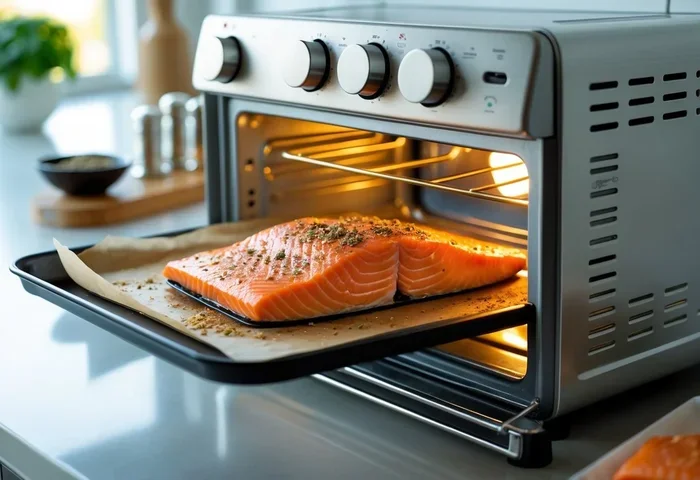
- Place the salmon fillets skin-side down (if skin-on) on the prepared tray. Leave space between each piece for proper air circulation.
- Season generously with your chosen spices and a drizzle of olive oil.
- Insert the tray into the center of the toaster oven and set your timer based on the thickness guide above.
- Check for doneness at the minimum time. The fish should flake easily with a fork and reach 145°F internally.
- Remove and rest for 3 to 5 minutes before serving. This lets the juices redistribute throughout the fillet.
Following these steps will give you juicy salmon with minimal effort. The process is simple, but the results are always impressive.
Tips for Crispy Skin and Juicy Fillets
Getting the Skin Perfectly Crispy
Crispy salmon skin is one of the best parts of the dish, and a toaster oven is perfect for achieving it. The key is to start with a dry surface. Always pat your fillets thoroughly with paper towels before seasoning. This removes surface moisture that would otherwise create steam and soggy skin.
Another pro tip is to place the fillet skin-side up during the first few minutes of cooking, then flip it skin-side down for the remainder. This initial exposure to top heat helps dry out the skin surface, while the final bake on the hot tray crisps it up beautifully.
You can also brush a very thin layer of oil on the skin side. Not too much — just enough to help conduct heat evenly. Too much oil will cause splattering and greasy results. A light coating is all you need for that satisfying crunch.
Avoiding Overcooking Your Salmon
Overcooked salmon is dry, chalky, and disappointing. The good news is that it is easy to avoid with a few simple precautions. First, always set your timer for the minimum recommended time and check early. You can always cook a little longer, but you cannot undo an overcooked fillet.
Second, invest in a good instant-read meat thermometer. It takes the guesswork out of cooking entirely. Insert it into the thickest part of the fillet at an angle. When it reads 145°F, your salmon is done. Remember that the temperature will continue to rise slightly during the resting period.
Third, understand that residual heat continues to cook the fish after you remove it from the toaster oven. This carryover cooking means you should pull the salmon off about 5 degrees before your target temperature. When it rests, it will reach the perfect 145°F naturally.
Common Mistakes to Avoid
Skipping the Pat-Dry Step
This is the single most common mistake people make when baking salmon. Putting wet fillets directly into the toaster oven creates steam instead of allowing the skin or surface to crisp. The result is pale, soft, sometimes even rubbery fish. Take the extra 30 seconds to pat your salmon dry. It makes a huge difference in texture and flavor.
Using the Wrong Temperature or Time
Every toaster oven behaves slightly differently. Some run hotter, some run cooler. If you blindly follow a timer without checking the fish, you risk either undercooking or overcooking. Get to know your specific appliance. Note how it distributes heat and whether it has hot spots. Once you understand your toaster oven settings, you will be able to adjust times and temperatures with confidence.
Overcrowding the Baking Tray
It can be tempting to fit as many fillets as possible on one tray, especially when cooking for a family. However, overcrowding blocks air circulation and leads to uneven cooking. The steam trapped between fillets prevents the skin from crisping and can leave you with soggy results. Give each fillet plenty of space, or use two trays if needed.
Forgetting to Rest the Salmon
Resting is not just for steaks. Salmon benefits from a few minutes of rest after baking. During this time, the internal juices relax and redistribute throughout the fillet. If you cut into it immediately, those juices run out onto the plate, leaving you with a drier piece of fish. Be patient — 3 to 5 minutes of rest makes a noticeable difference.
Best Seasonings and Flavor Combinations for Salmon
Simple and Classic Flavors
Sometimes the best salmon recipes are the simplest ones. A classic combination of olive oil, lemon zest, fresh dill, and a pinch of salt brings out the natural richness of the fish. This approach works especially well for high-quality wild-caught salmon, where the flavor is already outstanding.
Another timeless pairing is garlic butter. Melt a small pat of butter with minced garlic and a squeeze of lemon, then brush it over the fillet during the last few minutes of baking. The butter browns slightly and creates a rich, savory glaze that pairs beautifully with the fatty texture of salmon.
Global-Inspired Seasoning Ideas
If you love exploring different cuisines, these salmon recipe toaster oven variations will take your dinner on a world tour:
- Japanese style: Mix miso paste, mirin, and soy sauce for a sweet and savory glaze. Top with sesame seeds and sliced scallions.
- Indian-inspired: Use a blend of cumin, coriander, turmeric, and garam masala with yogurt for a fragrant, spiced fillet.
- Mexican flair: Rub the salmon with chili powder, cumin, smoked paprika, and a squeeze of lime. Serve with fresh pico de gallo.
- Middle Eastern twist: Za’atar spice blend with olive oil and lemon creates a tangy, herby crust that is absolutely delicious.
The beauty of cooking salmon in a toaster oven is that you can easily experiment with different flavors without committing to a full oven session. Try something new each week and discover your favorite combination.
Can You Reheat Salmon in a Toaster Oven?
Absolutely! In fact, a toaster oven is the best way to reheat leftover oven baked salmon without drying it out. Set your toaster oven to 275°F and warm the salmon for about 5 to 8 minutes. Cover the fillet loosely with foil to trap moisture. Check the internal temperature — you want it to reach 125°F to 130°F for a gently warmed fillet that still feels moist and tender.
Avoid reheating salmon in the microwave whenever possible. The microwave tends to heat unevenly and can make the fish rubbery. The toaster oven’s gentle, surrounding heat preserves the texture and flavor far better. This makes it the ideal method for reheating salmon leftovers from the previous night’s dinner.
With these tips and techniques, you now have everything you need to cook perfect salmon in your toaster oven every single time. The key is to pay attention to thickness, temperature, and timing. Keep a meat thermometer handy, do not skip the pat-dry step, and always let your salmon rest before serving. Soon enough, preparing a delicious salmon dinner will become second nature.
How long to cook salmon in the toaster oven really comes down to a few simple factors: fillet thickness, starting temperature, and your preferred level of doneness. With the guidance in this article, you can confidently bake salmon that is crispy on the outside, juicy on the inside, and bursting with flavor. So preheat that toaster oven, pick up some fresh salmon fillets, and get cooking. Your taste buds will thank you!
Frequently Asked Questions
What is the best temperature to cook salmon in a toaster oven?
The best temperature to cook salmon in a toaster oven is 400°F. This heat level cooks the fish through evenly while creating a beautifully crispy exterior. If you prefer a more gentle cook, 375°F works well for thicker fillets, while 425°F is great for thin pieces that need a quick, crispy finish.
How long does it take to bake salmon in a toaster oven at 400°F?
At 400°F, a standard ¾-inch thick salmon fillet takes about 12 to 16 minutes to bake. Thinner fillets around ½ inch may need only 8 to 12 minutes, while thicker 1-inch fillets could require 16 to 20 minutes. Always check the internal temperature with a meat thermometer to ensure it reaches 145°F at the thickest point.
Should I cook salmon skin-side up or skin-side down in a toaster oven?
For crispy skin, place the salmon skin-side down on the baking tray. The direct contact with the hot surface helps render the fat and creates that satisfying crunch. If you prefer softer skin, you can start skin-side up and flip halfway through cooking for the best of both worlds.
Can I use frozen salmon in a toaster oven?
Yes, you can cook frozen salmon in a toaster oven, but you will need to increase the cooking time by about 50 percent. It is best to let the salmon thaw slightly at room temperature for 10 to 15 minutes first, then pat it dry thoroughly before seasoning and baking. This helps ensure more even cooking throughout the fillet.
How do I know when salmon is done in a toaster oven?
The most reliable way to tell is by using an instant-read meat thermometer. Insert it into the thickest part of the fillet at an angle. When the internal temperature reaches 145°F, the salmon is done and safe to eat. You can also check for doneness by gently pressing the top of the fillet — it should feel firm but still have a slight give in the center.
What is the best way to reheat leftover salmon in a toaster oven?
The best way to reheat leftover salmon is at a low temperature of 275°F for about 5 to 8 minutes. Cover the fillet loosely with aluminum foil to keep moisture in. This gentle reheating method prevents the salmon from drying out and preserves its tender, flaky texture much better than using a microwave.