How To Tell If Your Oven Is Not Heating Properly
Finding out your oven is not heating properly can save you from ruined meals and expensive repairs. This guide covers the most common signs, simple DIY tests, and practical fixes for oven heating problems. You will learn how to spot temperature issues, test key parts like the bake element and thermostat, and decide when to call a professional.
Have you ever put a cake in the oven and waited forever, only to find it barely rises? Or maybe your roast comes out raw in the middle even though the timer says it is done. These frustrating moments point to one common problem: your oven is not heating the way it should. How To Tell If Your Oven Is Not Heating Properly is a question many homeowners face, and the answer is closer than you think.
Your oven is the heart of your kitchen. It bakes your Sunday cookies, roasts your holiday turkey, and crisps up your weeknight pizza. When it starts acting up, it throws your whole routine off balance. The good news is that most oven heating problems come with clear warning signs. You do not need to be a repair expert to spot them. In this guide, we walk you through every sign, test, and fix so you can get your oven back on track. Let us dive right in.
Key Takeaways
- Food takes too long to cook or comes out underdone: This is often the first and most obvious sign your oven is not heating properly.
- Visible damage to heating elements is a clear red flag: Cracks, blisters, or breaks in the bake or broil element mean immediate replacement is needed.
- A simple multimeter test can confirm a dead element: You do not need to be an expert to check for continuity at home.
- An oven thermometer reveals hidden temperature problems: Many ovens run hot or cold by 25-50 degrees without the owner knowing.
- The thermal fuse and temperature sensor are common failure points: These parts are affordable and relatively easy to replace.
- Regular oven maintenance prevents most heating issues: Clean spills promptly and avoid slamming the door to extend your oven’s life.
- Knowing when to call a pro saves time and money: Complex electrical issues or control board problems are best left to qualified technicians.
📑 Table of Contents
- Common Signs Your Oven Is Not Heating Properly
- How to Test If Your Oven Is Actually Not Heating
- Common Causes of Oven Heating Problems
- How to Fix Common Oven Heating Issues
- Preventing Oven Heating Problems in the Future
- Quick Tips for Testing Your Oven Element at Home
- Expert Insight: Why Regular Oven Maintenance Matters
Common Signs Your Oven Is Not Heating Properly
The first step in solving any problem is recognizing it. Oven heating issues rarely happen without warning. Your oven usually gives you plenty of clues before it completely stops working. Here are the most common signs to watch for.
Food Takes Forever to Cook
This is the number one complaint people have. You set the timer, follow the recipe, but your food still looks underdone. A roast that should take two hours is still tough after three. Cookies that should brown in ten minutes stay pale and doughy. If you find yourself constantly adding extra time to recipes, your oven might not be reaching the right temperature.
Food Cooks Unevenly
Have you noticed that the top of your casserole is burnt but the bottom is still runny? Or maybe one side of your cake is done while the other is raw? Uneven cooking is a classic symptom of uneven heat distribution. This can happen when one part of the oven is working harder than another. It often points to a failing heating element or a problem with internal air circulation.
The Oven Takes Too Long to Preheat
A healthy oven should preheat to 350°F in about 10 to 15 minutes. If your oven takes half an hour or more, something is wrong. Slow preheating usually means the heating element is partially damaged. It is still producing some heat, but not enough to do the job efficiently. This is a common early warning sign that should not be ignored.
You Notice a Burning Smell
A new oven might give off a slight smell the first few times you use it. But a persistent burning smell is not normal. This often happens when the heating element is damaged and starts to spark or glow in the wrong spots. The smell comes from insulation or other internal parts overheating. If you catch this smell, turn off your oven right away and inspect the element.
The Oven Light and Fan Work but There Is No Heat
Sometimes the oven looks like it is running fine. The light turns on, the fan spins, and the display shows the correct temperature. But when you open the door, there is no heat inside. This is a strong indicator that the heating element itself has failed. The oven’s electronics are working, but the part that actually generates heat is dead.
How to Test If Your Oven Is Actually Not Heating
Before you jump to conclusions, you should confirm that your oven really has a heating problem. Sometimes the issue is not the oven but the way you are using it. Here is how to test things properly.
Use an Oven Thermometer
This is the simplest and most affordable test you can do. Buy a basic oven thermometer from any hardware store for under fifteen dollars. Place it on the center rack, set your oven to 350°F, and wait twenty minutes. Open the door and check the reading.
If the thermometer shows 350°F, your oven is working fine. If it shows 300°F or 400°F, you have a temperature calibration problem. Many ovens drift over time, and this is an easy fix. Some ovens run consistently hot, which can also cause your food to burn on the outside while staying raw inside.
The Aluminum Foil Test
Line the bottom of your oven with a sheet of aluminum foil. Set the oven to 350°F and wait ten minutes. Check the foil for heat marks or browning. If the foil stays completely cool and unchanged, your oven is not producing heat at all. If only part of the foil is warm, you have an uneven heating problem.
Check the Bake Element During Preheating
When your oven starts to preheat, look through the window or carefully peer inside. The bake element at the bottom should glow bright red or orange. If it glows dimly, not at all, or only glows in spots, it is failing. A healthy element glows evenly across its entire length.
Common Causes of Oven Heating Problems
Once you confirm that your oven is not heating correctly, the next step is finding out why. Several parts could be responsible, and each one has its own set of symptoms. Understanding these causes helps you decide whether to fix it yourself or call a professional.
Faulty Bake Element
The bake element is the metal tube at the bottom of your oven. It is the primary heat source for baking and roasting. Over time, this element can burn out, crack, or develop holes. When it fails, your oven will not heat properly for baking. You can usually see the damage with a visual inspection. Look for blistering, cracking, or breaks in the metal.
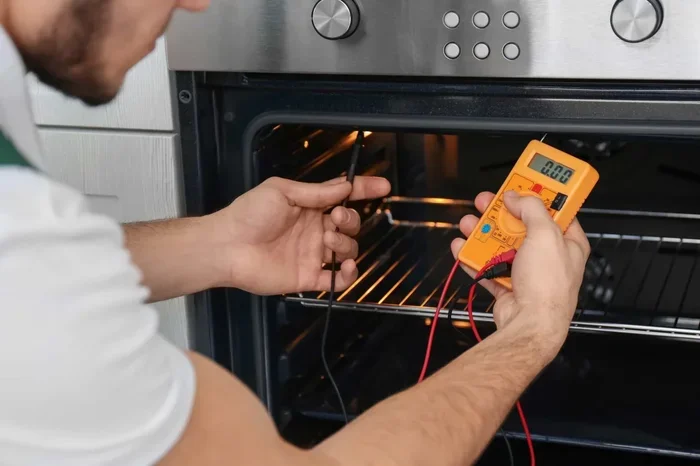
Testing the bake element is straightforward. Turn off the power to your oven at the circuit breaker. Pull the element out carefully. Use a multimeter set to the continuity setting. Touch the probes to the element terminals. If there is no reading, the element is dead and needs replacement. Oven element replacement is one of the easiest and most affordable repairs you can do yourself.
Broken Broil Element
The broil element sits at the top of your oven and provides high, direct heat for broiling. If this element fails, your oven will still work for baking but will struggle with broiling tasks. You might notice that your food does not get that nice crispy top finish anymore. The broil element can also be tested with a multimeter the same way as the bake element.
Failing Oven Thermostat
The thermostat controls the oven’s temperature. It tells the heating element when to turn on and off to maintain the right heat. When a thermostat goes bad, it can cause all sorts of problems. Your oven might run too hot, too cold, or not heat at all. Thermostat issues often cause inconsistent temperature readings that are hard to diagnose.
Replacing a thermostat is more involved than swapping out an element. It usually requires accessing the back panel of the oven. If you are not comfortable working with electrical components, this is a job for a professional. The part itself is reasonably priced, but the labor can be tricky.
Blown Thermal Fuse
The thermal fuse is a safety device that protects your oven from overheating. If the oven gets too hot, the fuse blows and cuts power to the heating element. A blown thermal fuse means the oven will not heat at all. This is one of the most common reasons an oven suddenly stops working completely.
You can test a thermal fuse with a multimeter. If it shows no continuity, the fuse is blown and must be replaced. The good news is thermal fuses are inexpensive and easy to swap out. However, if your thermal fuse keeps blowing, there is an underlying problem causing the oven to overheat. You need to fix the root cause, not just replace the fuse.
Bad Temperature Sensor
The temperature sensor is a small probe inside the oven that reads the internal temperature and sends data to the control board. When this sensor fails or gets dirty, it can give incorrect readings. Your oven might think it is hot enough when it is actually too cold, or vice versa.
Cleaning the sensor with a soft cloth can sometimes solve the problem. If the sensor is damaged, replacement is the best fix. The sensor is usually located on the back wall of the oven and is easy to access.
Damaged Control Board
The control board is the brain of your oven. It manages all functions, including heating. A damaged control board is less common but more serious. If the board fails, multiple oven functions may stop working at once. Control board issues often require professional diagnosis and repair because the electrical complexity is high.
How to Fix Common Oven Heating Issues
Once you have identified the cause, fixing the problem is often simpler than you think. Here is a breakdown of common fixes and what you need to know about each one.
Replacing a Heating Element
This is the most common oven repair, and it is surprisingly easy. You will need a replacement element that matches your oven model. You can find the correct part by checking your owner’s manual or searching online with your oven’s make and model number.
Here is a quick step-by-step process:
- Turn off the power at the circuit breaker. This is non-negotiable for safety.
- Remove the screws that hold the element in place.
- Disconnect the wires and note their positions for reconnection.
- Remove the old element carefully.
- Install the new element and reconnect the wires exactly as they were.
- Restore power and test the oven.
Most element replacements take less than thirty minutes and cost between twenty and sixty dollars for the part. It is one of the most satisfying DIY repairs you can do.
Calibrating Your Oven Temperature
If your oven thermometer shows that your oven runs a few degrees off, you can calibrate it. Most modern ovens have a calibration setting in the control panel. Check your owner’s manual for specific instructions. You can usually adjust the temperature by up to 35°F in either direction. This simple fix can transform your baking results overnight.
Replacing a Thermal Fuse
Replacing a thermal fuse involves locating it (usually near the back of the oven), testing it with a multimeter, and swapping it out if it shows no continuity. The part costs around ten to twenty dollars. Always make sure to find out why the fuse blew in the first place to prevent the same problem from recurring.
When to Call a Professional
Not every repair is a DIY job. You should call a professional if you are dealing with control board failures, wiring issues, or gas oven problems. Gas ovens have additional safety components like igniters and gas valves that require specialized knowledge. If you are uncomfortable working with electricity or gas, there is no shame in calling a technician. A qualified oven repair professional can diagnose and fix complex issues safely.
The average oven repair cost for a professional visit ranges from 100 to 300 dollars, depending on the part and the complexity of the fix. Keep in mind that a new oven can cost 500 dollars or more, so repairing your current unit is almost always the smarter financial choice.
Preventing Oven Heating Problems in the Future
Prevention is always better than repair. A little regular maintenance goes a long way in keeping your oven running smoothly. Here are some simple habits that can extend the life of your oven and prevent heating issues.
- Clean up spills immediately. Food residue can build up and affect heating elements. Wipe down the oven after every use.
- Do not slam the oven door. Harsh impacts can damage the door seal, hinges, and internal components over time.
- Use oven-safe cookware only. Non-oven-safe pots and pans can release fumes that damage internal parts.
- Check the door seal regularly. A worn-out seal lets heat escape, making your oven work harder and less efficiently.
- Run a self-clean cycle occasionally. This helps burn off stubborn residue that regular wiping misses.
- Avoid overcrowding the oven. Blocking air vents with too many dishes restricts airflow and causes uneven heating.
Quick Tips for Testing Your Oven Element at Home
Want to test your heating element quickly without calling anyone? Here are some fast tips to get you started.
- Always disconnect power before touching any internal parts.
- Look for visible damage like cracks, holes, or blistering first.
- Use a multimeter on the continuity setting for an accurate test.
- A healthy element should show low resistance on the multimeter.
- If the element shows infinite resistance or open circuit, it is dead.
- Keep a flashlight handy to inspect hard-to-see areas inside the oven.
Expert Insight: Why Regular Oven Maintenance Matters
Many homeowners wait until something breaks before thinking about their oven. But regular maintenance can catch small problems before they become big, expensive ones. A simple visual inspection of your heating elements every few months can reveal early signs of wear. Cleaning the oven interior regularly prevents grease buildup that can affect temperature accuracy.
Experts also recommend having your oven professionally serviced every few years, especially if you use it heavily. A technician can check the thermostat, calibration, wiring, and safety components that are hard to inspect yourself. Think of it like an oil change for your car. A little preventive care now saves you from a major breakdown later.
How To Tell If Your Oven Is Not Heating Properly does not have to be a stressful experience. With the right knowledge and a few simple tools, you can diagnose and often fix the problem yourself. Start with the easy checks like the oven thermometer and visual inspection. Move on to multimeter tests if you are comfortable. And do not hesitate to call a professional when the job is beyond your comfort zone.
Your oven works hard for you every day. Taking care of it means better-cooked meals, lower energy bills, and a longer appliance lifespan. The tips and fixes in this guide give you the power to handle most oven heating problems with confidence. Trust your instincts, follow the safety precautions, and remember that most heating issues are fixable with the right approach.
Frequently Asked Questions
Why is my oven not heating up to the right temperature?
This is usually caused by a faulty thermostat, a miscalibrated temperature sensor, or a failing heating element. Start by testing your oven with an independent thermometer to see how far off the temperature is. If the oven is more than 25 degrees off, calibration or part replacement is likely needed.
Can I still use my oven if one heating element is broken?
It depends on which element is broken. If the bake element fails, you will lose the ability to bake properly. If the broil element fails, you can still bake but not broil. However, using a damaged element can cause further electrical issues, so it is best to replace it as soon as possible.
How much does it cost to replace an oven heating element?
The element itself typically costs between 20 and 60 dollars. If you do the repair yourself, your only cost is the part. If you hire a technician, labor charges will add 50 to 150 dollars on top of the part cost. Overall, element replacement is one of the most affordable oven repairs.
How do I know if my oven’s thermal fuse is blown?
A blown thermal fuse causes the oven to stop heating completely. You can test the fuse with a multimeter for continuity. If the multimeter shows no continuity, the fuse is blown and needs replacement. Always investigate the root cause of the overheating before replacing the fuse to prevent it from blowing again.
Is it safe to repair an oven heating element myself?
Yes, replacing a heating element is one of the safest DIY oven repairs you can do, as long as you turn off the power at the circuit breaker first. Always make sure the oven is completely disconnected from electricity before starting any work. If you are uncomfortable with any step, call a professional instead.
How often should I calibrate my oven?
You should check your oven’s calibration at least once a year. Many ovens drift over time, especially as they age. If you notice your food consistently cooking too fast or too slow, test with an oven thermometer and recalibrate if needed. Most ovens allow easy temperature adjustment through the control panel.
=== CONCLUSION ===
How To Tell If Your Oven Is Not Heating Properly is a skill every home cook should have. The signs are usually obvious once you know what to look for. Slow cooking, uneven results, strange smells, and visible element damage all point to heating problems that need attention. By testing your oven with simple tools like a thermometer and a multimeter, you can pinpoint the exact cause and choose the right fix.
Most oven heating issues come down to a handful of common culprits: the bake element, broil element, thermostat, thermal fuse, or temperature sensor. Each one is replaceable and affordable. With the step-by-step guidance in this article, you are well equipped to tackle these repairs yourself or at least have an informed conversation with a repair technician. Take care of your oven, and it will keep serving you delicious meals for years to come.