The Best Coffee Maker For Camping You Can Buy Today
Looking for the best coffee maker for camping? Our guide covers top-rated portable coffee makers, from lightweight backpacking options to RV-friendly brewers. You will learn how to choose the right camping coffee maker, compare methods, and brew delicious camp coffee every time. Whether you car camp or backpack, there is a perfect coffee maker for your outdoor adventures.
There is nothing quite like waking up in the great outdoors and brewing a fresh cup of coffee beside a lake or under the trees. A good coffee maker for camping turns a basic campsite into a comfortable home away from home. Whether you are car camping with all the comforts or backpacking miles into the wilderness, the right brewing setup changes everything.
Finding the best coffee maker for camping is not just about convenience. It is about starting your day right when you are far from home. In this guide, we break down the top options, compare features, and help you pick the perfect portable coffee maker for your next trip. We also share practical tips so your camp coffee tastes as good as your morning brew at home.
Key Takeaways
- Portable coffee makers for camping come in many styles, from French presses to pour-over brewers and electric options.
- The best camping coffee maker depends on your camping style, power availability, and brewing preferences.
- Lightweight backpacking coffee makers prioritize weight and simplicity, while car camping options offer more features.
- Manual brew methods like French press and pour-over require no electricity and are very reliable outdoors.
- Proper coffee grounds and water temperature make a huge difference in camp coffee quality.
- Maintenance and cleaning are easier with the right camping coffee maker design.
- Investing in a quality portable coffee maker transforms your outdoor experience with fresh, hot coffee every morning.
📑 Table of Contents
- Why You Need a Coffee Maker For Camping
- Types Of Coffee Makers For Camping
- How To Choose The Best Coffee Maker For Camping
- Top Coffee Makers For Camping Compared
- Tips For Brewing Great Coffee At Camp
- Camping Coffee Gear You Will Also Need
- Maintenance Tips For Your Camping Coffee Maker
- Final Thoughts
Why You Need a Coffee Maker For Camping
Coffee is more than a drink for many people. It is a ritual, a comfort, and a daily necessity. When you spend days outdoors, skipping that morning cup can leave you feeling sluggish and low on energy. A camping coffee maker solves that problem easily.
Beyond the caffeine boost, there is something deeply satisfying about brewing coffee in nature. The smell of fresh grounds mixed with pine air creates a memory you will carry long after the trip ends. A good outdoor coffee maker makes those moments possible every single morning.
Here are a few reasons why a portable coffee brewer deserves a spot in your camping gear:
- Fresh taste: Brewing on demand gives you coffee that tastes far better than instant packets.
- Morale boost: A hot cup of coffee in the morning sets a positive tone for the whole day.
- Warmth and comfort: Holding a warm mug by a campfire feels incredible in cold weather.
- No electricity needed: Many manual options work anywhere, even on remote trails.
- Lightweight designs: Modern camping brewers are built to carry easily in any pack.
If you have been drinking instant coffee on trips, you are missing out. A dedicated coffee brewer for camping makes a noticeable difference in taste and enjoyment.
Types Of Coffee Makers For Camping
Not all camping coffee makers work the same way. Each type has strengths and trade-offs. Understanding the options helps you choose the right one for your style of camping.
French Press Coffee Makers
A French press is one of the most popular choices for camping. It is simple, durable, and brews rich, full-bodied coffee. You just add coarse grounds, pour hot water, wait a few minutes, and press down the plunger.
French presses for camping are usually made from stainless steel or BPA-free plastic. The stainless steel versions hold up well to drops and rough handling. They also keep coffee warm longer than glass versions. A good camping French press is a reliable workhorse that never fails.
One thing to keep in mind: you need coarser grounds for a French press. Fine grounds can slip through the filter and make your coffee gritty. Also, French presses brew a full-bodied cup, which some people love and others find too heavy.
Pour-Over Coffee Makers
Pour-over brewing is another excellent option for the outdoors. These brewers use a paper or metal filter and rely on gravity to pull hot water through the coffee grounds. The result is a clean, bright cup of coffee.
Pour-over camping brewers are lightweight and compact. Many fold flat or fit inside a cup for easy packing. Brands like the Jetboil Java Drip and the AeroPress are favorites among campers who want a cleaner cup. If you enjoy the clarity of pour-over coffee at home, you will appreciate it in the wilderness too.
The main downside is that pour-over methods take a bit more time and attention. You need to pour water slowly and steadily for the best results. But for many campers, that slow ritual is part of the joy.
Instant and Pressure-Based Brewers
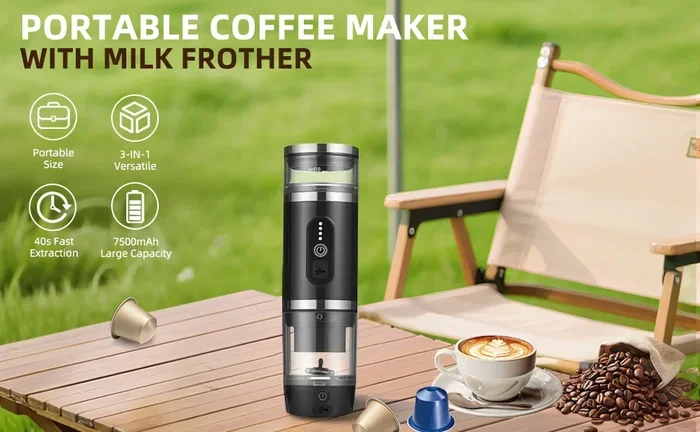
For those who want speed and convenience, instant coffee makers and pressure-based systems are worth considering. These devices use hot water pressure to brew coffee quickly, similar to how a portable espresso machine works.
The Wacaco Minipresso and Nanopresso are popular portable espresso makers. They let you brew espresso-style coffee without electricity. You just pump the handle to build pressure, and you get a rich, concentrated shot of coffee. These are perfect for campers who love espresso or strong coffee.
Instant coffee makers that use capsules or pods are also gaining popularity. They are super fast and require almost no cleanup. However, they do rely on pre-packaged coffee, which adds cost and waste over time.
Electric Coffee Makers For Car Camping
If you car camp or have access to power, electric coffee makers open up even more options. A small electric drip coffee maker can brew a full pot just like at home. Some compact models run on 12V power from your car battery or a portable generator.
Electric makers are great for group camping trips where everyone wants a fresh cup. They are also convenient because you can set them up and forget them. Just remember that you need a power source, and carrying a generator adds weight to your load.
For car campers who want espresso, there are portable electric espresso machines too. These are bulkier but deliver café-quality drinks at your campsite. They work best when you have a reliable power setup.
How To Choose The Best Coffee Maker For Camping
With so many options available, picking the right one can feel overwhelming. Here are the key factors to consider before you buy.
Consider Your Camping Style
Your camping style is the biggest factor in choosing a coffee maker for camping. If you backpack long distances, weight matters more than anything else. A lightweight option like the AeroPress or a simple French press makes sense. Every ounce counts when you carry your gear on your back.
For car camping, you have more flexibility. You can bring heavier brewers, electric options, or even a full French press with a separate grinder. If you are RV camping, you might even have access to a kitchen setup where you can use regular home coffee makers.
Think about how far you hike, how much space you have, and how much effort you want to put into brewing. The best coffee maker for outdoor adventures matches your specific needs.
Power Source Requirements
Do you need electricity or not? This is a simple but important question. Manual brewers like French presses, pour-over cones, and hand-pump espresso makers work anywhere. You just need hot water, which you can boil over a campfire or with a portable stove.
Electric coffee makers require a power source. For car camping, a 12V outlet or a generator works fine. For remote camping without power, stick to manual options. The good news is that manual brewers often produce excellent coffee and require fewer parts to carry.
Brewing Capacity
How many cups do you need per brew? Solo campers can get by with a single-serve brewer or a small French press. Couples might prefer a medium-sized French press or a pour-over that makes two cups. Group campers need a larger capacity, which is where electric drip makers or bigger French presses come in.
Check the listed cup capacity before buying. Keep in mind that camping mugs are often larger than standard coffee cups. A brewer that claims six cups might only fill four large camping mugs.
Durability and Build Quality
Camping gear takes a beating. Your portable coffee maker should be tough enough to handle drops, dust, rain, and temperature changes. Stainless steel is the most durable material for camping brewers. It resists cracks, does not absorb odors, and lasts for years.
Plastic options are lighter but can crack over time. Look for BPA-free, high-quality plastic if you go that route. Avoid glass French presses for camping, as they break too easily on the trail.
Ease of Cleaning
Nobody wants to scrub coffee grounds out of a complicated brewer while standing in the cold at a campsite. Choose a coffee maker for camping that is easy to disassemble and clean. French presses are simple to rinse out. Pour-over brewers need a quick rinse of the filter. Espresso makers require a bit more care but still stay manageable.
Bring a small scrub brush and some biodegradable soap for your camping cookware. Cleaning your coffee maker right after each use prevents buildup and keeps your brewer performing well trip after trip.
Top Coffee Makers For Camping Compared
To help you decide, here is a comparison of some of the best coffee makers for camping available right now.
| Coffee Maker | Type | Weight | Capacity | Power Needed | Best For |
|---|---|---|---|---|---|
| Stanley French Press | French Press | 1.2 lbs | 4 cups | None | Car camping and basecamp |
| AeroPress Go | Pour-Over/Press | 0.3 lbs | 1 cup | None | Backpacking and solo trips |
| Wacaco Nanopresso | Portable Espresso | 0.5 lbs | 1 shot | None (hand pump) | Espresso lovers backpacking |
| Jetboil Java Drip | Pour-Over | 0.4 lbs | 2 cups | None | Fast pour-over in the field |
| Mr. Coffee 12V | Electric Drip | 3.5 lbs | 5 cups | 12V Power | Car camping and RV trips |
Each of these brewers has earned a strong reputation among outdoor enthusiasts. Your choice depends on your budget, brewing style, and how you camp. A coffee grinder for camping can also elevate your setup. Freshly ground beans taste significantly better than pre-ground coffee, so consider packing a small hand grinder too. If you are curious about using a grinder for different purposes, check out whether a coffee grinder can be used for wet grinding as well.
Tips For Brewing Great Coffee At Camp
Having the right gear is only half the battle. Brewing technique matters just as much for camp coffee. Follow these tips to get the best results every time.
Use the Right Coffee Grounds
Grind size affects extraction and flavor. French presses need a coarse grind, similar to sea salt. Pour-over brewers work best with a medium grind, like sand. Espresso makers need a fine grind, closer to table salt. Using the wrong grind size leads to bitter or weak coffee.
Buy whole beans and grind them just before brewing. This preserves freshness and gives you the best flavor. A small hand grinder like the JavaPresse or Timemore works well for camping and fits easily in your pack.
Heat Water to the Right Temperature
Boiling water is too hot for most coffee brewing methods. Water above 205 degrees Fahrenheit can scorch grounds and create bitter flavors. The ideal brewing temperature is between 195 and 205 degrees Fahrenheit.
If you boil water over a campfire, let it sit for 30 to 60 seconds before pouring it over grounds. A simple camping thermometer takes the guesswork out of the process. Getting the water temperature right is one of the easiest ways to improve your camp coffee dramatically.
Measure Your Coffee and Water
Consistency comes from measuring. A good starting ratio is two tablespoons of coffee grounds per six ounces of water. Adjust to taste from there. Using a small kitchen scale helps you get the ratio right every time.
When you are camping, it is easy to eyeball measurements and end up with weak or overly strong coffee. A simple scoop and scale setup takes almost no space and makes a big difference in quality.
Preheat Your Brewer
Before adding grounds, rinse your brewer with hot water. This preheats the vessel and keeps your brewing temperature stable. It also rinses away any dust or paper taste from filters.
This small step takes only a few seconds but improves extraction and flavor. It is a habit that professional baristas follow and one that translates perfectly to the campsite.
Clean Up Properly
Leave no trace at your campsite. Pack out all coffee grounds and filters. Coffee grounds can attract animals, so store them securely or scatter them far from your tent if regulations allow.
Clean your coffee maker thoroughly after each use. Leftover oils and grounds can go rancid and affect the taste of your next brew. A quick rinse and dry keeps your outdoor coffee maker ready for the next trip.
Camping Coffee Gear You Will Also Need
A coffee maker is the centerpiece, but a few other items round out your camp brewing setup. Here is what you need to bring for the best camp coffee experience.
- Portable stove or campfire: You need a heat source to boil water. A compact camping stove is reliable and works in all weather conditions.
- Lightweight kettle: A collapsible kettle or a small metal pot lets you heat water efficiently. Look for one that is compatible with your stove.
- Coffee filters: If your brewer uses paper filters, pack enough for your trip. Reusable metal or cloth filters save space and reduce waste.
- Measuring scoop: A small dedicated scoop ensures consistent ratios without measuring spoons.
- Insulated mug: A good camping mug keeps your coffee hot for hours. Double-wall stainless steel is the best choice for durability and heat retention.
- Water bottle: Bring clean water for brewing. A filtered water bottle or purification tablets ensure safe water for your coffee.
If you are also cooking at camp, consider using oven safe bowls for baking to prepare other meals alongside your morning coffee routine. Having the right cookware makes your entire camp kitchen more efficient and enjoyable.
One thing many campers overlook is the type of cookware they use over a campfire. Not all materials handle direct heat well. For example, some enamel camping gear should not go in the oven or over direct flame for extended periods. If you are curious about what camping cookware is safe for baking or high-heat cooking, you might want to learn more about whether enamel camping gear can go in the oven to bake before packing your full kitchen setup.
Maintenance Tips For Your Camping Coffee Maker
Taking care of your portable coffee maker extends its life and keeps your coffee tasting great. Here are simple maintenance tips that every camper should follow.
- Rinse after every use: Hot water removes most oils and residue. Do this as soon as you finish brewing.
- Deep clean weekly: Soak parts in warm water with a drop of mild soap. Scrub away any buildup with a soft brush.
- Dry completely before storing: Moisture can cause mold and odors. Air dry all parts fully before packing them away.
- Replace filters regularly: Paper filters should be replaced after each trip. Reusable metal filters need periodic deep cleaning.
- Check seals and gaskets: For espresso makers and French presses, inspect seals for wear. Replace them before they fail on a trip.
- Store in a protective case: A padded bag or case prevents damage during transport. This is especially important for glass or ceramic parts.
A well-maintained coffee maker for camping performs just as well on trip ten as it did on trip one. The small effort you put into care pays off in better coffee and longer gear life.
Final Thoughts
Finding the best coffee maker for camping comes down to matching the brewer to your style of outdoor adventure. Backpackers will love the AeroPress Go and Nanopresso for their lightweight, simple designs. Car campers can enjoy the richer experience of a French press or the convenience of an electric drip maker. And pour-over enthusiasts will appreciate the clean, bright cups that a dedicated camping pour-over brewer delivers.
No matter which option you choose, the goal is the same: a hot, fresh, delicious cup of coffee in the middle of nature. With the right gear, the right technique, and a little practice, your camp coffee can rival anything you brew at home.
Start with one of the options in our comparison table, follow the brewing tips, and you will never want to drink instant coffee on a trip again. Your mornings in the outdoors deserve something better. Invest in a quality portable coffee maker, and every camping trip becomes a little more comfortable and a lot more enjoyable.
Remember, the best coffee maker for camping is the one that fits your needs, your pack, and your taste. Choose wisely, brew well, and enjoy every sip under the open sky.
Frequently Asked Questions
What is the best coffee maker for camping?
The best coffee maker for camping depends on your needs. For backpacking, the AeroPress Go and Wacaco Nanopresso are top picks because they are lightweight and compact. For car camping, a stainless steel French press or a 12V electric drip maker offers more comfort and capacity. The Stanley French Press is a popular all-around choice that works well for most campers.
Can I use a regular coffee maker while camping?
You can use a regular coffee maker if you have access to electricity, such as in an RV or a car campsite with a power outlet. For backcountry or remote camping without power, you need a manual or portable option. A coffee maker for camping is designed to work without electricity, making it essential for most outdoor trips.
How do I make coffee while camping without a coffee maker?
You can make camp coffee without a dedicated brewer using a simple pour-over method. Place a filter in a strainer or cloth, add grounds, and pour hot water slowly over them. You can also boil water with grounds directly in a pot and let them settle before pouring. However, a dedicated portable coffee maker gives you much better control and flavor.
What type of coffee is best for camping?
Medium to dark roast whole beans work best for camping because they hold up well in varying conditions. Pre-ground coffee loses freshness faster, so grinding beans right before brewing gives the best results. Coarse grounds are ideal for French presses, while medium grounds work well for pour-over methods.
How do I keep my camp coffee hot for longer?
Use an insulated mug or a thermal carafe to retain heat. Preheating your mug with hot water before brewing also helps. A good camping coffee maker with a well-insulated body, like a stainless steel French press, keeps coffee warm for 30 minutes or more. For longer warmth, pour coffee into a separate insulated container right after brewing.
Is a portable espresso maker worth it for camping?
If you love espresso or strong, concentrated coffee, a portable espresso maker like the Nanopresso is absolutely worth it. These hand-pump devices produce rich espresso shots without electricity or batteries. They are compact enough for backpacking and add a café-quality element to your outdoor mornings. For casual coffee drinkers, a French press or pour-over brewer may be a simpler and more practical choice.
=== CONCLUSION ===
A great cup of coffee in the wild is a simple luxury that makes every camping trip better. The right coffee maker for camping brings comfort, energy, and joy to your outdoor mornings. From lightweight backpacking brewers to sturdy car camping options, there is a perfect match for every type of outdoor adventure.
Consider your camping style, brewing preferences, and packing constraints when you choose. Follow the tips in this guide for the best results, and do not forget the importance of fresh grounds and proper water temperature. With the right setup, your camp coffee will be something you look forward to every single day on the trail.
Explore our full collection of camping gear guides for more tips and recommendations to upgrade your next outdoor adventure.