How To Hide A Toaster Oven In The Kitchen Cleverly
Hiding a toaster oven in your kitchen is easier than you think, and it can instantly make your space look cleaner and more organized. Whether you have a tiny apartment kitchen or a large open-plan layout, there are smart storage solutions that keep your toaster oven hidden while still making it easy to access. In this guide, we walk you through the best methods, from building a custom cabinet to using pull-out shelves and sliding pantry doors.
Your kitchen countertop should be your best friend when you cook. But when a bulky toaster oven takes up prime real estate, everything else suffers. Plates get pushed aside. Coffee makers get shoved to the back. And suddenly, your beautiful kitchen feels cluttered and cramped.
The good news is that you do not have to live with that mess forever. There are plenty of clever ways to hide a toaster oven in the kitchen without sacrificing convenience. Whether you rent or own, have a tiny studio or a spacious galley kitchen, the right storage trick can transform your space completely.
In this article, we share proven methods that real homeowners use every day. You will learn where to put your toaster oven, how to build custom storage, and what safety tips to keep in mind. By the end, you will have a clear plan to make your kitchen look tidy and feel more open.
Key Takeaways
- Reclaim Counter Space: Hiding your toaster oven frees up valuable countertop area for meal prep and daily use.
- Multiple Storage Options Exist: From cabinets and pantries to kitchen islands and sliding doors, there is a solution for every kitchen size.
- Safety Matters: Always ensure proper ventilation and heat clearance when storing a toaster oven in an enclosed space.
- Custom Builds Offer The Best Fit: A tailored cabinet or pull-out shelf keeps your appliance secure and your kitchen looking polished.
- Small Kitchens Benefit Most: Compact solutions like appliance garages and rolling carts work wonders in tight spaces.
- Aesthetic Upgrades Are Possible: You can make hidden storage blend seamlessly with your kitchen decor and design style.
📑 Table of Contents
- Why You Might Want To Hide Your Toaster Oven
- Best Places To Hide A Toaster Oven In Your Kitchen
- How To Build A Custom Toaster Oven Cabinet
- Creative Storage Solutions For Small Kitchens
- Tips For Safe And Ventilated Appliance Storage
- How To Make Your Hidden Setup Look Seamless
- Comparison Table: Best Hiding Methods By Kitchen Size
- Common Mistakes People Make When Hiding Their Toaster Oven
- Frequently Asked Questions
- Conclusion
Why You Might Want To Hide Your Toaster Oven
Before diving into the solutions, let us talk about why this matters so much. A toaster oven sitting out on the counter sends a visual message. It says “cluttered” even when everything else is clean. For many people, the look of the kitchen affects how they feel in the space.
The Clutter Problem
Counter clutter is one of the top complaints among homeowners. Studies show that people feel more stressed in messy kitchens. A toaster oven takes up anywhere from 12 to 24 inches of counter space. That is a lot of room lost for chopping vegetables, rolling dough, or simply setting down your coffee mug.
When you store a toaster oven away, you instantly gain back that space. The result is a cleaner look and a calmer feeling every time you walk into the kitchen.
Small Kitchen Challenges
If you live in a small apartment or a cozy home with limited square footage, every inch counts. A toaster oven can dominate a small kitchen in a way that feels overwhelming. Hidden storage helps you maximize the space you have. It makes your kitchen feel bigger than it actually is.
Even in larger kitchens, a visible toaster oven can break up the visual flow. Hiding it creates a more unified, intentional look. You get the benefit of the appliance without the visual cost.
Protecting Your Appliance
Here is a benefit that people often overlook. When a toaster oven sits out in the open, it collects dust, grease, and splatters from cooking. Storing it in a cabinet or enclosure keeps it cleaner. That means less maintenance and a longer lifespan for your appliance.
Best Places To Hide A Toaster Oven In Your Kitchen
Not every kitchen is the same, and neither should your storage solution be. Let us explore the most popular and effective spots where you can tuck away your toaster oven without making it a hassle to use.
Inside a Base Cabinet
This is the most common approach and for good reason. A standard kitchen base cabinet can easily fit a toaster oven. You simply slide it in and pull it out when needed. The door keeps it completely hidden from view.
One thing to watch out for is the cabinet height. Most toaster ovens are about 4 to 5 inches tall. A standard base cabinet has a drawer or shelf at around 34 inches from the floor. That works perfectly for most models. Just make sure the cabinet is not too deep, or you will have to reach far back to grab your oven.
Quick Tip: Use a lazy Susan or a pull-out shelf inside the cabinet. This makes it easy to slide the toaster oven out without bending and stretching every time.
In a Pull-Out Pantry
If your kitchen has a pull-out pantry or a narrow cabinet that slides open, this is a great option. A toaster oven fits neatly on one of the shelves. When the pantry is closed, the appliance disappears completely.
Pull-out pantries are especially popular in modern kitchen designs. They offer hidden storage that looks sleek and intentional. You can even dedicate one shelf specifically for your kitchen appliance storage needs.
Under a Kitchen Island
Kitchen islands are a dream for hidden storage. Many islands come with built-in cabinets or drawers underneath. A toaster oven slides right in and stays completely out of sight. This works beautifully in open-plan kitchens where the island is a central feature.
If you do not have an island yet, you might consider adding a small rolling cart that tucks under the existing island when not in use. This adds flexibility and extra storage without a big renovation.
Inside a Sliding Pantry Door Cabinet
Sliding pantry doors are a stylish way to hide appliances. The cabinet behind the doors can hold your toaster oven along with other small appliances. The sliding mechanism saves space compared to a swinging door and gives the kitchen a clean, modern look.
This option works well for homeowners who want a built-in look. You can match the cabinet finish to the rest of your kitchen for a seamless appearance.
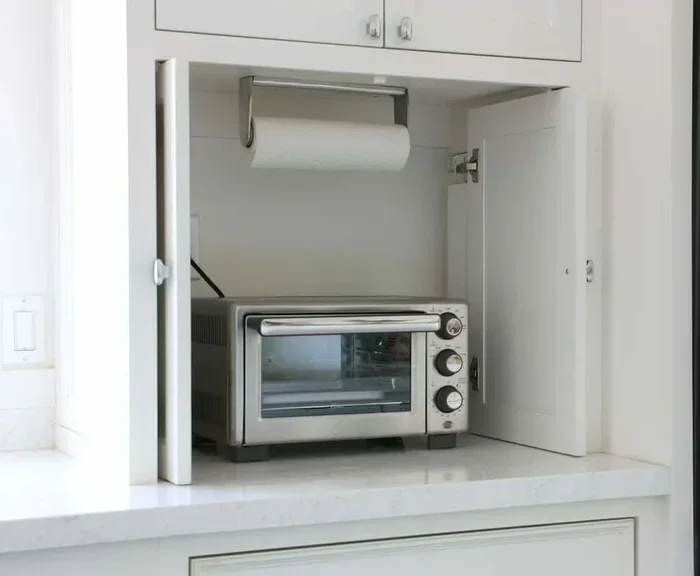
In an Appliance Garage
An appliance garage is a tall, narrow cabinet usually located near the countertop. It is designed specifically to store small appliances like toasters, blenders, and toaster ovens. The flip-top or push-to-open door keeps things hidden but within arm’s reach.
Appliance garages are a staple in many kitchen designs. They are especially useful if you use your toaster oven frequently and want quick access without cluttering the counter.
On a Rolling Cart or Sideboard
For renters or anyone who wants a flexible solution, a rolling cart is a fantastic choice. You store the toaster oven on the cart and roll it into a pantry, closet, or corner when guests come over. When you need it, you simply roll it back out.
Sideboards and buffets also work well. These pieces of furniture can sit against a wall and hide your appliance behind closed doors. They double as storage for dishes and linens too.
How To Build A Custom Toaster Oven Cabinet
If you are handy with tools or willing to hire a carpenter, building a custom cabinet is the gold standard for hiding a toaster oven. A custom build lets you design the perfect fit for your specific appliance and kitchen layout.
Planning Your Cabinet
Start by measuring your toaster oven carefully. Note the height, width, and depth. Add about 2 inches to the height and 1 inch to each side for airflow. This extra space is critical for safe ventilation.
Next, decide where the cabinet will go. A base cabinet next to the wall is the most common spot. You want the cabinet door to open easily without hitting the toaster oven inside. Measure the door swing and plan accordingly.
Expert Insight: Always leave at least 3 inches of space above and behind the toaster oven for heat dissipation. Overheating is the number one safety risk when enclosing any appliance.
Building the Cabinet
For a basic cabinet, you need plywood or MDF boards, hinges, and a door. Cut the sides, top, bottom, and back panels to size. Assemble them with screws or wood glue. Attach the door with hinges and add a handle for easy opening.
If you want a more polished look, add a face frame to the cabinet. This gives it a finished appearance that matches other kitchen cabinets. You can paint or stain the cabinet to blend in with your existing kitchen style.
Adding Ventilation
Ventilation is the most important part of any enclosed appliance storage. Without airflow, heat builds up and can damage both the toaster oven and the cabinet.
Here are some ventilation options to consider:
- Drill holes in the back panel of the cabinet for passive airflow.
- Install a small fan inside the cabinet to circulate air.
- Use a ventless design with gaps between the door and the cabinet frame.
- Add a heat-resistant mat inside the cabinet to protect the wood from heat damage.
Common Mistake: Many people forget to account for heat when building a toaster oven cabinet. Always test the temperature inside the cabinet after a few uses. If it feels too hot to touch, add more ventilation immediately.
Creative Storage Solutions For Small Kitchens
Small kitchens need creative thinking. You cannot always dedicate a full cabinet to a toaster oven. But that does not mean you are out of options. There are plenty of space-saving ideas that work beautifully in tight kitchens.
Use Overhead Wall Shelves
Wall shelves are a great way to keep appliances off the counter without using floor space. You can install a shelf above the toaster oven’s usual spot and store it there when not in use. Just make sure the shelf is sturdy enough to hold the weight of the appliance.
Open shelving has become very popular in recent years. It adds a decorative touch while giving you easy access to your kitchen appliances. Pair it with matching baskets or bins for a clean look.
Try a Corner Cabinet or Carousel
Corner cabinets often go unused or underused. A corner carousel or lazy Susan turns that dead space into valuable storage. A toaster oven fits perfectly on a corner shelf, and the carousel makes it easy to reach.
If you have a triangular or L-shaped kitchen, this is one of the best solutions available. It uses space that would otherwise go to waste.
Go Vertical With a Tall Cabinet
A tall cabinet, sometimes called a pantry tower, is a narrow vertical cabinet that reaches from floor to ceiling. You can dedicate one shelf to your toaster oven and use the other shelves for pantry items or small appliances.
Tall cabinets are perfect for narrow spaces like hallways or the gap between the refrigerator and the wall. They maximize vertical storage without taking up much floor space.
Use a Built-In Nook or Recess
Some kitchens have built-in recesses or alcoves that were designed for appliances. If your kitchen has one, a toaster oven slides right in and disappears. If you do not have a recess, you can create one by framing out a small alcove in an unused wall section.
This approach requires a bit of renovation but delivers the most seamless result. The toaster oven looks like it was always meant to be there.
Tips For Safe And Ventilated Appliance Storage
Hiding a toaster oven is great for your kitchen’s appearance, but safety must come first. Toaster ovens generate significant heat, and enclosing them without proper precautions can create a fire hazard.
Always Allow Airflow
Never seal a toaster oven in a completely airtight cabinet. Heat needs somewhere to go. The best practice is to leave gaps at the top and back of the enclosure. You can also add a small vent or drill holes in the back panel.
A good rule of thumb is to leave at least 2 to 3 inches of clearance on all sides. This allows hot air to circulate and prevents overheating.
Use Heat-Resistant Materials
When building or modifying a cabinet for a toaster oven, choose materials that can handle heat. Plywood, MDF, and metal are all good options. Avoid using plastic panels or thin materials that could warp or melt from proximity to heat.
If you use wood, consider applying a heat-resistant coating or paint. This adds an extra layer of protection and extends the life of your cabinet.
Never Leave the Appliance Unattended
This is a safety rule that applies whether the toaster oven is hidden or out in the open. Always turn it off when you are done cooking. Never leave it running while you leave the house or go to bed.
When the toaster oven is stored inside a cabinet, it is even more important to check it after use. Make sure it has cooled down before closing the door. This prevents heat buildup and reduces the risk of fire.
Keep Flammable Items Away
Make sure there are no towels, paper, or plastic items near the toaster oven when it is stored and in use. Flammable materials should always be kept at a safe distance from any heat source.
Quick Tip: Place a heat-resistant mat or silicone pad on the shelf where the toaster oven sits. This protects the shelf and catches any crumbs or spills.
How To Make Your Hidden Setup Look Seamless
The goal of hiding a toaster oven is not just storage. It is also to make your kitchen look beautiful and intentional. With a few design touches, you can make the hidden setup blend in perfectly with the rest of your kitchen.
Match the Cabinet Finish
If you are adding a new cabinet or enclosure, match the finish to your existing kitchen cabinets. Use the same wood tone, paint color, or hardware style. This makes the new addition look like it was always part of the design.
For a modern look, use clean lines and minimal hardware. For a rustic or farmhouse style, consider adding a wooden pull or barn-style door. The details matter when creating a cohesive look.
Add a Sliding or Pocket Door
Sliding doors are a great alternative to traditional hinged doors. They save space and give the kitchen a sleek, contemporary feel. Pocket doors slide completely into the wall, making the cabinet virtually invisible when closed.
If a pocket door is too complex, a simple barn door or sliding barn-style panel works well too. These add charm and character while keeping the appliance hidden.
Use Trim and Molding
Adding trim or molding around the cabinet helps it blend with the rest of the kitchen. Crown molding at the top and base molding at the bottom create a finished look. This small detail makes a big difference in the overall appearance.
Expert Insight: Interior designers often recommend using the same trim profile on hidden appliance cabinets as on the rest of the kitchen. This creates visual consistency and makes the storage feel intentional rather than improvised.
Keep the Area Around the Cabinet Clean
A hidden toaster oven looks best when the surrounding area is tidy. Keep the countertop around the cabinet clear of clutter. Add a small plant, a decorative tray, or a framed photo nearby to draw the eye away from the cabinet.
The less visible the cabinet is, the better it does its job. A clean, well-organized kitchen makes any hidden storage solution look like a permanent part of the design.
Comparison Table: Best Hiding Methods By Kitchen Size
Not sure which method is right for you? Here is a quick comparison of the most popular options based on kitchen size and needs.
| Method | Best For | Difficulty | Cost | Ventilation |
|---|---|---|---|---|
| Base Cabinet | All kitchen sizes | Easy | Low | Moderate |
| Pull-Out Pantry | Medium to large | Easy | Low to Medium | Good |
| Under Kitchen Island | Large kitchens | Medium | Medium to High | Good |
| Sliding Pantry Door | Medium kitchens | Medium | Medium | Moderate |
| Appliance Garage | All kitchen sizes | Easy | Low | Good |
| Rolling Cart | Small kitchens | Easy | Low | Excellent |
| Custom Built Cabinet | Any size | Hard | High | Excellent |
Each method has its strengths. The best choice depends on your kitchen size, budget, and how often you use your toaster oven. Think about your daily routine and pick the option that fits your lifestyle best.
Common Mistakes People Make When Hiding Their Toaster Oven
Even with the best intentions, mistakes can happen. Learning from others’ experiences helps you avoid common pitfalls and get the best results from your toaster oven storage setup.
Forgetting About Ventilation
This is the number one mistake. People build beautiful cabinets and forget that toaster ovens produce heat. Without proper airflow, the cabinet can become dangerously hot. Always plan for ventilation before you build or modify any enclosure.
Choosing a Cabinet That Is Too Shallow
Toaster ovens are deeper than many people realize. A standard toaster oven is about 12 to 16 inches deep. If the cabinet is too shallow, the oven will not fit or will stick out awkwardly. Always measure twice before building or buying a storage solution.
Storing the Appliance While It Is Still Hot
This is a safety hazard that many people overlook. Always let the toaster oven cool down completely before putting it away. Storing a hot appliance in a closed cabinet can damage the cabinet and create a fire risk.
Making It Too Hard to Access
There is a balance between hiding the appliance and making it easy to use. If you have to climb a stool or pull out three shelves to reach the toaster oven, you will stop using the setup. Keep it convenient so you actually use it regularly.
Ignoring the Weight
Toaster ovens are heavier than people expect. A typical model weighs between 10 and 25 pounds. Make sure the shelf or cabinet can handle the weight. Use sturdy materials and secure mounting hardware to prevent accidents.
Frequently Asked Questions
Can I hide a toaster oven in a regular kitchen cabinet?
Yes, you can hide a toaster oven in a standard base cabinet. Just make sure the cabinet is deep enough and tall enough to fit the appliance with some clearance. Leave gaps for ventilation and use a pull-out shelf or lazy Susan for easy access. This is the simplest and most affordable way to keep your toaster oven out of sight.
Is it safe to store a toaster oven in a closed cabinet?
It can be safe if you take the right precautions. Always ensure proper airflow by leaving gaps or adding vents. Never store the toaster oven while it is still hot. Use heat-resistant materials for the cabinet interior. As long as you follow these safety guidelines, enclosed storage works well for most kitchens.
What is the best hiding spot for a toaster oven in a small kitchen?
For small kitchens, a rolling cart, appliance garage, or pull-out pantry works best. These options keep the toaster oven accessible while freeing up counter space. A rolling cart is especially flexible because you can move it out of the way when needed. It is also a great rental-friendly solution that requires no permanent changes.
How do I build a custom cabinet for my toaster oven?
Start by measuring your toaster oven and adding 2 inches of clearance on all sides. Cut plywood or MDF panels to size and assemble them into a box shape. Attach a door with hinges and add ventilation holes in the back panel. Finish the cabinet with paint or stain to match your kitchen. Always test the heat levels after a few uses and adjust ventilation if needed.
Can I put a toaster oven under my kitchen island?
Yes, many kitchen islands have built-in cabinets that can accommodate a toaster oven. Make sure the island has enough clearance for the appliance and proper ventilation. If your island does not have built-in storage, you can add a removable shelf or use a rolling cart that fits underneath. This keeps the appliance hidden while keeping it within easy reach.
What are the cheapest ways to hide a toaster oven?
The cheapest options include using an existing base cabinet, a rolling cart, or a fabric-covered appliance garage. You can also repurpose a small sideboard or storage bench. A simple curtain or sliding barn door over an open shelf is another budget-friendly idea. The key is to find a solution that uses what you already have before buying new storage furniture.
Conclusion
Hiding a toaster oven in the kitchen is one of the simplest upgrades you can make. It frees up counter space, reduces clutter, and gives your kitchen a cleaner, more organized look. Whether you choose a base cabinet, a custom-built enclosure, or a rolling cart, the right solution makes a real difference in how your kitchen feels every day.
Remember to prioritize safety. Always allow for proper ventilation, use heat-resistant materials, and never store a hot appliance in an enclosed space. Take your time measuring and planning so the final result looks polished and functions well.
With the ideas in this guide, you have everything you need to find the perfect hiding spot for your toaster oven. Pick the method that fits your kitchen size, budget, and style. Then enjoy the satisfaction of a cleaner, more spacious kitchen that you will love spending time in every day.