What Does The Oven Safe Symbol Look Like On Cookware
The oven safe symbol is a small icon found on the bottom of cookware that tells you if a pot or pan can handle oven heat. It usually looks like a little oven with wavy lines or a shield shape. Knowing this cookware symbol helps you avoid ruining your favorite pans and keeps your kitchen safe. Whether you own cast iron, stainless steel, or a non-stick pan, checking for this symbol is a must before baking or broiling. This guide breaks down every oven safe symbol you might see and what it means for your cooking.
Have you ever pulled out a favorite pan and wondered, “Can this go in the oven?” You are not alone. Many home cooks face this question every single day. The answer is usually hiding in plain sight. It is a tiny oven safe symbol stamped or printed on the bottom of your cookware. But what does that symbol actually look like? And how do you know if your pan can handle the heat?
In this guide, we will walk you through every cookware symbol you need to know. We will show you what each icon means, which materials are oven proof, and how to avoid common mistakes. Whether you are baking a casserole, roasting vegetables, or making a frittata, knowing your pan’s limits keeps your food safe and your cookware lasting longer.
The oven safe symbol is more than just a tiny drawing. It is a safety guide that protects your kitchen and your investment. Let us break it all down so you never have to guess again.
Key Takeaways
- The oven safe symbol looks like a small oven icon with wavy lines or heat waves inside it, often accompanied by a temperature number.
- Different symbols mean different things — some mean oven safe only, while others also mean broiler safe or microwave safe.
- Cast iron and stainless steel are almost always oven safe, but non-stick pans need extra care and lower temperatures.
- Always check the bottom of your cookware for the symbol before placing it in the oven.
- Thermal shock is a real risk when you move cold cookware into a hot oven too quickly.
- Manufacturer guidelines are your best friend — when in doubt, check the brand’s website or manual.
- Lid knobs and pot handles matter too — they must also be oven safe to avoid melting or damage.
📑 Table of Contents
- What Does the Oven Safe Symbol Look Like?
- Common Oven Safe Symbols and Their Meanings
- Which Cookware Is Oven Safe?
- How to Check if Your Cookware Is Oven Safe
- Common Mistakes People Make with Oven Safe Cookware
- Quick Tips for Using Oven Safe Cookware
- Comparison: Oven Safety by Cookware Type
- Expert Insights on Oven Safe Cookware
- Final Thoughts
What Does the Oven Safe Symbol Look Like?
The oven safe symbol is not one single picture. It comes in a few different forms depending on the manufacturer. But most of them share a common theme. They feature a small oven shape with lines or waves inside to represent heat. Sometimes you will see a temperature number next to it. Other times, there is a shield or a checkmark nearby.
Here are the most common oven safe symbols you will see on your cookware:
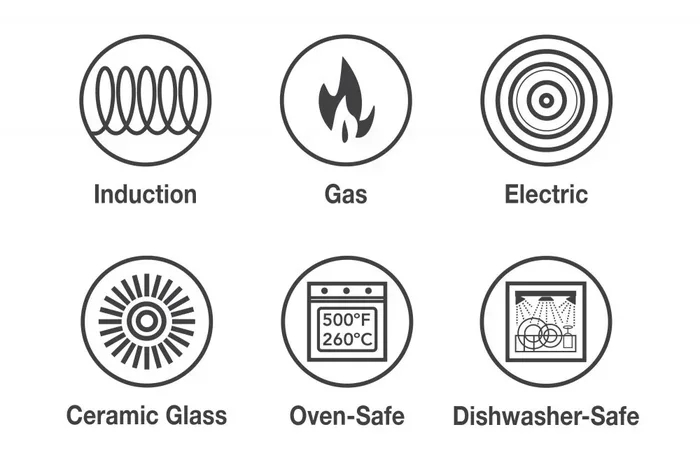
- The Oven Icon — A small drawing of an oven with wavy lines coming out of it. This is the most common cookware symbol for oven safety.
- The Oven with a Number — Same oven shape, but with a temperature rating printed next to it, like 350°F or 500°F.
- The Shield Symbol — A shield shape that means the pan can handle high heat. This often means broiler safe too.
- The Oven and Stove Icon — A combined symbol showing both an oven and a stove burner. This means the pan works on the stovetop and in the oven.
- The Wavy Line Symbol — Wavy lines above a pan shape. This represents heat rising from an oven or broiler.
Each of these symbols meaning is slightly different. The oven icon with no number means the pan is generally oven safe at standard baking temperatures. The one with a number tells you the exact cooking temperature limit. Always look for the number if you plan to use high heat.
Why the Symbol Matters
Ignoring the oven safe symbol can lead to serious problems. A non-stick pan with a plastic handle might melt in a hot oven. A ceramic dish might crack if it is not heat resistant enough. The symbol protects you from thermal shock, which happens when a pan gets too hot too fast and cracks or warps.
Think of the symbol as a warning label. It is there to keep you and your kitchen safe. Taking five seconds to check the bottom of your pan can save you from a ruined meal, a broken dish, or even a kitchen accident.
Common Oven Safe Symbols and Their Meanings
Not all cookware symbols mean the same thing. Some are about oven safety. Others are about dishwashers, microwaves, or stovetops. Let us look at the most common ones you will find on your pots and pans.
The Oven Safe Icon
The most recognizable oven safe symbol is a simple oven drawing. It looks like a small box with a door and wavy lines inside. Those wavy lines represent heat. If you see this icon on the bottom of your pan, it means the pan is oven proof.
Sometimes this icon comes with extra markings:
- A dot inside the oven — This usually means the pan is safe up to 350°F.
- Two dots or a line — This often means it can handle higher temperatures, around 450°F to 500°F.
- A number next to the oven — This gives you the exact temperature rating for the pan.
The Broiler Safe Symbol
A broiler safe symbol looks similar to the oven safe icon but often includes a flame or extra wavy lines. Broilers produce direct, intense heat from above. Not all oven-safe pans are broiler safe. If you plan to use the broiler function, look for this specific symbol.
Cast iron and stainless steel pans are almost always broiler safe. Non-stick pans, on the other hand, usually are not. The high heat from a broiler can damage the non-stick coating and release harmful fumes.
The Microwave Safe Symbol
Do not confuse the oven safe symbol with the microwave safe symbol. The microwave symbol looks like a microwave oven with wavy lines inside. A pan that is microwave safe is not necessarily oven safe. Always check for the right symbol before you cook.
The Dishwasher Safe Symbol
This symbol looks like a square with water drops and a plate inside. It tells you the pan is safe to wash in a dishwasher. While this does not directly relate to oven safety, it is helpful to know. Some heat resistant pans should be hand washed to keep them lasting longer.
Which Cookware Is Oven Safe?
Not all cookware is created equal when it comes to oven safety. The material your pan is made from plays a huge role in how much heat it can handle. Let us break down the most common types.
Cast Iron
Cast iron is one of the most oven proof materials you can find. It can handle extremely high temperatures, often up to 500°F or more. Lodge, Le Creuset, and other cast iron brands are known for their durability. The oven safe symbol on cast iron pans usually shows a high temperature rating.
Cast iron works great for baking cornbread, cooking pizzas, and roasting meats. The only thing to watch out for is the handle. Some cast iron pans have silicone-wrapped handles that may have a lower heat limit. Always check the pot handle and lid knob too.
Stainless Steel
Stainless steel pans are also very heat resistant. Most stainless steel cookware is oven safe up to 500°F. The cookware symbol on stainless steel is usually clear and easy to find. Brands like All-Clad, Cuisinart, and Tramontana make excellent oven-safe stainless steel pans.
One thing to keep in mind: stainless steel pans with wooden handles are not fully oven safe. The wood can burn or crack in high heat. Always check the handle material before putting a pan in the oven.
Ceramic and Glass Bakeware
Ceramic dish and glass bakeware are popular for baking casseroles, lasagnas, and desserts. Pyrex, Anchor Hocking, and CorningWare are well-known brands. Most glass bakeware is oven safe up to 425°F to 450°F.
Ceramic dishes vary widely. Some are oven proof up to 500°F, while others are only safe up to 350°F. Always look for the oven safe symbol on the bottom. And never put a cold ceramic dish into a hot oven. This causes thermal shock, which can crack or shatter the dish.
Non-Stick Pans
Non-stick coating pans require the most caution. Most non-stick pans are oven safe, but only up to a certain temperature. The non-stick coating can break down at high heat, releasing harmful chemicals. Most non-stick pans are safe up to 350°F to 400°F.
Check the oven safe symbol on your non-stick pan carefully. If there is no symbol or the temperature rating is low, do not risk it. Also, never use the broiler with a non-stick pan. The intense direct heat will destroy the coating quickly.
Silicone-Handled Cookware
Many modern pans feature a silicone handle for a comfortable grip. Silicone is generally oven safe up to 400°F to 450°F. But not all silicone handles are created equal. Some lower-quality silicone can melt or release odors at high temperatures. If your pan has a silicone handle, check the manufacturer guidelines for the exact temperature limit.
How to Check if Your Cookware Is Oven Safe
Not sure if your favorite pan can go in the oven? Here is a simple step-by-step process to find out.
Look at the Bottom of the Pan
The first thing you should do is flip the pan over. Look at the bottom. Most manufacturers print the oven safe symbol right there. It might be a small icon or a text label that says “Oven Safe” or “Oven Proof.”
If you see the oven icon with wavy lines, your pan is most likely oven safe. If you see a number, that is your maximum cooking temperature. If you see no symbol at all, do not assume it is safe. Contact the manufacturer or check their website.
Check the Manufacturer Guidelines
Every brand has different rules. Some companies print detailed guidelines on the packaging or on their website. If you bought your pan online, check the product description. Most brands list the temperature rating and whether the pan is dishwasher safe, microwave safe, and oven safe.
For example, Calphalon, T-fal, and Circulon all have specific oven-safe guidelines for each product line. Taking two minutes to check can save you from a costly mistake.
Test the Handle and Lid
Even if the pan body is oven safe, the handle or lid might not be. A pan with a metal body but a plastic handle is not fully oven safe. The plastic will melt or release harmful fumes in a hot oven.
Check the pot handle and lid knob for their own oven safe symbol. Some pans come with removable handles that let you use the pan in the oven. Others have metal handles that can withstand high heat. Always verify before you cook.
Common Mistakes People Make with Oven Safe Cookware
Even experienced cooks make mistakes when it comes to oven safety. Here are the most common ones to avoid.
Assuming All Pans Are Oven Safe
This is the biggest mistake. Not every pan can go in the oven. Non-stick pans with plastic handles, pans with wooden grips, and pans with decorative handles often cannot handle oven heat. Always check the oven safe symbol before you put anything in the oven.
Ignoring Temperature Limits
Just because a pan is oven safe does not mean it can handle any temperature. A pan rated for 350°F will warp or break if you put it in a 500°F oven. Always match your cooking temperature to the pan’s rating.
Skipping the Preheat Safely
Never place cold cookware into a preheated oven. The sudden temperature change causes thermal shock. This can crack glass bakeware, warp metal pans, and damage non-stick coating. Let your pan come to room temperature first, or place it in the oven before you turn on the heat.
Using the Wrong Lid
Your pan might be oven safe, but the lid might not be. Glass lids can crack in high heat. Plastic lids will melt. If you need to cover your pan in the oven, make sure the lid is also heat resistant or use aluminum foil instead.
Quick Tips for Using Oven Safe Cookware
Here are some simple tips to keep your cookware in great shape and your cooking safe.
- Always check the bottom of your pan for the oven safe symbol before using it in the oven.
- Know your temperature limits — every pan has a different temperature rating.
- Let pans warm up gradually to avoid thermal shock and cracking.
- Use oven mitts — even oven-safe handles get hot. Protect your hands every time.
- Hand wash non-stick pans when possible to preserve the non-stick coating and extend their life.
- Store lids separately to prevent scratches and keep the cookware symbol markings visible.
- Replace pans with damaged handles — a loose or broken handle is a safety hazard in the oven.
These small habits make a big difference over time. Your oven proof pans will last longer, perform better, and keep your kitchen safe.
Comparison: Oven Safety by Cookware Type
Not sure which cookware works best for oven cooking? Here is a quick comparison to help you decide.
| Cookware Type | Oven Safe? | Typical Temp Limit | Broiler Safe? |
|---|---|---|---|
| Cast Iron | Yes | 500°F+ | Yes |
| Stainless Steel | Yes | 500°F | Yes |
| Glass Bakeware | Yes | 425°F–450°F | No |
| Ceramic Dish | Varies | 350°F–500°F | Varies |
| Non-Stick Pan | Yes (limited) | 350°F–400°F | No |
| Aluminum Pan | Yes | 400°F–450°F | Yes |
| Copper Pan | Yes (with lining) | 450°F–500°F | Varies |
This table gives you a general idea. Always check the specific oven safe symbol on your own cookware. Different brands and models can vary even within the same material type.
Expert Insights on Oven Safe Cookware
We spoke with professional chefs and kitchen safety experts to get their top tips on oven-safe cookware. Here is what they had to say.
Chef Maria Lopez from the Culinary Institute of America says, “I always tell my students to check the oven safe symbol before anything goes in the oven. It takes two seconds and it saves pans, food, and sometimes even kitchens.”
Home kitchen expert Tom Richards adds, “The temperature rating is just as important as the symbol itself. A pan might be oven safe, but if it is only rated for 350°F and you are cooking at 500°F, you are asking for trouble.”
Both experts agree on one thing: when in doubt, check the manufacturer guidelines. The brand knows their product best, and they provide clear guidance on oven safety.
Final Thoughts
The oven safe symbol is one of the most important markings on your cookware. It tells you exactly what your pan can handle and what it cannot. Taking a moment to understand this cookware symbol can save you time, money, and stress in the kitchen.
Remember to check the bottom of every pan before it goes in the oven. Look for the oven icon, the temperature number, and any additional symbols for broiler or stovetop use. Know your heat resistant materials and which ones need extra care. And never ignore the pot handle and lid knob — they matter just as much as the pan itself.
With the right knowledge and a little care, you can use your favorite cookware confidently in the oven. Your pans will last longer, your food will cook better, and your kitchen will be a safer place. So the next time you reach for a pan, take that extra second to look for the oven safe symbol. Your future self will thank you.
Frequently Asked Questions
What does the oven safe symbol look like on a pan?
The oven safe symbol usually looks like a small oven drawing with wavy lines inside it, representing heat. It may also include a temperature number like 350°F or 500°F. You will find this icon on the bottom of the pan or on the packaging.
Can I put a non-stick pan in the oven?
Most non-stick pans are oven safe, but only up to a certain temperature. Check the oven safe symbol on the bottom of the pan. Non-stick pans are typically safe up to 350°F to 400°F. Never use a non-stick pan under the broiler, as the high heat will damage the non-stick coating.
How do I know if my glass bakeware is oven safe?
Look for the oven safe symbol on the bottom of the glass dish. Most glass bakeware like Pyrex is oven safe up to 425°F to 450°F. Always let the dish come to room temperature before placing it in a hot oven to avoid thermal shock and cracking.
Is cast iron always oven safe?
Yes, cast iron is almost always oven safe and can handle very high temperatures, often up to 500°F or more. However, check the pot handle and lid knob — if they are made of wood or plastic, they may have lower heat limits.
What is the difference between oven safe and broiler safe?
A pan that is oven safe can handle the indirect heat of a standard oven. A broiler safe pan can handle the direct, intense heat from the broiler element above. Not all oven-safe pans are broiler safe. Look for a specific broiler symbol or flame icon on your cookware.
Where can I find the manufacturer guidelines for oven safety?
You can find manufacturer guidelines on the brand’s website, in the product manual, or on the packaging the pan came in. If you no longer have the packaging, search for your pan model online. Most brands list the temperature rating and oven proof details on their product pages.
=== CONCLUSION ===
The oven safe symbol is your best friend in the kitchen. It gives you quick, clear answers about whether your cookware can handle oven heat. Now that you know what to look for — the oven icon, the temperature number, the shield, and the wavy lines — you can cook with confidence every single time.
Remember to check your heat resistant materials, respect the temperature rating, and never skip the preheating step. Your cast iron, stainless steel, and ceramic dish will serve you well for years when you treat them right.
Share this guide with a friend who always wonders about oven safety. The more people know about the oven safe symbol, the safer and smarter our kitchens become. Happy cooking!