What Temp To Slow Cook Roast In Oven For Perfect Results
Slow cooking a roast in the oven at 250°F to 325°F delivers the most tender, flavorful results. This guide covers the ideal temp to slow cook roast in oven, cooking times for different cuts, and step-by-step instructions. You will learn how to achieve a perfectly juicy oven slow roast with a beautiful crust every single time.
There is something truly magical about a slow-cooked roast in the oven. The kitchen fills with an incredible aroma, the meat becomes fall-apart tender, and the flavors deepen in ways that no quick cooking method can match. If you have ever wondered what temp to slow cook roast in oven, you are in the right place. This complete guide will walk you through everything you need to know about oven slow roast temperatures, timing, and techniques. Whether you are cooking a chuck roast, a pork shoulder, or a bone-in beef roast, you will find practical advice that works every time.
The beauty of slow cooking in the oven lies in its simplicity. You do not need fancy equipment or years of experience. With the right slow cook roast temperature and a little patience, you can turn a humble cut of meat into a show-stopping centerpiece. Let us dive into the details and help you master the art of slow cooking roast in oven like a pro.
Key Takeaways
- Best Temp Range: Slow cook roast in oven at 250°F to 325°F for optimal tenderness.
- Internal Temp Matters: Aim for 195°F to 205°F for beef roasts to break down connective tissue.
- Low and Slow Wins: Lower temperatures over longer periods create the most juicy, fall-apart texture.
- Always Sear First: A good sear before slow roasting adds deep flavor and a gorgeous crust.
- Use a Meat Thermometer: Guessing leads to overcooked or undercooked roasts every time.
- Rest Before Slicing: Let your roast rest 15 to 20 minutes to lock in the juices.
- Dutch Oven Is King: An oven-safe Dutch oven traps moisture and delivers the best slow roast results.
📑 Table of Contents
- Why Slow Cooking in the Oven Works So Well
- The Best Temperature To Slow Cook Roast In Oven
- How Long To Slow Cook Roast In Oven
- Step-by-Step Guide To Slow Roasting
- Common Mistakes To Avoid
- Expert Tips For The Perfect Slow Roast
- Slow Cook Roast Temperature Comparison
- Frequently Asked Questions
- Conclusion
Why Slow Cooking in the Oven Works So Well
The Science Behind Low and Slow Roasting
When you cook meat at a low temperature for a long time, something amazing happens at the molecular level. The connective tissue inside the meat, made mostly of collagen, begins to break down slowly. This process turns tough cuts into tender, juicy pieces of heaven. High heat causes muscle fibers to contract tightly, squeezing out moisture. Low heat does the opposite. It allows collagen to convert into gelatin, which gives the meat a silky, melt-in-your-mouth texture.
This is why low temperature cooking is the secret to the best roasts. The collagen breakdown process needs time and gentle heat. When you roast at too high a temperature, the outside burns before the inside has a chance to tenderize. Slow roasting solves this problem completely.
Benefits of Oven Slow Cooking
Oven slow cooking offers several advantages over other methods. Here is why it is worth your time:
- Even Heat Distribution: Your oven surrounds the roast with consistent warmth from all sides.
- Hands-Off Cooking: Once the roast is in, you can focus on other things in the kitchen.
- Deep Flavor Development: The long cooking time allows flavors to meld and deepen beautifully.
- Versatility: You can cook beef, pork, lamb, or even poultry using the same basic approach.
- One-Pot Convenience: Most slow roasts need just a single pan or Dutch oven.
- Perfect for Busy Days: Set it and forget it while the oven does all the work.
The Best Temperature To Slow Cook Roast In Oven
The temp to slow cook roast in oven depends on what you are cooking and how much time you have. But there is a general sweet spot that works beautifully for almost every roast. Most experts agree that 250°F to 325°F is the ideal range for slow roasting. Let us break this down further.
Recommended Temperature Ranges
Here is a quick look at the most common oven slow roast temperature ranges:
- 250°F: The lowest recommended setting. Best for very tough cuts that need extra time. Expect cooking times of 4 to 6 hours or more.
- 275°F: A popular choice for beef roast recipes and pork roasts. Great balance of time and flavor.
- 300°F: Slightly faster while still maintaining tenderness. Works well for medium-sized roasts.
- 325°F: The upper end of slow roasting. Good for roasts you want done in 2 to 3 hours.
Temperature for Different Types of Roasts
Different cuts of meat respond best to slightly different temperatures. Here is a helpful guide:
- Chuck Roast: Cook at 275°F to 300°F. This tough cut has lots of connective tissue and needs gentle, slow heat.
- Pork Shoulder (Boston Butt): 250°F to 275°F works best. The long cook time renders the fat perfectly.
- Bone-In Beef Roast: 275°F to 300°F gives you a beautiful crust and tender interior.
- Lamb Roast: 275°F to 300°F keeps the meat juicy and flavorful.
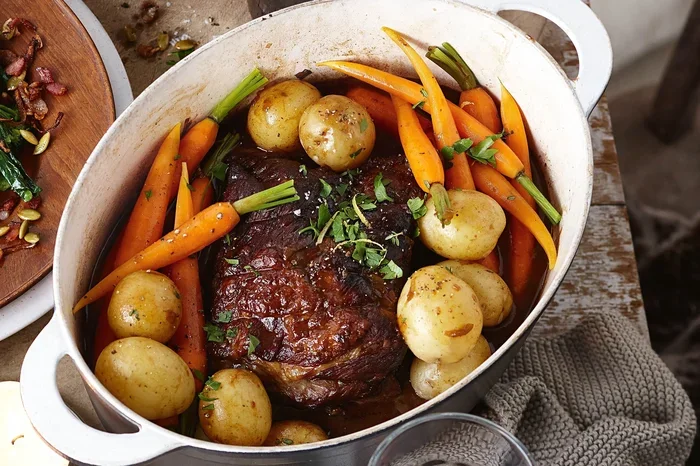
- Pot Roast in Oven: 300°F is the go-to temperature for a classic pot roast.
If you are comparing slow cooker vs oven methods, the oven gives you more control over the final texture and crust. A Dutch oven on the stovetop followed by an oven finish is another excellent approach for oven braised roast dishes.
How Long To Slow Cook Roast In Oven
Cooking Time by Weight
The slow cooking time for a roast depends mainly on its weight and the temperature you choose. Here is a general guideline for oven roasted beef and other meats:
- 2 to 3 pounds: About 3 to 4 hours at 300°F
- 4 to 5 pounds: About 4 to 5 hours at 300°F
- 6 to 7 pounds: About 5 to 6 hours at 300°F
- 8 pounds or more: About 6 to 8 hours at 275°F to 300°F
These times are approximate. Always use a meat thermometer to check the internal temperature rather than relying solely on the clock.
Factors That Affect Cooking Time
Several factors can change how long your roast takes:
- Bone-In vs Boneless: Bone-in roasts take longer to cook through because the bone insulates the meat.
- Starting Temperature: A roast straight from the fridge will take longer than one brought to room temperature first.
- Oven Accuracy: Every oven is slightly different. Some run hot, others run cool.
- Roasting Pan Material: Dark pans absorb more heat and can speed up cooking slightly.
- Desired Doneness: If you like your roast more well-done, add extra time.
Step-by-Step Guide To Slow Roasting
Now that you know the right temp to slow cook roast in oven, let us walk through the actual process. Following these steps will give you a roast with a beautiful crust and a tender, juicy interior.
Preparing Your Roast
Start by taking your roast out of the refrigerator about 30 to 45 minutes before cooking. This lets it come closer to room temperature, which helps it cook more evenly. Pat the meat dry with paper towels. Moisture on the surface creates steam, which prevents a good sear. Season generously with salt and pepper on all sides. You can also add garlic powder, onion powder, paprika, or any dry rub you prefer.
Searing and Seasoning
Searing is a step you should never skip. Heating a small amount of oil in a cast iron skillet or oven-safe pan over medium-high heat creates a Maillard reaction on the surface of the meat. This chemical reaction produces hundreds of new flavor compounds and gives your roast that deep, golden-brown crust.
Sear each side of the roast for about 2 to 3 minutes until a nice brown crust forms. Transfer the seared roast to your oven-safe Dutch oven or roasting pan. Add aromatics like onions, carrots, celery, garlic cloves, and fresh herbs around the roast. Pour in a splash of beef broth, wine, or stock for extra moisture and flavor.
The Slow Roast Process
Place the covered Dutch oven or roasting pan in the preheated oven. Set your timer and let the low and slow cooking do its work. Resist the urge to open the oven door too often. Every time you open it, you lose heat and extend the cooking time.
Here is a simple timeline for a 4-pound beef chuck roast at 300°F:
- Hour 0: Sear the roast and place it in the Dutch oven with aromatics.
- Hour 1: The roast begins to slowly heat through.
- Hour 2: Connective tissue starts breaking down.
- Hour 3: The meat becomes noticeably more tender.
- Hour 4: Check the internal temperature. It should be close to 195°F to 205°F.
- Hour 5 (if needed): Continue cooking until the desired internal temperature is reached.
Common Mistakes To Avoid
Skipping the Sear
One of the biggest mistakes home cooks make is skipping the sear. Some people think that since the roast cooks for hours, the sear does not matter much. This is simply not true. The sear adds a layer of complex, savory flavor that permeates the entire dish. Without it, your slow roast may taste flat and one-dimensional.
Opening the Oven Door Too Often
It is tempting to peek inside the oven every 20 minutes to check on the roast. Each time you open the door, the oven temperature drops by 25°F to 50°F. This adds significant time to your cook and can result in uneven cooking. Trust the process and only open the door when you need to check the internal temperature.
Using the Wrong Cut of Meat
Not every cut of meat is suited for slow roasting. Lean cuts like filet mignon or sirloin will dry out during a long cook. Choose cuts with plenty of marbling and connective tissue. Chuck roast, brisket, pork shoulder, and short ribs are all excellent choices for oven braised roast dishes.
Overcooking the Roast
While slow cooking is forgiving, it is still possible to overcook. When the internal temperature climbs past 210°F, the meat can start to dry out and lose its juiciness. Pull the roast when it reaches 195°F to 205°F for beef, or 195°F for pork. The meat will continue to cook slightly as it rests.
Expert Tips For The Perfect Slow Roast
Using a Meat Thermometer Correctly
A meat thermometer is the single most important tool for slow roasting. Insert it into the thickest part of the roast, avoiding bone and fat pockets. For beef roasts, aim for an internal temperature of 195°F to 205°F. For pork, target 195°F to 200°F. For chicken or turkey roasts, the safe internal temperature is 165°F.
Buy a digital instant-read thermometer if you do not already have one. They are affordable and take the guesswork completely out of cooking.
Resting Your Roast Before Slicing
Once your roast is done, take it out of the oven and let it rest for 15 to 20 minutes before slicing. This resting period allows the juices to redistribute throughout the meat. If you cut too early, those precious juices will run all over your cutting board instead of staying inside the roast.
Tent the roast loosely with aluminum foil during resting. This keeps it warm without trapping too much steam, which could soften the crust.
Making the Most of the Pan Juices
Do not throw away the liquid left in the Dutch oven or roasting pan. Those juices are packed with flavor from the meat, aromatics, and rendered fat. You can use them to make a quick gravy or drizzle them over sliced roast for extra moisture and taste. Simply pour the pan juices into a saucepan, bring to a simmer, and thicken with a little cornstarch slurry if desired.
Slow Cook Roast Temperature Comparison
Not sure which temperature to choose for your next roast? Here is a helpful comparison of the most common slow cook roast temperature options:
| Temperature | Best For | Approximate Time (4 lb roast) | Texture |
|---|---|---|---|
| 250°F | Very tough cuts, pork shoulder | 5 to 6 hours | Ultra-tender, fall-apart |
| 275°F | Beef chuck, pork butt | 4 to 5 hours | Very tender, juicy |
| 300°F | General purpose roasting | 3 to 4 hours | Tender with good crust |
| 325°F | Smaller roasts, quicker cooks | 2.5 to 3.5 hours | Tender, more crust development |
As you can see, the lower the temperature, the longer the cook time and the more tender the result. For the most tender roast with deep flavor, choose 275°F and plan for a relaxed afternoon in the kitchen.
Frequently Asked Questions
What Is the Best Temperature To Slow Cook Roast In Oven?
The best temp to slow cook roast in oven is between 250°F and 325°F. For most beef roasts, 275°F to 300°F hits the sweet spot between tenderness and cooking time. This low temperature cooking approach breaks down connective tissue without drying out the meat.
Can You Slow Cook a Roast at 200°F in the Oven?
Yes, you can slow cook a roast at 200°F, but it will take significantly longer. This temperature is best for overnight cooks or very tough cuts like beef brisket. Make sure your oven maintains a stable temperature at this low setting, and use a reliable meat thermometer to track doneness.
How Do You Know When a Slow Roast Is Done?
The most reliable way to know if your oven slow roast is done is to use a meat thermometer. For beef, the internal temperature should reach 195°F to 205°F. The meat should pull apart easily with a fork. If it resists, give it more time and check again every 30 minutes.
Should You Cover a Roast When Slow Cooking in the Oven?
Yes, covering the roast traps moisture and creates a braising effect. Use a tight-fitting lid on your Dutch oven or cover the roasting pan tightly with aluminum foil. This keeps the oven braised roast juicy and tender throughout the long cook time. You can uncover it for the last 30 minutes if you want to develop a thicker crust.
What Is the Difference Between Slow Cooking and Braising in the Oven?
The terms are often used interchangeably, but there is a subtle difference. Slow cooking refers to cooking at a low temperature for an extended period. Braising involves searing the meat first and then cooking it partially submerged in liquid. Both methods use low, gentle heat, but braising always includes liquid while slow cooking may not.
Can You Slow Cook a Frozen Roast in the Oven?
It is not recommended to slow cook a frozen roast directly in the oven. Starting with a frozen roast puts it in the danger zone for too long before it reaches a safe internal temperature. Always thaw your roast in the refrigerator overnight before cooking. This ensures even cooking and food safety throughout the process.
Conclusion
Mastering the temp to slow cook roast in oven is one of the most rewarding skills you can develop in the kitchen. The combination of low heat, patience, and a good cut of meat transforms even the toughest roast into something truly extraordinary. Remember to keep your oven between 250°F and 325°F, always sear your meat first, and use a meat thermometer to check for doneness.
The key to a perfect slow cook roast in oven is not complicated. It comes down to choosing the right temperature, giving it enough time, and resisting the urge to rush the process. Whether you are making a classic beef chuck roast, a savory pork shoulder, or a holiday pot roast, the principles remain the same. Keep it low, keep it slow, and let the oven do the heavy lifting.
Now that you have all the knowledge you need, it is time to put it into practice. Pick up your favorite cut of meat, preheat the oven to your chosen slow cook roast temperature, and enjoy the process. Your family and guests will thank you for the incredible, tender roast that comes out of your oven. Happy cooking!