De Longhi Coffee Machine Descaling Instructions Made Easy
Descaling your De Longhi coffee machine is essential for great-tasting coffee and long machine life. This guide provides clear, easy-to-follow De Longhi coffee machine descaling instructions that anyone can use. You will learn exactly when, why, and how to descale your machine using both official products and home remedies. Follow these steps to remove limescale, improve brew quality, and keep your De Longhi running smoothly for years.
Your De Longhi coffee machine makes wonderful cups of coffee every morning. But over time, something invisible starts building up inside. Mineral deposits called limescale slowly clog the pipes and heating elements. This affects how your machine heats water and, more importantly, how your coffee tastes. That is why De Longhi coffee machine descaling instructions matter so much. In this guide, we walk you through every step in plain, simple language. You will never have to guess or worry about the process again.
Descaling might sound technical, but it is really just cleaning the inside of your machine. Think of it like flushing a drain. Limescale builds up from minerals in your tap water. The more you use your machine, the more buildup occurs. The good news is that descaling takes only about 30 minutes. And once you know the process, it becomes second nature. Whether you own a De Longhi espresso machine, a bean-to-cup model, or a simple drip coffee maker, the basic principles stay the same. Let us dive into why this matters and how to do it right.
Key Takeaways
- Regular descaling prevents limescale buildup and keeps your coffee tasting its best.
- De Longhi EcoDecalk is the recommended descaling solution for optimal results.
- You should descale every 2-3 months or when the descale light appears on your machine.
- White vinegar and water work as a budget-friendly alternative to commercial descalers.
- Running rinse cycles after descaling is critical to remove any residue.
- Skipping descaling can damage your machine and ruin the flavor of your coffee.
- Each De Longhi model has slight differences, so always check your manual for specifics.
📑 Table of Contents
- Why Descaling Your De Longhi Matters
- How Often Should You Descale Your De Longhi Machine
- What You Need Before Starting the Descaling Process
- Step-by-Step De Longhi Descaling Instructions
- EcoDecalk vs. Home Remedies: Which Is Better
- Common Mistakes to Avoid When Descaling
- Troubleshooting After Descaling
- Maintaining Your De Longhi Between Descales
Why Descaling Your De Longhi Matters
Limescale is not just a cosmetic issue. It is a real problem that affects your machine’s performance. When calcium and magnesium deposits build up inside the boiler and tubes, they act like insulation. This means your machine has to work harder to heat the water. Over time, this extra strain leads to higher energy bills and a shorter machine lifespan.
But the biggest impact is on your coffee taste. Limescale changes how water flows through the coffee grounds. This means your brew time shifts, and the extraction becomes uneven. The result is coffee that tastes flat, bitter, or just plain off. Many people blame their coffee beans when the real culprit is a dirty machine. Regular coffee maker maintenance including descaling solves this problem completely.
Here is what happens when you skip descaling for too long:
- Your coffee takes longer to brew because water cannot flow freely.
- The machine makes strange noises during the brewing cycle.
- Your coffee tastes metallic or chalky from mineral contamination.
- Heat efficiency drops, meaning your machine uses more electricity.
- In severe cases, the machine can break down and need expensive repairs.
The solution is simple and inexpensive. A routine coffee machine descaling schedule keeps all these problems away. Your De Longhi was built to last, but only with proper care. Think of descaling as a small investment that protects a bigger one.
How Often Should You Descale Your De Longhi Machine
The frequency of descaling depends on a few factors. The hardness of your local water is the biggest one. If you live in an area with hard water, minerals build up faster. You may need to descale more often than someone with soft water.
As a general rule, you should descale your De Longhi every two to three months. That means about four to six times per year. However, some signs tell you it is time to descale sooner:
- The descale light on your machine turns on or starts flashing.
- Your coffee takes noticeably longer to brew than usual.
- You notice a strange taste or odor in your coffee.
- Steam output becomes weaker during milk frothing.
- Small amounts of white or chalky residue appear near the water outlet.
Most De Longhi machines have a built-in descale indicator light. When this light comes on, it is your machine telling you it is time. Do not ignore it. The light uses a counter based on the number of brewing cycles. It is calibrated to give you the best timing for maintenance. If your model does not have this feature, set a reminder on your phone every three months.
Coffee machine care also includes wiping down the exterior, cleaning the drip tray, and rinsing the water tank weekly. These small habits reduce the workload on your descaling routine. They keep your machine in top shape between deeper cleanings.
What You Need Before Starting the Descaling Process
Before you begin, gather everything you need. Having all your supplies ready makes the process smooth and stress-free. You do not want to start a cleaning cycle and then realize you are missing something.
Here is your checklist for De Longhi coffee machine descaling instructions:
- De Longhi EcoDecalk descaling solution (the official product designed for De Longhi machines).
- White distilled vinegar (a proven home alternative if you do not have the official solution).
- Clean, fresh water (about 1 to 1.5 liters depending on your model).
- A clean container or jug to catch the liquid that runs through the machine.
- A soft cloth or sponge for wiping down external parts.
- Your De Longhi user manual (helpful for model-specific details).
The EcoDecalk solution is specially formulated for De Longhi machines. It is safe for all internal components and does not leave any residue. It also has a pleasant, neutral scent. You can find it at most kitchen appliance stores or online. A bottle typically lasts for several descaling cycles, so it is a worthwhile investment.
If you prefer a budget option, white vinegar and water work very well. A common ratio is one part vinegar to one part water. The acidity in vinegar dissolves limescale effectively. Some coffee lovers use lemon juice as an alternative, but vinegar is the most popular and reliable home remedy.
Step-by-Step De Longhi Descaling Instructions
Now for the part you have been waiting for. Here is the full De Longhi coffee machine descaling instructions walkthrough. We will cover the general process that works for most De Longhi models. Remember to check your specific model’s manual for any unique steps.
Step 1: Prepare Your Machine
Start by turning off your machine and letting it cool down completely. You do not want to handle hot parts. Remove the water tank and empty any remaining water. Take out the coffee grounds container, the used capsule container, or the drip tray. Clean these parts with warm soapy water and a soft cloth. Rinse them thoroughly and dry them before putting them back. A clean starting point makes the whole process more effective.
Step 2: Prepare the Descaling Solution
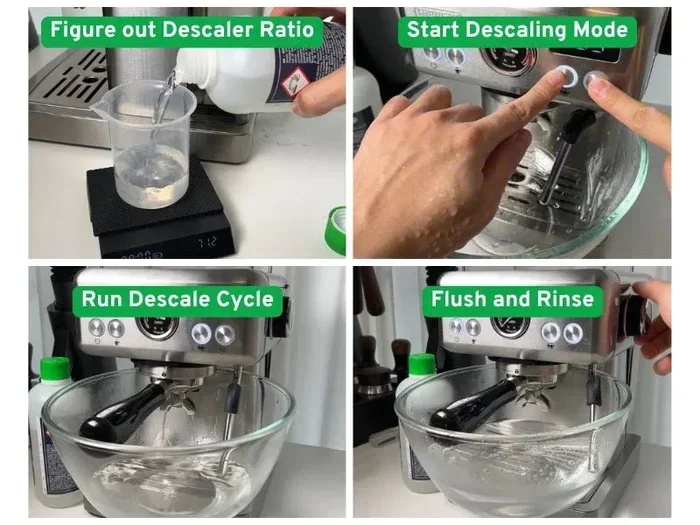
If you are using EcoDecalk, follow the dilution instructions on the bottle. Most De Longhi models require mixing the solution with water in the water tank. Typically, you fill the tank with the recommended ratio of descaling solution and fresh water. If you are using vinegar, mix equal parts white vinegar and water. Pour the mixture into the water tank until it reaches the maximum fill line.
Step 3: Start the Descaling Cycle
Place a large container or jug under the coffee outlet and the steam wand. You want to catch all the liquid that flows through the machine. Now turn on your De Longhi machine. For models with a descale mode, press and hold the descale button. The machine will start a special cleaning cycle that runs the solution through the internal pipes. If your machine does not have a dedicated descale mode, simply run a normal brewing cycle without coffee grounds. Let the solution drip through into your container.
The machine will pause several times during this cycle. This is normal. It allows the solution to sit inside the pipes and dissolve limescale. Do not skip these pauses. They are an important part of the cleaning cycle. Let the solution sit for about 15 minutes when the machine pauses.
Step 4: Rinse Thoroughly
Once the descaling solution has completely passed through the machine, it is time to rinse. This step is just as important as the descaling itself. Empty your collection container and refill the water tank with fresh, clean water. Run another full brewing cycle with just plain water. Repeat this rinse cycle two to three times. This ensures no vinegar or descaling solution residue remains inside the machine.
After the final rinse, wipe down the steam wand and coffee outlet with a damp cloth. Any residual solution left on these surfaces could affect the taste of your next cup of coffee.
Step 5: Reset the Descale Indicator
If your De Longhi machine has a descale light, you need to reset it after completing the process. The reset method varies by model. On many machines, you hold the descale button for about three seconds until the light turns off. Some models require a combination of button presses. Refer to your user manual for the exact reset procedure for your specific De Longhi model. Once the light is off, your machine is ready to brew again.
EcoDecalk vs. Home Remedies: Which Is Better
When it comes to coffee maker descaling, you have two main options. You can use the official De Longhi EcoDecalk solution, or you can try a home remedy like vinegar. Both methods work, but they have some differences worth considering.
| Feature | EcoDecalk Solution | White Vinegar |
|---|---|---|
| Price | Moderate (around $10-15 per bottle) | Very affordable (a few dollars per bottle) |
| Effectiveness | Very high, specifically designed for De Longhi | High, dissolves limescale effectively |
| Residue | None, leaves no taste or smell | May leave a slight vinegar smell if not rinsed well |
| Safety | Safe for all internal components | Safe, but acidic; rinse thoroughly |
| Convenience | Pre-measured, ready to use | Requires mixing with water |
| Smell | Neutral, no strong odor | Temporary vinegar smell during the process |
| Longevity | One bottle lasts multiple cycles | Use fresh vinegar each time |
Most De Longhi owners find that EcoDecalk is the easier and more convenient option. It is designed specifically for De Longhi machines and requires less rinsing. However, vinegar works just as well for removing limescale. The only real downside is the smell and the need for extra rinsing.
Some coffee experts suggest alternating between both methods. Use EcoDecalk every other descaling and vinegar in between. This keeps costs down while still maintaining excellent machine health. Whatever method you choose, the key is consistency. Regular descaling matters far more than which solution you use.
Common Mistakes to Avoid When Descaling
Even when you follow De Longhi coffee machine descaling instructions carefully, mistakes can happen. Here are the most common errors and how to avoid them:
Skipping the rinse cycles. This is the number one mistake people make. After descaling, you must rinse the machine multiple times. Any leftover solution can affect the taste of your coffee and may damage internal seals over time. Run at least two to three full rinse cycles with fresh water.
Using the wrong solution. Do not use bleach, harsh chemicals, or soap inside your machine. These can damage internal components and leave harmful residues. Stick to EcoDecalk, vinegar, or lemon juice only. Your machine’s internal parts are not designed to handle strong detergents.
Not descaling often enough. Some people wait until their machine shows serious problems before descaling. By then, heavy limescale buildup may have already caused damage. Stick to your schedule. Preventive maintenance is always easier and cheaper than repairs.
Forgetting to reset the descale light. If your machine has an indicator, resetting it after descaling is important. An unresolved light can be confusing and may cause you to descale too frequently or not frequently enough.
Using hot water instead of room temperature water. Always use cold or room temperature water for the descaling solution. Hot water can react with vinegar and reduce its effectiveness. It can also cause pressure buildup inside the machine during the cycle.
Troubleshooting After Descaling
Sometimes things do not go perfectly after descaling. Here are a few common issues and quick fixes:
The descale light is still on. This usually means the reset was not completed properly. Try turning the machine off, unplugging it for 30 seconds, and plugging it back in. Then attempt the reset again by holding the descale button for five seconds.
Coffee still tastes off after descaling. This could mean you need an extra rinse cycle. Run two more plain water cycles through the machine. If the taste persists, try descaling again with a fresh solution. Sometimes a second pass is needed for heavy buildup.
The machine is making gurgling noises. Air bubbles can get trapped in the pipes during descaling. Run several rinse cycles to push the air out. The gurgling should stop after a few cycles.
Water flow is still slow. If limescale was very heavy, one descaling may not remove it all. Repeat the descaling process once more. You can also check the water filter in your tank and replace it if needed. A clogged filter can restrict water flow even after descaling.
Maintaining Your De Longhi Between Descales
Descaling is the most important maintenance task, but it is not the only one. To keep your De Longhi in excellent condition, follow these daily and weekly habits:
- Empty and rinse the water tank every few days. Stale water promotes mineral buildup and bacteria growth.
- Wipe the steam wand after every use. Milk residue can clog the wand and affect frothing performance.
- Clean the drip tray and coffee grounds container regularly. These parts collect debris that can affect hygiene.
- Replace the water filter every two months or as recommended by De Longhi. Filters reduce the minerals entering your machine.
- Use filtered water in your machine. This significantly reduces limescale formation and extends the time between descalings.
These small habits make a big difference over time. They mean your machine needs less intensive descaling. They also mean your coffee tastes better every single day. Coffee machine care is not complicated. It just requires a little consistency.
De Longhi coffee machine descaling instructions are straightforward once you know the steps. The key is to stay on a regular schedule and never skip the rinse cycles. Your machine works hard every day to deliver that perfect cup of coffee. A little maintenance goes a long way in return.
Whether you use the official EcoDecalk solution or a simple vinegar and water mix, what matters most is that you do it regularly. Set a calendar reminder every three months. Keep your supplies stocked. And never let the descale light stay on longer than necessary. Your De Longhi machine is a worthwhile investment, and proper maintenance keeps it performing at its best for many years to come.
Now that you have all the De Longhi coffee machine descaling instructions you need, there is no reason to delay. Grab your EcoDecalk or vinegar, gather your supplies, and give your machine the care it deserves. A clean machine brews better coffee. It is that simple. Start today, and your morning cup will thank you for it.
Frequently Asked Questions
How long does the descaling process take for a De Longhi machine?
The entire process takes about 30 to 45 minutes. This includes the descaling cycle, the pause time for the solution to work, and two to three rinse cycles. If your machine has a dedicated descale mode, the active cycle portion takes about 15 to 20 minutes.
Can I use apple cider vinegar instead of white vinegar to descale my De Longhi?
You can, but white distilled vinegar is recommended. It has a higher acid concentration, which makes it more effective at dissolving limescale. Apple cider vinegar works but may leave a slight residue or odor that requires extra rinsing to remove completely.
What happens if I do not descale my De Longhi coffee machine?
Without regular descaling, limescale builds up inside the machine. This reduces heating efficiency, slows water flow, and ruins the taste of your coffee. In severe cases, heavy buildup can cause permanent damage to the boiler and internal components, leading to costly repairs or machine failure.
Is it safe to descale my De Longhi machine with lemon juice?
Yes, lemon juice is a safe and natural alternative for descaling. Its citric acid effectively dissolves limescale. Use fresh lemon juice mixed with water in equal parts. However, it is not as strong as vinegar or EcoDecalk, so you may need to run the cycle twice for best results.
How do I know which De Longhi descale mode my machine has?
Check your user manual for the specific descale instructions for your model. Most De Longhi bean-to-cup and espresso machines have a dedicated descale button or menu option. If you cannot find it, visit the De Longhi website and enter your model number for detailed guidance.
Can I use tap water for the descaling rinse cycles?
Yes, tap water is fine for rinse cycles. However, if your tap water is very hard, consider using filtered or bottled water for all cycles including rinsing. This reduces the risk of new mineral deposits forming immediately after descaling. Using filtered water in your machine daily also helps extend the time between future descalings.
=== CONCLUSION ===
De Longhi coffee machine descaling instructions are simpler than most people think. With the right supplies and a little time every few months, you can keep your machine running at peak performance. The steps are clear, the process is straightforward, and the results are noticeable in every cup you brew. Regular descaling protects your investment, improves coffee taste, and extends the life of your beloved De Longhi machine. Make it a habit, and you will never have to worry about limescale ruining your morning coffee again.